Innovation or Stagnation: The 2025 Economics Nobel and the Future of Bangladesh

Published in South Asia Journal. October 25, 2025

This year’s Nobel laureates in economics — Joel Mokyr, Philippe Aghion, and Peter Howitt — received the prize for their research on, among other things, creative destruction. The idea that “destruction” itself can be creative was first presented as a theory by Harvard professor Joseph Schumpeter, who remains a favorite economist of millions, including myself.

What is this theory that has been discussed by students and teachers for generations?

Its central idea is that economic growth, the evolution of capitalism, and technological progress occur through a continuous cycle in which new technologies, products, institutions, or business models replace the old ones. Schumpeter placed particular emphasis on the role of the entrepreneur. Indeed, the entrepreneur is the driving force of innovation, because, according to Schumpeter, it is the entrepreneur who breaks down existing structures and reorganizes resources in new and more productive ways.

He considered the capitalist economy to be inherently dynamic. According to him, progress depends on continuous change — the decline of old industries, the emergence of new ones, and the replacement of outdated methods. Although this process is creative, it also has destructive aspects. Schumpeter warned of its negative consequences — such as economic instability, worker displacement, and political resistance from entrenched interest groups. Notably, these symptoms are now visible in Bangladesh.

Schumpeter elaborated on these ideas in his famous book Capitalism, Socialism and Democracy. In the same work, he also argued that capitalism would ultimately destroy itself as it evolved. He reasoned that the socio-psychological foundations of capitalism would gradually erode and eventually vanish. In this sense, his words seem to echo those of Karl Marx.

However, the causes he identified were different from Marx’s. Schumpeter argued that capitalist institutions, bureaucracies, and vested interests typically resist change. He further predicted that bureaucracy would eventually dominate industrial enterprises, diminishing the spirit of innovation. Massive inequality, he warned, would emerge — leading to public resistance and, consequently, increased state control and regulation. In other words, capitalism would meet its demise. Thus, Schumpeter suggested that the real challenge lies in sustaining the vitality and dynamism of innovation while skillfully managing its destructive outcomes. The downfall of capitalism, though undesirable, is an inevitable fate.

What did he say about socialism? He did not support Marx’s revolutionary communism, but he believed that through democratic and bureaucratic evolution — and due to the instability created by capitalism’s creative destruction — a form of socialism would gradually replace capitalism. This transformation, he argued, would occur peacefully. However, Schumpeter was skeptical about the efficiency of socialism. In his view, innovation under socialism would not be as dynamic as in capitalism, and the system would lack entrepreneurial energy.

The 2025 Nobel Prize in Economics was awarded “for explaining innovation-driven economic growth.” One part of the prize went to Joel Mokyr, while the other was jointly awarded to Philippe Aghion and Peter Howitt.

Mokyr identified the preconditions for sustained growth through technological progress. His research demonstrated how creative destruction becomes possible — what conditions allow innovations to build upon one another, and which social, cultural, and institutional factors sustain innovation over centuries. In particular, he showed that a knowledge-based culture, institutions that encourage freedom of exchange, and a mindset open to risk-taking are all crucial. Without these, the process of innovation can stagnate.

Philippe Aghion and Peter Howitt, in their model, explained how sustained growth can occur through Schumpeter’s theory of creative destruction. They transformed qualitative insights into a precise and analytically testable framework. These models help us understand how innovation generates growth from within the economy, how old institutions are displaced, how competition stimulates innovation, and how economic policies, institutions, and market structures influence this dynamism. The central premise of their theory is that growth emerges from a continuous cycle of innovation and destruction.

The Royal Swedish Academy awarded the prize to these three economists “for explaining innovation-driven economic growth.” The Academy noted that their work demonstrates that “economic growth cannot be taken for granted; it requires continuous effort,” and that “to avoid stagnation, the processes underpinning creative destruction must be kept alive.” They also explained how new products and discoveries accelerate economic growth.

To grasp the true significance of this Nobel-winning research, we must see how it builds upon Schumpeter’s original theory. Schumpeter’s framework was primarily philosophical and conceptual. Aghion and Howitt placed his ideas within a formal mathematical structure, allowing for quantitative analysis. Mokyr, on the other hand, added historical and institutional depth — exploring the long-term social, cultural, and scientific factors that make creative destruction possible. He identified the essential preconditions for sustaining innovation, encompassing cultural, institutional, and scientific dimensions.

The new research helps us understand which policies stimulate innovation and what their potential drawbacks are — for instance, how to preserve competition, how to design patent systems, how to address resistance from incumbents, and how institutions can remain open to new ideas. In this sense, their work represents a major advancement beyond Schumpeter’s original theory.

They also integrated Schumpeter’s ideas with more contemporary issues such as globalization, trade, openness, and the challenges of stagnation. The 2025 Nobel laureates’ research offers deep insights into why some economies, despite having access to technology, become stagnant or fail to innovate.

The celebrated 1992 article by economists Philippe Aghion and Peter Howitt, â€œA Model of Growth through Creative Destruction,” marked the birth of modern Schumpeterian growth theory. Through it, they transformed Schumpeter’s qualitative insights into a formal theoretical model. According to their framework, growth arises from a continuous process of innovation, in which new products and processes replace old and inefficient ones.

In earlier exogenous growth models, technological progress was treated as an external factor. Aghion and Howitt, however, made it endogenous â€” that is, driven by deliberate efforts and incentives. Firms invest in research and development to gain temporary monopoly power, but once superior technologies emerge, the old ones are replaced. Progress thus occurs through competition among innovators — a perpetual race in which success may be short-lived, yet society as a whole benefits from it.

While Aghion and Howitt presented the mechanics of innovation through formal models, economic historian Joel Mokyr explored its spirit. In his books The Lever of Riches and A Culture of Growth, Mokyr asked two profound questions: Why did the Industrial Revolution occur in Europe — and why did it endure? After years of research, he found his answer. He discovered that the Industrial Revolution was not merely a revolution in markets or machinery, but a revolution in thought, mindset, and culture.

According to Mokyr, Europe’s economic transformation emerged from a unique cultural and intellectual environment — one that valued curiosity, experimentation, and rational inquiry. The so-called â€œRepublic of Letters” â€” a transnational network of scholars, scientists, and inventors across Europe — allowed knowledge to flow freely across borders. This openness gave rise to what Mokyr calls â€œthe Industrial Enlightenment,” a period when scientific discovery and technological innovation began to reinforce one another.

For Mokyr, innovation is not merely an economic activity; it is a cultural institution. Progress occurs when a society rewards new ideas and tolerates the uncertainty that accompanies them. But where imitation, censorship, or fear of failure prevail, the light of creativity fades. His research offers a profound historical lesson: for sustainable growth, capital and labor alone are not enough — a thriving ecosystem of freedom, trust, and intellectual openness is equally essential.

What can Bangladesh learn from this research? The country’s garments industry has been the cornerstone of its industrialization. However, to remain competitive, it must increasingly rely on automation, design innovation, and environmentally sustainable production methods. Similarly, the rise of Bangladesh’s digital economy — from e-commerce to IT services — requires preparing young entrepreneurs to innovate.

Bangladesh’s growth model, driven by cheap labor and export-oriented production, though impressive, cannot be sustained indefinitely. The challenge now is to foster innovation-driven growth — one that depends not merely on physical infrastructure, but on creating an environment where creativity, experimentation, and entrepreneurial spirit can flourish.
Innovation or stagnation: The 2025 Economics Nobel & future of developing economies

Published on The finacial Express 25 October, 2025

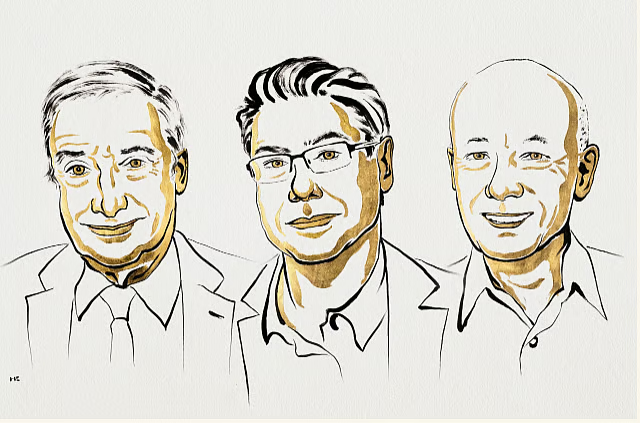
This year’s Nobel Prize in Economics awarded to Joel Mokyr, Philippe Aghion, and Peter Howitt signifies recognition of substantial advancements in the field of innovation-driven economic growth. Their research is anchored in the concept of creative destruction, a theoretical framework first articulated by Joseph Schumpeter, a Harvard professor whose influence persists across generations of economists and scholars.

Schumpeter’s theory of creative destruction says that economic development, capitalist evolution, and technological progress materialise through a perpetual cycle of replacement, whereby emergent technologies, products, institutions, and business models supersede those that are obsolete. Central to this theoretical construct is the entrepreneur, whom Schumpeter identifies as the principal agent of innovation. Entrepreneurs disrupt entrenched structures and reallocate resources toward more productive uses, thereby catalysing economic transformation.

Schumpeter described capitalism as a system driven by constant change, where old industries fade, new ones emerge, and economic methods keep evolving. This process fuels innovation but also brings disruption—causing instability, job losses, and resistance from those who benefit from the old order. Similar patterns can be seen in today’s Bangladeshi economy.

In his seminal work, Capitalism, Socialism and Democracy, Schumpeter elaborated upon the mechanisms through which capitalism may ultimately undermine itself. He theorised that the socio-psychological underpinnings of capitalism would gradually erode, culminating in the system’s eventual dissolution—a perspective that exhibits conceptual resonance with Karl Marx,. Specifically, Schumpeter contended that institutional inertia, bureaucratic expansion, and entrenched interests hinder adaptive change, and predicted that bureaucratisation would supplant entrepreneurial vigour, thereby diminishing innovation. He further anticipated that pronounced inequality would incite public resistance, engendering expanded state intervention and regulatory frameworks, and thus precipitating the demise of capitalism.

For Schumpeter, the principal challenge lies in sustaining the dynamism of innovation while judiciously managing its destructive externalities. He regarded the eventual decline of capitalism as an inevitable, though undesirable, outcome.

Regarding socialism, Schumpeter did not support Marxian revolutionary communism; instead, he predicted that the instability generated by creative destruction, coupled with democratic and bureaucratic evolution, would facilitate a gradual and peaceful transition to a form of socialism. Nevertheless, he was sceptical about socialism’s capacity for innovation, arguing that the absence of entrepreneurial incentives would impede the system’s creative potential.

The 2025 Nobel Prize in Economics was conferred in recognition of research elucidating the mechanisms underpinning innovation-driven economic growth. Joel Mokyr identified the prerequisites for sustained technological advancement, demonstrating how creative destruction is contingent upon specific cultural, social, and institutional conditions. Mokyr emphasised the necessity of a knowledge-oriented culture, institutions that promote the free exchange of ideas, and a societal disposition conducive to risk-taking. Absent these factors, innovation is liable to stagnate.

Aghion and Howitt advanced Schumpeterian theory by constructing formal, analytically robust models that explicate how endogenous innovation engenders sustained economic growth. Their framework delineates the displacement of established institutions, the role of competition in stimulating innovation, and the influence of policy, institutional architecture, and market structure on economic dynamism. The central thesis posits that growth is the product of a continuous, self-renewing cycle of innovation and obsolescence.

The Royal Swedish Academy honoured the three economists “for explaining innovation-driven economic growth.” In its statement, the Academy stressed that economic growth is never automatic — it demands constant effort — and warned that “to prevent stagnation, the forces behind creative destruction must be kept alive.” Their collective research shows how new ideas, products, and discoveries can accelerate growth.

To appreciate the full importance of this Nobel-winning work, it must be viewed in relation to Schumpeter’s original theory. Schumpeter’s ideas were largely philosophical and conceptual. Aghion and Howitt transformed them into a formal mathematical model, enabling empirical and quantitative analysis. Mokyr complemented this by providing historical and institutional context, examining the long-term cultural, social, and scientific foundations that sustain innovation and make creative destruction possible.

The recent research deepens our understanding of which policies effectively promote innovation and what trade-offs they entail — such as how to maintain competition, design patent systems, overcome resistance from established firms, and ensure that institutions stay receptive to new ideas. In this respect, their work significantly extends Schumpeter’s original theory.

They also connected Schumpeter’s concepts to modern issues like globalisation, trade, openness, and the risk of economic stagnation. The 2025 Nobel laureates’ contributions shed light on why some economies, even with access to advanced technology, struggle to innovate or experience prolonged stagnation.

The landmark 1992 paper by Philippe Aghion and Peter Howitt, “A Model of Growth through Creative Destruction,” marked the foundation of modern Schumpeterian growth theory. It translated Schumpeter’s qualitative insights into a formal theoretical framework, showing that economic growth emerges from a continuous cycle of innovation in which new products and processes replace out dated and inefficient ones.

Earlier exogenous growth models treated technological progress as something that occurred outside the economic system. Aghion and Howitt, however, made it an internal—or endogenous—process, driven by purposeful actions and incentives. Firms invest in research and development to gain temporary monopoly advantages, but as better technologies emerge, older ones are displaced. Growth, therefore, results from on-going competition among innovators — a relentless race in which individual success is fleeting, yet society as a whole advances.

While Aghion and Howitt explained the mechanics of innovation through formal modeling, economic historian Joel Mokyr examined its underlying spirit. In his influential works The Lever of Riches and A Culture of Growth, Mokyr posed two fundamental questions: Why did the Industrial Revolution begin in Europe, and why did it persist? After extensive research, he concluded that the revolution was not merely economic or technological—it was intellectual and cultural.

Mokyr argued that Europe’s transformation was born from a distinct cultural and intellectual climate that celebrated curiosity, experimentation, and rational inquiry. The “Republic of Letters”—a transnational community of scholars, scientists, and inventors—enabled knowledge to circulate freely across borders. This openness fostered what Mokyr terms the “Industrial Enlightenment,” an era in which scientific progress and technological innovation became mutually reinforcing.

For Mokyr, innovation is more than an economic process — it is a cultural institution. Progress thrives when societies value fresh ideas and accept the risks that come with them. But when imitation, censorship, or fear of failure dominate, creativity withers. His work offers a timeless lesson: sustainable growth requires more than capital and labour — it also depends on a vibrant culture of freedom, trust, and intellectual openness.

What lessons should the developing countries like Bangladesh extract from the theories of this year’s Nobel Laureates? Bangladesh’s garment industry has long been the foundation of its industrial success. Yet, to stay competitive, it must increasingly embrace automation, design innovation, and environmentally responsible production. Likewise, the expansion of Bangladesh’s digital economy — from e-commerce to IT services — hinges on empowering young entrepreneurs to think creatively and innovate.

Bangladesh’s growth model, built on low-cost labour and export-led production, has achieved remarkable progress but cannot endure forever. The next phase of development must focus on innovation-driven growth — one that rests not only on physical infrastructure, but also on cultivating an environment where creativity, experimentation, and entrepreneurship can truly thrive.
Dr N N Tarun Chakravorty is a Professor of Economics at Independent University, Bangladesh. Editor-At-Large, South Asia Journal. nntarun@gmail.com

When Destruction Becomes Creative: The Big Ideas Behind The 2025 Nobel In Economics – OpEd

Published in EURASIA REVIEW 22 October, 2025

This year’s Nobel laureates in economics — Joel Mokyr, Philippe Aghion, and Peter Howitt — received the prize for their research on, among other things, creative destruction. The idea that “destruction” itself can be creative was first presented as a theory by Harvard professor Joseph Schumpeter, who remains a favorite economist of millions, including myself.

What is this theory that has been discussed by students and teachers for generations?

Its central idea is that economic growth, the evolution of capitalism, and technological progress occur through a continuous cycle in which new technologies, products, institutions, or business models replace the old ones. Schumpeter placed particular emphasis on the role of the entrepreneur. Indeed, the entrepreneur is the driving force of innovation, because, according to Schumpeter, it is the entrepreneur who breaks down existing structures and reorganizes resources in new and more productive ways.

He considered the capitalist economy to be inherently dynamic. According to him, progress depends on continuous change — the decline of old industries, the emergence of new ones, and the replacement of outdated methods. Although this process is creative, it also has destructive aspects. Schumpeter warned of its negative consequences — such as economic instability, worker displacement, and political resistance from entrenched interest groups. Notably, these symptoms are now visible in Bangladesh.

Schumpeter elaborated on these ideas in his famous book Capitalism, Socialism and Democracy. In the same work, he also argued that capitalism would ultimately destroy itself as it evolved. He reasoned that the socio-psychological foundations of capitalism would gradually erode and eventually vanish. In this sense, his words seem to echo those of Karl Marx.

However, the causes he identified were different from Marx’s. Schumpeter argued that capitalist institutions, bureaucracies, and vested interests typically resist change. He further predicted that bureaucracy would eventually dominate industrial enterprises, diminishing the spirit of innovation. Massive inequality, he warned, would emerge — leading to public resistance and, consequently, increased state control and regulation. In other words, capitalism would meet its demise. Thus, Schumpeter suggested that the real challenge lies in sustaining the vitality and dynamism of innovation while skillfully managing its destructive outcomes. The downfall of capitalism, though undesirable, is an inevitable fate.

What did he say about socialism? He did not support Marx’s revolutionary communism, but he believed that through democratic and bureaucratic evolution — and due to the instability created by capitalism’s creative destruction — a form of socialism would gradually replace capitalism. This transformation, he argued, would occur peacefully. However, Schumpeter was skeptical about the efficiency of socialism. In his view, innovation under socialism would not be as dynamic as in capitalism, and the system would lack entrepreneurial energy.

The 2025 Nobel Prize in Economics was awarded “for explaining innovation-driven economic growth.” One part of the prize went to Joel Mokyr, while the other was jointly awarded to Philippe Aghion and Peter Howitt.

Mokyr identified the preconditions for sustained growth through technological progress. His research demonstrated how creative destruction becomes possible — what conditions allow innovations to build upon one another, and which social, cultural, and institutional factors sustain innovation over centuries. In particular, he showed that a knowledge-based culture, institutions that encourage freedom of exchange, and a mindset open to risk-taking are all crucial. Without these, the process of innovation can stagnate.

Philippe Aghion and Peter Howitt, in their model, explained how sustained growth can occur through Schumpeter’s theory of creative destruction. They transformed qualitative insights into a precise and analytically testable framework. These models help us understand how innovation generates growth from within the economy, how old institutions are displaced, how competition stimulates innovation, and how economic policies, institutions, and market structures influence this dynamism. The central premise of their theory is that growth emerges from a continuous cycle of innovation and destruction.

The Royal Swedish Academy awarded the prize to these three economists “for explaining innovation-driven economic growth.” The Academy noted that their work demonstrates that “economic growth cannot be taken for granted; it requires continuous effort,” and that “to avoid stagnation, the processes underpinning creative destruction must be kept alive.” They also explained how new products and discoveries accelerate economic growth.

To grasp the true significance of this Nobel-winning research, we must see how it builds upon Schumpeter’s original theory. Schumpeter’s framework was primarily philosophical and conceptual. Aghion and Howitt placed his ideas within a formal mathematical structure, allowing for quantitative analysis. Mokyr, on the other hand, added historical and institutional depth — exploring the long-term social, cultural, and scientific factors that make creative destruction possible. He identified the essential preconditions for sustaining innovation, encompassing cultural, institutional, and scientific dimensions.

The new research helps us understand which policies stimulate innovation and what their potential drawbacks are — for instance, how to preserve competition, how to design patent systems, how to address resistance from incumbents, and how institutions can remain open to new ideas. In this sense, their work represents a major advancement beyond Schumpeter’s original theory.

They also integrated Schumpeter’s ideas with more contemporary issues such as globalization, trade, openness, and the challenges of stagnation. The 2025 Nobel laureates’ research offers deep insights into why some economies, despite having access to technology, become stagnant or fail to innovate.

The celebrated 1992 article by economists Philippe Aghion and Peter Howitt, â€œA Model of Growth through Creative Destruction,” marked the birth of modern Schumpeterian growth theory. Through it, they transformed Schumpeter’s qualitative insights into a formal theoretical model. According to their framework, growth arises from a continuous process of innovation, in which new products and processes replace old and inefficient ones.

In earlier exogenous growth models, technological progress was treated as an external factor. Aghion and Howitt, however, made it endogenous â€” that is, driven by deliberate efforts and incentives. Firms invest in research and development to gain temporary monopoly power, but once superior technologies emerge, the old ones are replaced. Progress thus occurs through competition among innovators — a perpetual race in which success may be short-lived, yet society as a whole benefits from it.

While Aghion and Howitt presented the mechanics of innovation through formal models, economic historian Joel Mokyr explored its spirit. In his books The Lever of Riches and A Culture of Growth, Mokyr asked two profound questions: Why did the Industrial Revolution occur in Europe — and why did it endure? After years of research, he found his answer. He discovered that the Industrial Revolution was not merely a revolution in markets or machinery, but a revolution in thought, mindset, and culture.

According to Mokyr, Europe’s economic transformation emerged from a unique cultural and intellectual environment — one that valued curiosity, experimentation, and rational inquiry. The so-called â€œRepublic of Letters” â€” a transnational network of scholars, scientists, and inventors across Europe — allowed knowledge to flow freely across borders. This openness gave rise to what Mokyr calls â€œthe Industrial Enlightenment,” a period when scientific discovery and technological innovation began to reinforce one another.

For Mokyr, innovation is not merely an economic activity; it is a cultural institution. Progress occurs when a society rewards new ideas and tolerates the uncertainty that accompanies them. But where imitation, censorship, or fear of failure prevail, the light of creativity fades. His research offers a profound historical lesson: for sustainable growth, capital and labor alone are not enough — a thriving ecosystem of freedom, trust, and intellectual openness is equally essential.

What can Bangladesh learn from this research? The country’s garments industry has been the cornerstone of its industrialization. However, to remain competitive, it must increasingly rely on automation, design innovation, and environmentally sustainable production methods. Similarly, the rise of Bangladesh’s digital economy — from e-commerce to IT services — requires preparing young entrepreneurs to innovate.

Bangladesh’s growth model, driven by cheap labor and export-oriented production, though impressive, cannot be sustained indefinitely. The challenge now is to foster innovation-driven growth — one that depends not merely on physical infrastructure, but on creating an environment where creativity, experimentation, and entrepreneurial spirit can flourish.

Dr. N N Tarun Chakravorty

Dr. N N Tarun Chakravorty is a Visiting Professor of Economics at Siberian Federal University, Russia. Editor-At-Large, South Asia Journal. He has studied Economics at The University of Leeds, London School of Economics and The University of Bath. As an economist has presented papers in several conferences arranged by Royal Economic Society, American Economic Association, UK-based Development Studies Association, Canadian Economics Association, Asia Pacific Region, Economic Congress of Russia etc.

āĻ āĻŦāĻ›āϰ⧇āϰ āĻ…āĻ°ā§āĻĨāύ⧀āϤāĻŋāϰ āύ⧋āĻŦ⧇āϞ āĻĒ⧁āϰāĻ¸ā§āĻ•āĻžāϰ āĻāϤ āϗ⧁āϰ⧁āĻ¤ā§āĻŦāĻĒā§‚āĻ°ā§āĻŖ āϕ⧇āύ

Published in Prothom Alo 20 October, 2025

āĻ āĻŦāĻ›āϰ āύ⧋āĻŦ⧇āϞ āĻŦāĻŋāϜāϝāĻŧā§€ āĻœā§‹āϝāĻŧ⧇āϞ āĻŽā§‹āĻ•āĻŋāϰ, āĻĢāĻŋāϞāĻŋāĻĒ āφāĻ—āĻŋāϝāĻŧā§‹āρ āĻ“ āĻĒāĻŋāϟāĻžāϰ āĻšāĻžāωāχāϟ āϝ⧇ āĻ—āĻŦ⧇āώāĻŖāĻžāϰ āϜāĻ¨ā§āϝ āĻĒ⧁āϰāĻ¸ā§āĻ•āĻžāϰāϟāĻž āĻĒ⧇āϞ⧇āύ, āĻāϰ āĻāĻ•āϟāĻž āĻ…āĻ‚āĻļ āĻšāϞ⧋ āĻ•ā§āϰāĻŋāϝāĻŧ⧇āϟāĻŋāĻ­ āĻĄā§‡āĻ¸ā§āĻŸā§āϰāĻžāĻ•āĻļāύ, āϤāĻĨāĻž āϏ⧃āϜāύāĻļā§€āϞ āĻ§ā§āĻŦāĻ‚āϏāĨ¤ ‘āĻ§ā§āĻŦāĻ‚āĻ¸â€™āĻ“ āϝ⧇ āϏ⧃āϜāύāĻļā§€āϞ āĻšāϤ⧇ āĻĒāĻžāϰ⧇, āϤāĻž āĻāĻ•āϟāĻž āϤāĻ¤ā§āĻ¤ā§āĻŦ⧇āϰ āĻŽāĻžāĻ§ā§āϝāĻŽā§‡ āĻĒā§āϰāĻĨāĻŽ āĻĻ⧇āĻ–āĻžāύ āĻšāĻžāĻ°ā§āĻ­āĻžāĻ°ā§āĻĄ āĻ…āĻ§ā§āϝāĻžāĻĒāĻ• āϝ⧋āϏ⧇āĻĢ āĻļāĻŽāĻĒāĻŋāϟāĻžāϰ, āϝāĻŋāύāĻŋ āφāĻŽāĻžāϰ āĻŽāϤ⧋ āϕ⧋āϟāĻŋ āϕ⧋āϟāĻŋ āĻŽāĻžāύ⧁āώ⧇āϰ āĻĒā§āϰāĻŋāϝāĻŧ āĻ…āĻ°ā§āĻĨāύ⧀āϤāĻŋāĻŦāĻŋāĻĻāĨ¤ āϕ⧀ āϏ⧇āχ āϤāĻ¤ā§āĻ¤ā§āĻŦ, āϝāĻž āϝ⧁āĻ— āϝ⧁āĻ— āϧāϰ⧇ āĻ›āĻžāĻ¤ā§āϰ-āĻļāĻŋāĻ•ā§āώāϕ⧇āϰ āĻŽā§āϖ⧇ āĻŽā§āϖ⧇ āφāϞ⧋āϚāĻŋāϤ āĻšāϝāĻŧ⧇ āφāϏāϛ⧇?

āĻāϰ āĻŽā§‚āϞ āϧāĻžāϰāĻŖāĻž āĻšāϞ⧋ āĻ…āĻ°ā§āĻĨāύ⧈āϤāĻŋāĻ• āĻĒā§āϰāĻŦ⧃āĻĻā§āϧāĻŋ, āĻĒ⧁āρāϜāĻŋāĻŦāĻžāĻĻ⧇āϰ āĻŦāĻŋāĻ•āĻžāĻļ āĻ“ āĻĒā§āϰāϝ⧁āĻ•ā§āϤāĻŋāĻ—āϤ āĻ…āĻ—ā§āϰāĻ—āϤāĻŋ āϘāĻŸā§‡ āĻāĻŽāύ āĻāĻ• āϚāĻ•ā§āϰ⧇āϰ āĻŽāĻžāĻ§ā§āϝāĻŽā§‡, āϝ⧇āĻ–āĻžāύ⧇ āύāϤ⧁āύ āĻĒā§āϰāϝ⧁āĻ•ā§āϤāĻŋ, āĻĒāĻŖā§āϝ, āĻĒā§āϰāϤāĻŋāĻˇā§āĻ āĻžāύ āĻŦāĻž āĻŦā§āϝāĻŦāϏāĻžāϝāĻŧāĻŋāĻ• āĻŽāĻĄā§‡āϞ āĻĒ⧁āϰ⧋āύ⧋āĻĻ⧇āϰ āĻĒā§āϰāϤāĻŋāĻ¸ā§āĻĨāĻžāĻĒāύ āĻ•āϰ⧇āĨ¤ āĻļāĻŽāĻĒāĻŋāϟāĻžāϰ āωāĻĻā§āϝ⧋āĻ•ā§āϤāĻžāϰ āĻ­ā§‚āĻŽāĻŋāĻ•āĻžāϕ⧇ āĻŦāĻŋāĻļ⧇āώāĻ­āĻžāĻŦ⧇ āϗ⧁āϰ⧁āĻ¤ā§āĻŦ āĻĻāĻŋāϝāĻŧ⧇āĻ›āĻŋāϞ⧇āύāĨ¤ āĻŦāĻ¸ā§āϤ⧁āϤ āωāĻĻā§āϝ⧋āĻ•ā§āϤāĻžāχ āωāĻĻā§āĻ­āĻžāĻŦāύ⧇āϰ āĻŽā§‚āϞ āϚāĻžāϞāĻŋāĻ•āĻž āĻļāĻ•ā§āϤāĻŋāĨ¤ āĻ•āĻžāϰāĻŖ, āϤāĻžāρāϰ āĻŽāϤ⧇, āωāĻĻā§āϝ⧋āĻ•ā§āϤāĻžāχ āĻŦāĻŋāĻĻā§āϝāĻŽāĻžāύ āĻ•āĻžāĻ āĻžāĻŽā§‹āϕ⧇ āϭ⧇āϙ⧇ āύāϤ⧁āύ āωāĻĒāĻžāϝāĻŧ⧇ āϏāĻŽā§āĻĒāĻĻ⧇āϰ āϏāĻŽāĻ¨ā§āĻŦāϝāĻŧ āϘāϟāĻžāύāĨ¤

āĻĒ⧁āρāϜāĻŋāĻŦāĻžāĻĻā§€ āĻ…āĻ°ā§āĻĨāύ⧀āϤāĻŋāϕ⧇ āĻļāĻŽāĻĒāĻŋāϟāĻžāϰ āĻ…āĻ¨ā§āϤāĻ°ā§āύāĻŋāĻšāĻŋāϤāĻ­āĻžāĻŦ⧇āχ āĻ—āϤāĻŋāĻļā§€āϞ āĻŦāĻŋāĻŦ⧇āϚāύāĻž āĻ•āϰāϤ⧇āύāĨ¤ āϤāĻžāρāϰ āĻŽāϤ⧇, āĻ…āĻ—ā§āϰāĻ—āϤāĻŋ āύāĻŋāĻ°ā§āĻ­āϰ āĻ•āϰ⧇ āϧāĻžāϰāĻžāĻŦāĻžāĻšāĻŋāĻ• āĻĒāϰāĻŋāĻŦāĻ°ā§āϤāύ⧇āϰ āĻ“āĻĒāĻ°â€”āĻĒ⧁āϰ⧋āύ⧋ āĻļāĻŋāĻ˛ā§āĻĒ⧇āϰ āĻ…āĻŦāϏāĻžāύ, āύāϤ⧁āύ⧇āϰ āωāĻĻā§āĻ­āĻŦ āĻāĻŦāĻ‚ āϏ⧇āϕ⧇āϞ⧇ āĻĒāĻĻā§āϧāϤāĻŋāϰ āĻĒā§āϰāϤāĻŋāĻ¸ā§āĻĨāĻžāĻĒāύāĨ¤ āĻĒā§āϰāĻ•ā§āϰāĻŋāϝāĻŧāĻžāϟāĻŋ āϏ⧃āϜāύāĻļā§€āϞ āĻšāϞ⧇āĻ“ āĻāϰ āĻ§ā§āĻŦāĻ‚āϏāĻžāĻ¤ā§āĻŽāĻ• āĻĻāĻŋāĻ•āĻ“ āϰāϝāĻŧ⧇āϛ⧇āύāĨ¤ āĻļāĻŽāĻĒāĻŋāϟāĻžāϰ āĻāϰ āύ⧇āϤāĻŋāĻŦāĻžāϚāĻ• āĻĻāĻŋāĻ•āϗ⧁āϞ⧋āϰ āĻĒā§āϰāϤāĻŋāĻ“ āϏāϤāĻ°ā§āĻ• āĻ•āϰ⧇āĻ›āĻŋāϞ⧇āύ, āϝ⧇āĻŽāύ āĻ…āĻ°ā§āĻĨāύ⧈āϤāĻŋāĻ• āĻ…āĻ¸ā§āĻĨāĻŋāϰāϤāĻž, āĻļā§āϰāĻŽāĻŋāĻ•āĻĻ⧇āϰ āĻ¸ā§āĻĨāĻžāύāĻšā§āϝ⧁āϤāĻŋ āĻ“ āĻĒā§āϰāϤāĻŋāĻˇā§āĻ āĻŋāϤ āĻ¸ā§āĻŦāĻžāĻ°ā§āĻĨāĻ—ā§‹āĻˇā§āĻ ā§€āϰ āϰāĻžāϜāύ⧈āϤāĻŋāĻ• āĻĒā§āϰāϤāĻŋāϰ⧋āϧāĨ¤ āĻĒā§āϰāϏāĻ™ā§āĻ—āϤ āĻŦāĻžāĻ‚āϞāĻžāĻĻ⧇āĻļ⧇ āĻāχ āϞāĻ•ā§āώāĻŖāϗ⧁āϞ⧋ āĻāĻ–āύ āĻĻ⧃āĻļā§āϝāĻŽāĻžāύāĨ¤

āωāĻĒāϰāĻŋāωāĻ•ā§āϤ āϧāĻžāϰāĻŖāĻž āĻ“ āφāϞ⧋āϚāύāĻž āĻļāĻŽāĻĒāĻŋāϟāĻžāϰ āϤāĻžāρāϰ āĻŦāĻŋāĻ–ā§āϝāĻžāϤ ‘āĻ•ā§āϝāĻžāĻĒāĻŋāϟāĻžāϞāĻŋāϜāĻŽ, āϏ⧋āĻļā§āϝāĻžāϞāĻŋāϜāĻŽ āĻ…ā§āϝāĻžāĻ¨ā§āĻĄ āĻĄā§‡āĻŽā§‹āĻ•ā§āϰ⧇āϏāĻŋ’ āĻ—ā§āϰāĻ¨ā§āĻĨ⧇ āϞāĻŋāĻĒāĻŋāĻŦāĻĻā§āϧ āĻ•āϰ⧇āύāĨ¤ āĻāĻ•āχ āĻŦāχāϝāĻŧ⧇ āϤāĻŋāύāĻŋ āĻ-āĻ“ āĻŦāϞ⧇āύ, āĻ•ā§āϝāĻžāĻĒāĻŋāϟāĻžāϞāĻŋāϜāĻŽ āĻŦāĻŋāĻ•āĻļāĻŋāϤ āĻšāϤ⧇ āĻšāϤ⧇ āĻāĻ•āϏāĻŽāϝāĻŧ āύāĻŋāĻœā§‡āϕ⧇ āύāĻŋāĻœā§‡ āĻ§ā§āĻŦāĻ‚āϏ āĻ•āϰ⧇ āĻĢ⧇āϞāĻŦ⧇āĨ¤ āϤāĻŋāύāĻŋ āϝ⧁āĻ•ā§āϤāĻŋ āĻĻ⧇āĻ–āĻžāύ, āϧāύāϤāĻ¨ā§āĻ¤ā§āϰ⧇āϰ āϏāĻžāĻŽāĻžāϜāĻŋāĻ•-āĻŽāύāĻ¸ā§āϤāĻžāĻ¤ā§āĻ¤ā§āĻŦāĻŋāĻ• āĻ­āĻŋāϤāϗ⧁āϞ⧋ āĻ•ā§āώāϝāĻŧ āĻšāϤ⧇ āĻšāϤ⧇ āύāĻŋāσāĻļ⧇āώ āĻšāϝāĻŧ⧇ āϝāĻžāĻŦ⧇āĨ¤ āĻāĻ–āĻžāύ⧇ āϤāĻŋāύāĻŋ āϝ⧇āύ āĻ•āĻžāĻ°ā§āϞ āĻŽāĻžāĻ°ā§āĻ•ā§āϏ⧇āϰ āĻ•āĻĨāĻžāϰ āĻĒā§āϰāϤāĻŋāĻ§ā§āĻŦāύāĻŋ āĻ•āϰāϛ⧇āύāĨ¤

āϝāĻĻāĻŋāĻ“ āĻ•āĻžāϰāĻŖ āĻšāĻŋāϏ⧇āĻŦ⧇ āĻļāĻŽāĻĒāĻŋāϟāĻžāϰ āϝāĻž āĻŦāϞ⧇āύ, āϤāĻž āĻŽāĻžāĻ°ā§āĻ•ā§āϏ āĻĨ⧇āϕ⧇ āĻ­āĻŋāĻ¨ā§āύāĨ¤ āĻļāĻŽāĻĒāĻŋāϟāĻžāϰ āĻŦāϞ⧇āύ, āĻĒ⧁āρāϜāĻŋāĻŦāĻžāĻĻā§€ āĻĒā§āϰāϤāĻŋāĻˇā§āĻ āĻžāύ, āφāĻŽāϞāĻžāϤāĻ¨ā§āĻ¤ā§āϰ āĻ“ āĻ¸ā§āĻŦāĻžāĻ°ā§āĻĨāĻžāĻ¨ā§āĻŦ⧇āώ⧀ āĻ—ā§‹āĻˇā§āĻ ā§€āϗ⧁āϞ⧋ āϏāĻžāϧāĻžāϰāĻŖāϤ āĻĒāϰāĻŋāĻŦāĻ°ā§āϤāύ⧇āϰ āĻŦāĻŋāϰ⧁āĻĻā§āϧ⧇ āĻĒā§āϰāϤāĻŋāϰ⧋āϧ āĻ—āĻĄāĻŧ⧇ āϤ⧋āϞ⧇āĨ¤ āϤāĻŋāύāĻŋ āφāϰāĻ“ āĻ­āĻŦāĻŋāĻˇā§āϝāĻĻā§āĻŦāĻžāĻŖā§€ āĻ•āϰ⧇āύ, āĻļāĻŋāĻ˛ā§āĻĒāĻĒā§āϰāϤāĻŋāĻˇā§āĻ āĻžāύ⧇ āφāĻŽāϞāĻžāϤāĻ¨ā§āĻ¤ā§āϰ āĻĻ⧇āĻ–āĻž āĻĻ⧇āĻŦ⧇, āĻĢāϞ⧇ āωāĻĻā§āĻ­āĻžāĻŦāύ⧇āϰ āĻ¸ā§āĻĒ⧃āĻšāĻž āĻ•āĻŽā§‡ āϝāĻžāĻŦ⧇āĨ¤ āϏāĻŽāĻžāĻœā§‡ āĻŦā§āϝāĻžāĻĒāĻ• āϧāύāĻŦ⧈āώāĻŽā§āϝ āĻĻ⧇āĻ–āĻž āĻĻ⧇āĻŦ⧇āĨ¤ āĻĢāϞ⧇ āĻāϰ āĻŦāĻŋāϰ⧁āĻĻā§āϧ⧇ āϜāύāĻ—āϪ⧇āϰ āφāĻ¨ā§āĻĻā§‹āϞāύ⧇āϰ āĻŽā§āϖ⧇ āϰāĻžāĻˇā§āĻŸā§āϰ⧀āϝāĻŧ āύāĻŋāϝāĻŧāĻ¨ā§āĻ¤ā§āϰāĻŖ āĻ“ āĻ•āĻĄāĻŧāĻžāĻ•āĻĄāĻŧāĻŋ āĻŦ⧇āĻĄāĻŧ⧇ āϝāĻžāĻŦ⧇āĨ¤ āĻ…āĻ°ā§āĻĨāĻžā§Ž āϧāύāϤāĻ¨ā§āĻ¤ā§āϰ⧇āϰ āĻŽā§ƒāĻ¤ā§āϝ⧁ āϘāϟāĻŦ⧇āĨ¤ āϏ⧇ āϜāĻ¨ā§āϝāχ āĻļāĻŽāĻĒāĻŋāϟāĻžāϰ āχāĻ™ā§āĻ—āĻŋāϤ āĻĻāĻŋāϝāĻŧ⧇āĻ›āĻŋāϞ⧇āύ, āĻĒā§āϰāĻ•ā§ƒāϤ āĻšā§āϝāĻžāϞ⧇āĻžā§āϜ āĻšāϞ⧋ āωāĻĻā§āĻ­āĻžāĻŦāύ⧇āϰ āĻĒā§āϰāĻžāĻŖāĻļāĻ•ā§āϤāĻŋ āĻ“ āĻ—āϤāĻŋāĻļā§€āϞāϤāĻž āϧāϰ⧇ āϰāĻžāĻ–āĻž, āĻāĻ•āχ āϏāĻ™ā§āϗ⧇ āϤāĻžāϰ āĻ§ā§āĻŦāĻ‚āϏāĻžāĻ¤ā§āĻŽāĻ• āĻĒāϰāĻŋāĻŖāϤāĻŋāϗ⧁āϞ⧋āϕ⧇ āĻĻāĻ•ā§āώāĻ­āĻžāĻŦ⧇ āύāĻŋāϝāĻŧāĻ¨ā§āĻ¤ā§āϰāĻŖ āĻ•āϰāĻžāĨ¤ āĻ•āĻžāĻ™ā§āĻ•ā§āώāĻŋāϤ āύāĻž āĻšāϞ⧇āĻ“ āĻĒ⧁āρāϜāĻŋāĻŦāĻžāĻĻ⧇āϰ āĻ§ā§āĻŦāĻ‚āϏ āĻāĻ• āĻ…āĻŽā§‹āϘ āύāĻŋāϝāĻŧāϤāĻŋāĨ¤

āĻœā§‹āϝāĻŧ⧇āϞ āĻŽā§‹āĻ•āĻŋāϰ, āĻĢāĻŋāϞāĻŋāĻĒ āĻ…ā§āϝāĻžāĻ—āĻŋāϝāĻŧāύ āĻ“ āĻĒāĻŋāϟāĻžāϰ āĻšāĻžāωāχāϟ

āĻœā§‹āϝāĻŧ⧇āϞ āĻŽā§‹āĻ•āĻŋāϰ, āĻĢāĻŋāϞāĻŋāĻĒ āĻ…ā§āϝāĻžāĻ—āĻŋāϝāĻŧāύ āĻ“ āĻĒāĻŋāϟāĻžāϰ āĻšāĻžāωāχāϟāύ⧋āĻŦ⧇āϞ āĻĒā§āϰāĻžāχāϜ āĻĄāϟ āĻ…āĻ°ā§āĻ—

āϏāĻŽāĻžāϜāϤāĻ¨ā§āĻ¤ā§āϰ āϏāĻŽā§āĻĒāĻ°ā§āϕ⧇ āĻļāĻŽāĻĒāĻŋāϟāĻžāϰ āϕ⧀ āĻŦāϞāϞ⧇āύ? āϤāĻŋāύāĻŋ āĻŽāĻžāĻ°ā§āĻ•ā§āϏ⧇āϰ āĻŦāĻŋāĻĒā§āϞāĻŦāĻžāĻ¤ā§āĻŽāĻ• āϏāĻžāĻŽā§āϝāĻŦāĻžāĻĻāϕ⧇ āϏāĻŽāĻ°ā§āĻĨāύ āĻ•āϰ⧇āύāύāĻŋāĨ¤ āϤāĻŦ⧇ āĻŦāĻŋāĻļā§āĻŦāĻžāϏ āĻ•āϰāϤ⧇āύ, āĻ—āĻŖāϤāĻžāĻ¨ā§āĻ¤ā§āϰāĻŋāĻ• āĻ“ āφāĻŽāϞāĻžāϤāĻžāĻ¨ā§āĻ¤ā§āϰāĻŋāĻ• āĻŦāĻŋāĻ•āĻžāĻļ⧇āϰ āϧāĻžāϰāĻžāϝāĻŧ, āĻĒ⧁āρāϜāĻŋāĻŦāĻžāĻĻ⧇āϰ āϏ⧃āϜāύāĻļā§€āϞ āĻ§ā§āĻŦāĻ‚āϏ āĻĨ⧇āϕ⧇ āϏ⧃āĻˇā§āϟ āĻ…āĻ¸ā§āĻĨāĻŋāϰāϤāĻžāϰ āĻ•āĻžāϰāϪ⧇ āĻāĻ•āϧāϰāύ⧇āϰ āϏāĻŽāĻžāϜāϤāĻ¨ā§āĻ¤ā§āϰ āϧ⧀āϰ⧇ āϧ⧀āϰ⧇ āĻĒ⧁āρāϜāĻŋāĻŦāĻžāĻĻāϕ⧇ āĻĒā§āϰāϤāĻŋāĻ¸ā§āĻĨāĻžāĻĒāύ āĻ•āϰāĻŦ⧇āĨ¤ āĻĒāϰāĻŋāĻŦāĻ°ā§āϤāύāϟāĻŋ āϘāϟāĻŦ⧇ āĻļāĻžāĻ¨ā§āϤāĻŋāĻĒā§‚āĻ°ā§āĻŖ āωāĻĒāĻžāϝāĻŧ⧇āĨ¤ āĻļāĻŽāĻĒāĻŋāϟāĻžāϰ āϏāĻŽāĻžāϜāϤāĻ¨ā§āĻ¤ā§āϰ⧇āϰ āĻĻāĻ•ā§āώāϤāĻž āϏāĻŽā§āĻĒāĻ°ā§āϕ⧇ āϏāĻ¨ā§āĻĻāĻŋāĻšāĻžāύ āĻ›āĻŋāϞ⧇āύāĨ¤ āϤāĻžāρāϰ āĻŽāϤ⧇, āϏāĻŽāĻžāϜāϤāĻ¨ā§āĻ¤ā§āϰ⧇ āωāĻĻā§āĻ­āĻžāĻŦāύ āĻĒ⧁āρāϜāĻŋāĻŦāĻžāĻĻ⧇āϰ āĻŽāϤ⧋ āĻ—āϤāĻŋāĻļā§€āϞ āĻšāĻŦ⧇ āύāĻž, āωāĻĻā§āϝ⧋āĻ•ā§āϤāĻž āĻļāĻ•ā§āϤāĻŋāϰāĻ“ āϘāĻžāϟāϤāĻŋ āĻĨāĻžāĻ•āĻŦ⧇āĨ¤

⧍ā§Ļ⧍ā§Ģ āϏāĻžāϞ⧇āϰ āύ⧋āĻŦ⧇āϞ āĻĒ⧁āϰāĻ¸ā§āĻ•āĻžāϰ āĻĻ⧇āĻ“āϝāĻŧāĻž āĻšāϝāĻŧ⧇āϛ⧇ ‘āωāĻĻā§āĻ­āĻžāĻŦāύāύāĻŋāĻ°ā§āĻ­āϰ āĻ…āĻ°ā§āĻĨāύ⧈āϤāĻŋāĻ• āĻĒā§āϰāĻŦ⧃āĻĻā§āϧāĻŋāϰ āĻŦā§āϝāĻžāĻ–ā§āϝāĻž āĻĻ⧇āĻ“āϝāĻŧāĻžāϰ āϜāĻ¨ā§āĻ¯â€™āĨ¤ āĻĒ⧁āϰāĻ¸ā§āĻ•āĻžāϰ⧇āϰ āĻāĻ• āĻ…āĻ‚āĻļ āĻĒ⧇āϝāĻŧ⧇āϛ⧇āύ āĻœā§‹āϝāĻŧ⧇āϞ āĻŽā§‹āĻ•āĻŋāϰ, āφāϰ āĻ…āĻĒāϰ āĻ…āĻ‚āĻļāϟāĻŋ āϝ⧌āĻĨāĻ­āĻžāĻŦ⧇ āĻĒ⧇āϝāĻŧ⧇āϛ⧇āύ āĻĢāĻŋāϞāĻŋāĻĒ āφāĻ—āĻŋāϝāĻŧā§‹āρ āĻ“ āĻĒāĻŋāϟāĻžāϰ āĻšāĻžāωāχāϟāĨ¤

āĻŽā§‹āĻ•āĻŋāϰ āĻĒā§āϰāϝ⧁āĻ•ā§āϤāĻŋāĻ—āϤ āĻ…āĻ—ā§āϰāĻ—āϤāĻŋāϰ āĻŽāĻžāĻ§ā§āϝāĻŽā§‡ āĻĻā§€āĻ°ā§āϘāĻ¸ā§āĻĨāĻžāϝāĻŧā§€ āĻĒā§āϰāĻŦ⧃āĻĻā§āϧāĻŋāϰ āĻĒā§‚āĻ°ā§āĻŦāĻļāĻ°ā§āϤāϗ⧁āϞ⧋ āĻļāύāĻžāĻ•ā§āϤ āĻ•āϰ⧇āϛ⧇āύāĨ¤ āĻ—āĻŦ⧇āώāĻŖāĻžāϝāĻŧ āϤāĻŋāύāĻŋ āĻĻ⧇āĻ–āĻŋāϝāĻŧ⧇āϛ⧇āύ, āϕ⧀āĻ­āĻžāĻŦ⧇ āϏ⧃āϜāύāĻļā§€āϞ āĻ§ā§āĻŦāĻ‚āϏ āϏāĻŽā§āĻ­āĻŦ āĻšāϝāĻŧ, āϕ⧋āύ āĻļāĻ°ā§āϤ āωāĻĻā§āĻ­āĻžāĻŦāύāϕ⧇ āĻāĻ•āϟāĻŋāϰ āĻ“āĻĒāϰ āφāϰ⧇āĻ•āϟāĻŋ āύāĻŋāĻ°ā§āĻŽāĻžāϪ⧇āϰ āϏ⧁āϝ⧋āĻ— āĻĻ⧇āϝāĻŧ āĻāĻŦāĻ‚ āϕ⧋āύ āϏāĻžāĻŽāĻžāϜāĻŋāĻ•, āϏāĻžāĻ‚āĻ¸ā§āĻ•ā§ƒāϤāĻŋāĻ• āĻ“ āĻĒā§āϰāĻžāϤāĻŋāĻˇā§āĻ āĻžāύāĻŋāĻ• āωāĻĒāĻžāĻĻāĻžāύ āĻļāϤāĻžāĻŦā§āĻĻā§€āϰ āĻĒāϰ āĻļāϤāĻžāĻŦā§āĻĻā§€ āϧāϰ⧇ āωāĻĻā§āĻ­āĻžāĻŦāύāϕ⧇ āϟāĻŋāĻ•āĻŋāϝāĻŧ⧇ āϰāĻžāϖ⧇āĨ¤ āĻŦāĻŋāĻļ⧇āώāĻ­āĻžāĻŦ⧇ āϤāĻŋāύāĻŋ āĻĻ⧇āĻ–āĻŋāϝāĻŧ⧇āϛ⧇āύ, āĻœā§āĻžāĻžāύāĻ­āĻŋāĻ¤ā§āϤāĻŋāĻ• āϏāĻ‚āĻ¸ā§āĻ•ā§ƒāϤāĻŋ, āĻŽāϤāĻŦāĻŋāύāĻŋāĻŽāϝāĻŧ⧇āϰ āĻ¸ā§āĻŦāĻžāϧ⧀āύāϤāĻž āĻ‰ā§ŽāϏāĻžāĻšāĻŋāϤ āĻ•āϰāĻž āĻĒā§āϰāϤāĻŋāĻˇā§āĻ āĻžāύ, āĻā§āρāĻ•āĻŋ āύ⧇āĻ“āϝāĻŧāĻžāϰ āĻŽāĻžāύāϏāĻŋāĻ•āϤāĻž āχāĻ¤ā§āϝāĻžāĻĻāĻŋ āĻ…āĻ¤ā§āϝāĻ¨ā§āϤ āϗ⧁āϰ⧁āĻ¤ā§āĻŦāĻĒā§‚āĻ°ā§āĻŖāĨ¤ āĻāϏāĻŦ āύāĻž āĻĨāĻžāĻ•āϞ⧇ āωāĻĻā§āĻ­āĻžāĻŦāύ⧇āϰ āĻĒā§āϰāĻ•ā§āϰāĻŋāϝāĻŧāĻž āĻ¸ā§āĻĨāĻŦāĻŋāϰ āĻšāϝāĻŧ⧇ āϝ⧇āϤ⧇ āĻĒāĻžāϰ⧇āĨ¤

āĻĢāĻŋāϞāĻŋāĻĒ āφāĻ—āĻŋāϝāĻŧā§‹āρ āĻ“ āĻĒāĻŋāϟāĻžāϰ āĻšāĻžāωāχāϟ āϤāĻžāρāĻĻ⧇āϰ āĻŽāĻĄā§‡āϞ⧇ āĻļāĻŽāĻĒāĻŋāϟāĻžāϰ⧇āϰ ‘āϏ⧃āϜāύāĻļā§€āϞ āĻ§ā§āĻŦāĻ‚āĻ¸â€™ āϤāĻ¤ā§āĻ¤ā§āĻŦ⧇āϰ āĻŽāĻžāĻ§ā§āϝāĻŽā§‡ āĻ¸ā§āĻĨāĻžāϝāĻŧā§€ āĻĒā§āϰāĻŦ⧃āĻĻā§āϧāĻŋ āϕ⧀āĻ­āĻžāĻŦ⧇ āĻšāϤ⧇ āĻĒāĻžāϰ⧇, āϤāĻž āĻŦā§āϝāĻžāĻ–ā§āϝāĻž āĻ•āϰ⧇āϛ⧇āύāĨ¤āϗ⧁āĻŖāĻ—āϤ āĻ…āĻ¨ā§āϤāĻ°ā§āĻĻ⧃āĻˇā§āϟāĻŋāϕ⧇ āύāĻŋāĻ°ā§āĻĻāĻŋāĻˇā§āϟ āĻ“ āĻŦāĻŋāĻļā§āϞ⧇āώāĻŖāϝ⧋āĻ—ā§āϝ āĻ•āĻžāĻ āĻžāĻŽā§‹āϰ āĻŽāĻ§ā§āϝ⧇ āϰ⧂āĻĒ āĻĻāĻŋāϝāĻŧ⧇āϛ⧇āύāĨ¤ āĻāϏāĻŦ āĻŽāĻĄā§‡āϞ āφāĻŽāĻžāĻĻ⧇āϰ āĻŦā§‹āĻāĻžāϤ⧇ āϏāĻžāĻšāĻžāĻ¯ā§āϝ āĻ•āϰ⧇ āϝ⧇ āϕ⧀āĻ­āĻžāĻŦ⧇ āωāĻĻā§āĻ­āĻžāĻŦāύ āĻ…āĻ°ā§āĻĨāύ⧀āϤāĻŋāϰ āϭ⧇āϤāϰ āĻĨ⧇āϕ⧇āχ āĻĒā§āϰāĻŦ⧃āĻĻā§āϧāĻŋ āϏ⧃āĻˇā§āϟāĻŋ āĻ•āϰ⧇, āϕ⧀āĻ­āĻžāĻŦ⧇ āĻĒ⧁āϰ⧋āύ⧋ āĻĒā§āϰāϤāĻŋāĻˇā§āĻ āĻžāύāϗ⧁āϞ⧋ āĻ¸ā§āĻĨāĻžāύāĻšā§āϝ⧁āϤ āĻšāϝāĻŧ, āĻĒā§āϰāϤāĻŋāϝ⧋āĻ—āĻŋāϤāĻž āϕ⧀āĻ­āĻžāĻŦ⧇ āωāĻĻā§āĻ­āĻžāĻŦāύāϕ⧇ āĻ‰ā§ŽāϏāĻžāĻšāĻŋāϤ āĻ•āϰ⧇ āĻāĻŦāĻ‚ āĻ…āĻ°ā§āĻĨāύ⧈āϤāĻŋāĻ• āύ⧀āϤāĻŋ, āĻĒā§āϰāϤāĻŋāĻˇā§āĻ āĻžāύ āĻ“ āĻŦāĻžāϜāĻžāϰāĻ•āĻžāĻ āĻžāĻŽā§‹ āĻāχ āĻ—āϤāĻŋāĻļā§€āϞāϤāĻžāϕ⧇ āϕ⧀āĻ­āĻžāĻŦ⧇ āĻĒā§āϰāĻ­āĻžāĻŦāĻŋāϤ āĻ•āϰ⧇āĨ¤ āĻĒā§āϰāĻŦ⧃āĻĻā§āϧāĻŋ āϝ⧇ āĻ…āĻŦāĻŋāϰāĻžāĻŽ āωāĻĻā§āĻ­āĻžāĻŦāύ āĻ“ āĻ§ā§āĻŦāĻ‚āϏ⧇āϰ āϚāĻ•ā§āϰ āĻĨ⧇āϕ⧇ āφāĻ¸ā§‡â€”āĻ āϧāĻžāϰāĻŖāĻžāχ āϤāĻ¤ā§āĻ¤ā§āĻŦāϟāĻŋāϰ āĻŽā§‚āϞ āĻ­āĻŋāĻ¤ā§āϤāĻŋāĨ¤

āϰāϝāĻŧā§āϝāĻžāϞ āϏ⧁āχāĻĄāĻŋāĻļ āĻāĻ•āĻžāĻĄā§‡āĻŽāĻŋ ‘āωāĻĻā§āĻ­āĻžāĻŦāύāύāĻŋāĻ°ā§āĻ­āϰ āĻ…āĻ°ā§āĻĨāύ⧈āϤāĻŋāĻ• āĻĒā§āϰāĻŦ⧃āĻĻā§āϧāĻŋāϰ āĻŦā§āϝāĻžāĻ–ā§āϝāĻžâ€™ āĻĻ⧇āĻ“āϝāĻŧāĻžāϰ āϜāĻ¨ā§āϝ āϤāĻŋāύ āĻ…āĻ°ā§āĻĨāύ⧀āϤāĻŋāĻŦāĻŋāĻĻāϕ⧇ āĻāχ āĻĒ⧁āϰāĻ¸ā§āĻ•āĻžāϰ āĻĒā§āϰāĻĻāĻžāύ āĻ•āϰ⧇āϛ⧇āĨ¤ āĻŦāϞ⧇āϛ⧇, āĻŦāĻŋāϜāϝāĻŧā§€āĻĻ⧇āϰ āωāĻĻā§āĻ­āĻžāĻŦāύāύāĻŋāĻ°ā§āĻ­āϰ āĻĒā§āϰāĻŦ⧃āĻĻā§āϧāĻŋāϏāĻ‚āĻ•ā§āϰāĻžāĻ¨ā§āϤ āĻ•āĻžāϜāϟāĻŋ āĻĒā§āϰāĻŽāĻžāĻŖ āĻ•āϰ⧇, ‘āĻ…āĻ°ā§āĻĨāύ⧈āϤāĻŋāĻ• āĻĒā§āϰāĻŦ⧃āĻĻā§āϧāĻŋāϕ⧇ āĻ¸ā§āĻŦāϝāĻŧāĻ‚āĻ•ā§āϰāĻŋāϝāĻŧāĻ­āĻžāĻŦ⧇ āϧāϰ⧇ āύ⧇āĻ“āϝāĻŧāĻž āϝāĻžāϝāĻŧ āύāĻž, āĻŦāϰāĻ‚ āĻĒā§āϰāĻŦ⧃āĻĻā§āϧāĻŋ āĻ…āĻ°ā§āϜāύ⧇ āύāĻŋāϰāĻ¨ā§āϤāϰ āĻĒā§āϰāĻšā§‡āĻˇā§āϟāĻž āĻĒā§āϰāϝāĻŧā§‹āϜāĻ¨â€™, ‘āĻ…āϚāϞāĻžāĻŦāĻ¸ā§āĻĨāĻž āĻāĻĄāĻŧāĻžāϤ⧇ āϏ⧃āϜāύāĻļā§€āϞ āĻ§ā§āĻŦāĻ‚āϏ⧇āϰ āĻ­āĻŋāĻ¤ā§āϤāĻŋ āĻ—āĻ āύāĻ•āĻžāϰ⧀ āĻĒā§āϰāĻ•ā§āϰāĻŋāϝāĻŧāĻžāϗ⧁āϞ⧋ āϚāĻžāϞ⧁ āϰāĻžāĻ–āϤ⧇ āĻšāĻŦā§‡â€™āĨ¤ ‘āύāϤ⧁āύ āĻĒāĻŖā§āϝ āĻ“ āφāĻŦāĻŋāĻˇā§āĻ•āĻžāϰ āϕ⧀āĻ­āĻžāĻŦ⧇ āĻ…āĻ°ā§āĻĨāύ⧈āϤāĻŋāĻ• āĻĒā§āϰāĻŦ⧃āĻĻā§āϧāĻŋāϕ⧇ āĻ¤ā§āĻŦāϰāĻžāĻ¨ā§āĻŦāĻŋāϤ āĻ•āĻ°ā§‡â€™, āϤāĻžāρāϰāĻž āϤāĻž āĻŦā§āϝāĻžāĻ–ā§āϝāĻž āĻ•āϰ⧇āϛ⧇āύāĨ¤

āĻļāĻŽāĻĒāĻŋāϟāĻžāϰ⧇āϰ āϤāĻ¤ā§āĻ¤ā§āĻŦ⧇āϰ āϏāĻ™ā§āϗ⧇ āĻāχ āύ⧋āĻŦ⧇āϞ āĻŦāĻŋāϜāϝāĻŧā§€āĻĻ⧇āϰ āĻ—āĻŦ⧇āώāĻŖāĻž āĻ•āϤāϟāĻž āύāϤ⧁āύ āϏāĻ‚āϝ⧋āϜāύ, āϤāĻž āĻŦā§‹āĻāĻž āĻĻāϰāĻ•āĻžāϰāĨ¤ āĻļāĻŽāĻĒāĻŋāϟāĻžāϰ⧇āϰ āϤāĻ¤ā§āĻ¤ā§āĻŦ āĻ›āĻŋāϞ āĻŽā§‚āϞāϤ āĻĻāĻžāĻ°ā§āĻļāύāĻŋāĻ• āĻŦāĻž āϧāĻžāϰāĻŖāĻžāĻ—āϤāĨ¤ āφāĻ—āĻŋāϝāĻŧā§‹āρ āĻ“ āĻšāĻžāωāχāϟ āϤāĻžāρāϰ āϧāĻžāϰāĻŖāĻžāϕ⧇ āĻ—āĻžāĻŖāĻŋāϤāĻŋāĻ• āĻ•āĻžāĻ āĻžāĻŽā§‹āϰ āĻŽāĻ§ā§āϝ⧇ āĻ¸ā§āĻĨāĻžāĻĒāύ āĻ•āϰ⧇āϛ⧇āύ, āϝāĻžāϰ āĻĢāϞ⧇ āĻĒāϰāĻŋāĻŽāĻžāĻŖāĻ—āϤ āĻ…āĻ§ā§āϝāϝāĻŧāύ āϏāĻŽā§āĻ­āĻŦ āĻšāϝāĻŧ⧇āϛ⧇āĨ¤ āĻŽā§‹āĻ•āĻŋāϰ āϝ⧋āĻ— āĻ•āϰ⧇āϛ⧇āύ āϐāϤāĻŋāĻšāĻžāϏāĻŋāĻ• āĻ“ āĻĒā§āϰāĻžāϤāĻŋāĻˇā§āĻ āĻžāύāĻŋāĻ• āĻ—āĻ­ā§€āϰāϤāĻž, āϝāĻž āĻĻā§€āĻ°ā§āϘ āϏāĻŽāϝāĻŧ āϧāϰ⧇ āϏāĻŽāĻžāϜāϜ⧁āĻĄāĻŧ⧇ āĻĻ⧃āĻļā§āϝāĻŽāĻžāύ āĻĨāĻžāϕ⧇, āϝāĻž āϏ⧃āϜāύāĻļā§€āϞ āĻ§ā§āĻŦāĻ‚āϏāϕ⧇ āϏāĻŽā§āĻ­āĻŦ āĻ•āϰ⧇ āϤ⧋āϞ⧇āĨ¤ āϤāĻŋāύāĻŋ āωāĻĻā§āĻ­āĻžāĻŦāύāϕ⧇ āϟāĻŋāĻ•āĻŋāϝāĻŧ⧇ āϰāĻžāĻ–āĻžāϰ āϜāĻ¨ā§āϝ āĻĒā§‚āĻ°ā§āĻŦāĻļāĻ°ā§āϤāϗ⧁āϞ⧋ āφāĻŦāĻŋāĻˇā§āĻ•āĻžāϰ āĻ•āϰ⧇āϛ⧇āύ, āϝāĻžāϰ āĻŽāĻ§ā§āϝ⧇ āφāϛ⧇ āϏāĻžāĻ‚āĻ¸ā§āĻ•ā§ƒāϤāĻŋāĻ•, āĻĒā§āϰāĻžāϤāĻŋāĻˇā§āĻ āĻžāύāĻŋāĻ• āĻ“ āĻŦ⧈āĻœā§āĻžāĻžāύāĻŋāĻ• āϏāĻŦ āωāĻĒāĻžāĻĻāĻžāύāĨ¤

āύāϤ⧁āύ āĻ•āĻžāϜāϟāĻŋ āφāĻŽāĻžāĻĻ⧇āϰ āĻŦ⧁āĻāϤ⧇ āϏāĻžāĻšāĻžāĻ¯ā§āϝ āĻ•āϰ⧇, āϕ⧋āύ āύ⧀āϤāĻŋ āωāĻĻā§āĻ­āĻžāĻŦāύāϕ⧇ āωāϏāϕ⧇ āĻĻ⧇āϝāĻŧ āĻāĻŦāĻ‚ āĻāϰ āϏ⧁āĻŦāĻŋāϧāĻžāϗ⧁āϞ⧋ āϕ⧀, āϝ⧇āĻŽāύ āĻĒā§āϰāϤāĻŋāϝ⧋āĻ—āĻŋāϤāĻž āϕ⧀āĻ­āĻžāĻŦ⧇ āϏāĻ‚āϰāĻ•ā§āώāĻŖ āĻ•āϰāĻž āϝāĻžāϝāĻŧ, āĻĒ⧇āĻŸā§‡āĻ¨ā§āϟ āϕ⧀āĻ­āĻžāĻŦ⧇ āĻĄāĻŋāϜāĻžāχāύ āĻ•āϰāĻž āωāϚāĻŋāϤ, āĻĒāĻĻāĻ¸ā§āĻĨāĻĻ⧇āϰ āĻĒā§āϰāϤāĻŋāϰ⧋āϧ āϕ⧀āĻ­āĻžāĻŦ⧇ āĻŽā§‹āĻ•āĻžāĻŦāĻŋāϞāĻž āĻ•āϰāĻž āωāϚāĻŋāϤ, āĻĒā§āϰāϤāĻŋāĻˇā§āĻ āĻžāύāϗ⧁āϞ⧋ āϕ⧀āĻ­āĻžāĻŦ⧇ āύāϤ⧁āύ āϧāĻžāϰāĻŖāĻžāϰ āϜāĻ¨ā§āϝ āωāĻ¨ā§āĻŽā§āĻ•ā§āϤ āĻšāĻ“āϝāĻŧāĻž āωāϚāĻŋāϤāĨ¤ āĻāĻ­āĻžāĻŦ⧇ āĻļāĻŽāĻĒāĻŋāϟāĻžāϰ⧇āϰ āϤāĻ¤ā§āĻ¤ā§āĻŦ⧇āϰ āĻšā§‡āϝāĻŧ⧇ āϤāĻžāρāĻĻ⧇āϰ āĻ•āĻžāϜ āĻāĻ•āϟāĻŋ āĻŦāĻŋāϰāĻžāϟ āĻ…āĻ—ā§āϰāĻ—āϤāĻŋāĨ¤

āϤāĻžāρāϰāĻž āĻļāĻŽāĻĒāĻŋāϟāĻžāϰ⧇āϰ āϧāĻžāϰāĻŖāĻžāϰ āϏāĻ™ā§āϗ⧇ āφāϰāĻ“ āφāϧ⧁āύāĻŋāĻ• āĻŦāĻŋāώāϝāĻŧ āϝ⧁āĻ•ā§āϤ āĻ•āϰ⧇āϛ⧇āύ, āϝ⧇āĻŽāύ āĻŦāĻŋāĻļā§āĻŦāĻžāϝāĻŧāύ, āĻŦāĻžāĻŖāĻŋāĻœā§āϝ, āωāĻ¨ā§āĻŽā§āĻ•ā§āϤāϤāĻž, āĻ¸ā§āĻĨāĻŦāĻŋāϰāϤāĻžāϰ āĻšā§āϝāĻžāϞ⧇āĻžā§āϜ āχāĻ¤ā§āϝāĻžāĻĻāĻŋ āĻĒā§āϰāϝ⧁āĻ•ā§āϤāĻŋ āĻĨāĻžāĻ•āĻž āϏāĻ¤ā§āĻ¤ā§āĻŦ⧇āĻ“ āϕ⧇āύ āĻ•āĻŋāϛ⧁ āĻ…āĻ°ā§āĻĨāύ⧀āϤāĻŋ āĻ¸ā§āĻĨāĻŦāĻŋāϰ āĻšāϝāĻŧ⧇ āĻĒāĻĄāĻŧ⧇ āĻŦāĻž āωāĻĻā§āĻ­āĻžāĻŦāύ⧇ āĻŦā§āϝāĻ°ā§āĻĨ āĻšāϝāĻŧ, ⧍ā§Ļ⧍ā§Ģ āϏāĻžāϞ⧇āϰ āύ⧋āĻŦ⧇āϞ āĻŦāĻŋāϜāϝāĻŧā§€āĻĻ⧇āϰ āĻ—āĻŦ⧇āώāĻŖāĻž āĻāϏāĻŦ āĻŦāĻŋāώāϝāĻŧ⧇ āĻ—āĻ­ā§€āϰ āĻ…āĻ¨ā§āϤāĻ°ā§āĻĻ⧃āĻˇā§āϟāĻŋ āĻĒā§āϰāĻĻāĻžāύ āĻ•āϰ⧇āĨ¤

⧧⧝⧝⧍ āϏāĻžāϞ⧇ āĻĒā§āϰāĻ•āĻžāĻļāĻŋāϤ āĻ…āĻ°ā§āĻĨāύ⧀āϤāĻŋāĻŦāĻŋāĻĻ āĻĢāĻŋāϞāĻŋāĻĒ āφāĻ—āĻŋāϝāĻŧā§‹āρ āĻ“ āĻĒāĻŋāϟāĻžāϰ āĻšāĻžāωāχāĻŸā§‡āϰ āĻŦāĻŋāĻ–ā§āϝāĻžāϤ āφāĻ°ā§āϟāĻŋāϕ⧇āϞ ‘āφ āĻŽāĻĄā§‡āϞ āĻ…āĻŦ āĻ—ā§āϰ⧋āĻĨ āĻĨā§āϰ⧁ āĻ•ā§āϰāĻŋāϝāĻŧ⧇āϟāĻŋāĻ­ āĻĄā§‡āĻ¸ā§āĻŸā§āϰāĻžāĻ•āĻļāĻ¨â€™ āĻŦāĻ°ā§āϤāĻŽāĻžāύ⧇āϰ āĻļāĻŽāĻĒāĻŋāϟāĻžāϰāĻŋāϝāĻŧāĻžāύ āĻ—ā§āϰ⧋āĻĨ āĻĨāĻŋāĻ“āϰāĻŋāϰ āϜāĻ¨ā§āĻŽā§‡āϰ āϏ⧂āϚāύāĻž āĻ•āϰ⧇āĨ¤ āĻāϰ āĻŽāĻžāĻ§ā§āϝāĻŽā§‡ āϤāĻžāρāϰāĻž āĻļāĻŽāĻĒāĻŋāϟāĻžāϰ⧇āϰ āϗ⧁āĻŖāĻ—āϤ āĻ…āĻ¨ā§āϤāĻ°ā§āĻĻ⧃āĻˇā§āϟāĻŋāϕ⧇ āĻāĻ•āϟāĻŋ āφāύ⧁āĻˇā§āĻ āĻžāύāĻŋāĻ• āϤāĻ¤ā§āĻ¤ā§āĻŦ⧇ āϰ⧂āĻĒāĻžāĻ¨ā§āϤāϰ āĻ•āϰ⧇āύāĨ¤ āϤāĻžāρāĻĻ⧇āϰ āĻŽāĻĄā§‡āϞ āĻ…āύ⧁āϏāĻžāϰ⧇, āĻĒā§āϰāĻŦ⧃āĻĻā§āϧāĻŋ āφāϏ⧇ āĻāĻ•āϟāĻŋ āϧāĻžāϰāĻžāĻŦāĻžāĻšāĻŋāĻ• āωāĻĻā§āĻ­āĻžāĻŦāύāĻĒā§āϰāĻ•ā§āϰāĻŋāϝāĻŧāĻžāϰ āĻŽāĻžāĻ§ā§āϝāĻŽā§‡, āϝ⧇āĻ–āĻžāύ⧇ āύāϤ⧁āύ āĻĒāĻŖā§āϝ āĻ“ āĻĒā§āϰāĻ•ā§āϰāĻŋāϝāĻŧāĻž āĻĒ⧁āϰ⧋āύ⧋ āĻ“ āĻ…āĻ•āĻžāĻ°ā§āϝāĻ•āϰāϗ⧁āϞ⧋āϰ āĻ¸ā§āĻĨāĻžāύ āύ⧇āϝāĻŧāĨ¤

āφāϗ⧇āϰ ‘āĻāĻ•ā§āϏ⧋āĻœā§‡āύāĻžāϏ āĻ—ā§āϰ⧋āĻĨ āĻŽāĻĄā§‡āĻ˛ā§‡â€™ āĻĒā§āϰāϝ⧁āĻ•ā§āϤāĻŋāĻ—āϤ āĻ…āĻ—ā§āϰāĻ—āϤāĻŋāϕ⧇ āĻŦāĻšāĻŋāĻ¸ā§āĻĨ āωāĻĒāĻžāĻĻāĻžāύ āĻšāĻŋāϏ⧇āĻŦ⧇ āĻĻ⧇āĻ–āĻž āĻšāĻ¤ā§‹â€”āφāĻ—āĻŋāϝāĻŧā§‹āρ āĻ“ āĻšāĻžāωāχāĻŸā§‡āϰ āϏ⧇āϟāĻŋāϕ⧇ āϧāϰ⧇āϛ⧇āύ āĻ…āĻ¨ā§āϤāĻ°ā§āĻ—āϤ āĻ…āĻ°ā§āĻĨāĻžā§Ž āύāĻŋāĻ°ā§āĻĻāĻŋāĻˇā§āϟ āϞāĻ•ā§āĻˇā§āϝ⧇ āĻĒāϰāĻŋāϚāĻžāϞāĻŋāϤ āĻĒā§āϰāĻšā§‡āĻˇā§āϟāĻž āĻ“ āĻĒā§āϰāĻŖā§‹āĻĻāύāĻž āĻĨ⧇āϕ⧇ āωāĻĻā§āĻ­ā§‚āϤāĨ¤ āĻĒā§āϰāϤāĻŋāĻˇā§āĻ āĻžāύāϗ⧁āϞ⧋ āĻ—āĻŦ⧇āώāĻŖāĻž āĻ“ āωāĻ¨ā§āύāϝāĻŧāύ⧇ āĻŦāĻŋāύāĻŋāϝāĻŧā§‹āĻ— āĻ•āϰ⧇ āĻ…āĻ¸ā§āĻĨāĻžāϝāĻŧā§€ āĻāĻ•āĻšā§‡āϟāĻŋāϝāĻŧāĻž āĻ•ā§āώāĻŽāϤāĻž āĻ…āĻ°ā§āϜāύ āĻ•āϰ⧇ āĻŦāĻŸā§‡, āĻ•āĻŋāĻ¨ā§āϤ⧁ āϝāĻ–āύāχ āφāϰāĻ“ āωāĻ¨ā§āύāϤ āĻĒā§āϰāϝ⧁āĻ•ā§āϤāĻŋ-āωāĻĻā§āĻ­āĻžāĻŦāύ āφāϏ⧇, āĻĒ⧁āϰ⧋āύ⧋āϗ⧁āϞ⧋ āĻĒā§āϰāϤāĻŋāĻ¸ā§āĻĨāĻžāĻĒāĻŋāϤ āĻšāϝāĻŧ⧇ āϝāĻžāϝāĻŧāĨ¤ āĻāĻ­āĻžāĻŦ⧇ āĻ…āĻ—ā§āϰāĻ—āϤāĻŋ āϘāĻŸā§‡ āωāĻĻā§āĻ­āĻžāĻŦāĻ•āĻĻ⧇āϰ āĻŽāĻ§ā§āϝ⧇ āĻĒā§āϰāϤāĻŋāϝ⧋āĻ—āĻŋāϤāĻžāϰ āĻŽāĻžāĻ§ā§āϝāĻŽā§‡ āĻāĻŦāĻ‚ āĻāϟāĻŋ āĻāĻ•āϟāĻŋ āϚāĻŋāϰāĻ¸ā§āĻĨāĻžāϝāĻŧā§€ āĻĻ⧌āĻĄāĻŧ, āϝ⧇āĻ–āĻžāύ⧇ āϏāĻžāĻĢāĻ˛ā§āϝ āĻ•ā§āώāĻŖāĻ¸ā§āĻĨāĻžāϝāĻŧā§€ āĻšāϞ⧇āĻ“ āϏāĻŽāĻžāĻœā§‡āϰ āϜāĻ¨ā§āϝ āϤāĻž āωāĻĒāĻ•āĻžāϰ⧀āĨ¤

āφāĻ—āĻŋāϝāĻŧā§‹āρ āĻ“ āĻšāĻžāωāχāϟ āϝāĻ–āύ āωāĻĻā§āĻ­āĻžāĻŦāύ⧇āϰ āϝāĻžāĻ¨ā§āĻ¤ā§āϰāĻŋāĻ• āĻĻāĻŋāĻ•āϟāĻŋ āĻŽāĻĄā§‡āϞ āφāĻ•āĻžāϰ⧇ āωāĻĒāĻ¸ā§āĻĨāĻžāĻĒāύ āĻ•āϰ⧇āĻ›āĻŋāϞ⧇āύ, āĻ…āĻ°ā§āĻĨāύ⧈āϤāĻŋāĻ• āχāϤāĻŋāĻšāĻžāϏāĻŦāĻŋāĻĻ āĻœā§‹āϝāĻŧ⧇āϞ āĻŽā§‹āĻ•āĻŋāϰ āϤāĻ–āύ āĻ…āύ⧁āϏāĻ¨ā§āϧāĻžāύ āĻ•āϰ⧇āϛ⧇āύ āĻāϰ ‘āφāĻ¤ā§āĻŽāĻžâ€™āĨ¤ āϤāĻžāρāϰ āĻŦāχ ‘āĻĻā§āϝ āϞāĻŋāĻ­āĻžāϰ āĻ…āĻŦ āϰāĻŋāĻšā§‡āĻœâ€™ āĻ“ ‘āφ āĻ•āĻžāϞāϚāĻžāϰ āĻ…āĻŦ āĻ—ā§āϰ⧋āĻĨ’-āĻ āĻŽā§‹āĻ•āĻŋāϰ āĻĒā§āϰāĻļā§āύ āϤ⧁āϞ⧇āϛ⧇āύ, āχāωāϰ⧋āĻĒ⧇ āϕ⧇āύ āĻļāĻŋāĻ˛ā§āĻĒāĻŦāĻŋāĻĒā§āϞāĻŦ āϘāĻŸā§‡āĻ›āĻŋāϞ āĻāĻŦāĻ‚ āϕ⧇āύ āϤāĻž āϟāĻŋāϕ⧇ āĻ›āĻŋāϞ? āĻĻā§€āĻ°ā§āϘ āĻ—āĻŦ⧇āώāĻŖāĻž āĻļ⧇āώ⧇ āĻāϰ āωāĻ¤ā§āϤāϰ āĻŽāĻŋāϞ⧇āϛ⧇āĨ¤ āϤāĻŋāύāĻŋ āĻĻ⧇āϖ⧇āϛ⧇āύ, āĻļ⧁āϧ⧁ āĻŦāĻžāϜāĻžāϰ⧇ āĻŦāĻž āϝāĻ¨ā§āĻ¤ā§āϰ⧇ āύāϝāĻŧ, āĻŦāϰāĻ‚ ‘āĻļāĻŋāĻ˛ā§āĻĒāĻŦāĻŋāĻĒā§āϞāĻŦ’ āĻŽāĻžāύ⧇ āĻŦāĻŋāĻĒā§āϞāĻŦ āϘāĻŸā§‡āĻ›āĻŋāϞ āĻ­āĻžāĻŦāύāĻžāϝāĻŧ, āĻŽāύāύ⧇, āϏāĻ‚āĻ¸ā§āĻ•ā§ƒāϤāĻŋāϤ⧇āĨ¤

āĻŽā§‹āĻ•āĻŋāϰ⧇āϰ āĻŽāϤ⧇, āχāωāϰ⧋āĻĒ⧇āϰ āĻ…āĻ°ā§āĻĨāύ⧈āϤāĻŋāĻ• āϰ⧂āĻĒāĻžāĻ¨ā§āϤāϰ āĻāϏ⧇āĻ›āĻŋāϞ āĻāĻ•āϟāĻŋ āĻ…āύāĻ¨ā§āϝ āϏāĻžāĻ‚āĻ¸ā§āĻ•ā§ƒāϤāĻŋāĻ• āĻ“ āĻŦ⧌āĻĻā§āϧāĻŋāĻ• āĻĒāϰāĻŋāĻŦ⧇āĻļ āĻĨ⧇āϕ⧇, āϝ⧇āĻ–āĻžāύ⧇ āĻ•ā§ŒāϤ⧂āĻšāϞ, āĻĒāϰ⧀āĻ•ā§āώāĻž-āύāĻŋāϰ⧀āĻ•ā§āώāĻž āĻ“ āϝ⧁āĻ•ā§āϤāĻŋāύāĻŋāĻˇā§āĻ  āĻ…āύ⧁āϏāĻ¨ā§āϧāĻžāύāϕ⧇ āĻŽā§‚āĻ˛ā§āϝ āĻĻ⧇āĻ“āϝāĻŧāĻž āĻšāϤ⧋āĨ¤ āϤāĻĨāĻžāĻ•āĻĨāĻŋāϤ ‘āϰāĻŋāĻĒāĻžāĻŦāϞāĻŋāĻ• āĻ…āĻŦ āϞ⧇āϟāĻžāϰāĻœâ€™ āχāωāϰ⧋āĻĒāϜ⧁āĻĄāĻŧ⧇ āĻĒāĻŖā§āĻĄāĻŋāϤ, āĻŦāĻŋāĻœā§āĻžāĻžāύ⧀ āĻ“ āωāĻĻā§āĻ­āĻžāĻŦāĻ•āĻĻ⧇āϰ āĻāĻ• āφāĻ¨ā§āϤāĻĻ⧇āĻļā§€āϝāĻŧ āύ⧇āϟāĻ“āϝāĻŧāĻžāĻ°ā§āĻ•-āĻœā§āĻžāĻžāύāϕ⧇ āϏ⧀āĻŽāĻžāĻ¨ā§āϤ āĻĒ⧇āϰāĻŋāϝāĻŧ⧇ āĻ…āĻŦāĻžāϧ⧇ āĻĒā§āϰāĻŦāĻžāĻšāĻŋāϤ āĻšāϤ⧇ āϏāĻžāĻšāĻžāĻ¯ā§āϝ āĻ•āϰ⧇āĻ›āĻŋāϞāĨ¤ āĻāχ āωāĻ¨ā§āĻŽā§āĻ•ā§āϤāϤāĻžāχ āϜāĻ¨ā§āĻŽ āĻĻāĻŋāϝāĻŧ⧇āĻ›āĻŋāϞ āĻŽā§‹āĻ•āĻŋāϰ⧇āϰ āĻ­āĻžāώāĻžāϝāĻŧ ‘āχāĻ¨ā§āĻĄāĻžāĻ¸ā§āĻŸā§āϰāĻŋāϝāĻŧāĻžāϞ āĻāύāϞāĻžāχāĻŸā§‡āύāĻŽā§‡āĻ¨ā§āĻŸâ€™, āϝ⧇āĻ–āĻžāύ⧇ āĻŦ⧈āĻœā§āĻžāĻžāύāĻŋāĻ• āφāĻŦāĻŋāĻˇā§āĻ•āĻžāϰ āĻ“ āĻĒā§āϰāϝ⧁āĻ•ā§āϤāĻŋāĻ—āϤ āωāĻĻā§āĻ­āĻžāĻŦāύ āĻāϕ⧇ āĻ…āĻĒāϰāϕ⧇ āĻļāĻ•ā§āϤāĻŋāĻļāĻžāϞ⧀ āĻ•āϰāϤ⧇ āĻļ⧁āϰ⧁ āĻ•āϰ⧇āĨ¤

āĻŽā§‹āĻ•āĻŋāϰ⧇āϰ āϜāĻ¨ā§āϝ āωāĻĻā§āĻ­āĻžāĻŦāύ āĻļ⧁āϧ⧁ āĻāĻ•āϟāĻŋ āĻ…āĻ°ā§āĻĨāύ⧈āϤāĻŋāĻ• āĻ•āĻžāĻ°ā§āϝāĻ•āϞāĻžāĻĒ āύāϝāĻŧ; āĻāϟāĻŋ āĻāĻ•āϟāĻŋ āϏāĻžāĻ‚āĻ¸ā§āĻ•ā§ƒāϤāĻŋāĻ• āĻĒā§āϰāϤāĻŋāĻˇā§āĻ āĻžāύāĨ¤ āĻ…āĻ—ā§āϰāĻ—āϤāĻŋ āϘāĻŸā§‡ āϤāĻ–āύāχ, āϝāĻ–āύ āϏāĻŽāĻžāϜ āύāϤ⧁āύ āϧāĻžāϰāĻŖāĻžāϕ⧇ āĻĒ⧁āϰāĻ¸ā§āĻ•ā§ƒāϤ āĻ•āϰ⧇ āĻāĻŦāĻ‚ āϤāĻžāϰ āϏāĻ™ā§āϗ⧇ āφāϏāĻž āĻ…āύāĻŋāĻļā§āϚāϝāĻŧāϤāĻžāϕ⧇ āϏāĻšā§āϝ āĻ•āϰ⧇āĨ¤ āĻ•āĻŋāĻ¨ā§āϤ⧁ āϝ⧇āĻ–āĻžāύ⧇ āĻ…āύ⧁āĻ•āϰāĻŖ, āϏ⧇āĻ¨ā§āϏāϰāĻļāĻŋāĻĒ āĻŦāĻž āĻŦā§āϝāĻ°ā§āĻĨāϤāĻžāϰ āĻ­āϝāĻŧ āĻĒā§āϰāĻžāϧāĻžāĻ¨ā§āϝ āĻĒāĻžāϝāĻŧ, āϏ⧇āĻ–āĻžāύ⧇āχ āϏ⧃āϜāύāĻļā§€āϞāϤāĻžāϰ āφāϞ⧋ āĻŽā§āϞāĻžāύ āĻšāϝāĻŧ⧇ āϝāĻžāϝāĻŧāĨ¤ āϤāĻžāρāϰ āĻ—āĻŦ⧇āώāĻŖāĻž āĻāĻ•āϟāĻŋ āĻ—āĻ­ā§€āϰ āϐāϤāĻŋāĻšāĻžāϏāĻŋāĻ• āĻļāĻŋāĻ•ā§āώāĻž āĻĻ⧇āϝāĻŧ—āĻŸā§‡āĻ•āϏāχ āĻĒā§āϰāĻŦ⧃āĻĻā§āϧāĻŋāϰ āϜāĻ¨ā§āϝ āĻļ⧁āϧ⧁ āĻĒ⧁āρāϜāĻŋ āĻ“ āĻļā§āϰāĻŽāχ āϝāĻĨ⧇āĻˇā§āϟ āύāϝāĻŧ; āĻĒā§āϰāϝāĻŧā§‹āϜāύ āĻ¸ā§āĻŦāĻžāϧ⧀āύāϤāĻž, āĻŦāĻŋāĻļā§āĻŦāĻžāϏ āĻ“ āĻŦ⧌āĻĻā§āϧāĻŋāĻ• āωāĻ¨ā§āĻŽā§āĻ•ā§āϤāϤāĻžāϰ āĻāĻ•āϟāĻŋ āĻŦāĻžāĻ¸ā§āϤ⧁āϤāĻ¨ā§āĻ¤ā§āϰāĨ¤

āĻŦāĻžāĻ‚āϞāĻžāĻĻ⧇āĻļ āϕ⧀ āĻļāĻŋāĻ–āĻŦ⧇ āĻ āĻ—āĻŦ⧇āώāĻŖāĻž āĻĨ⧇āϕ⧇? āĻŦāĻžāĻ‚āϞāĻžāĻĻ⧇āĻļ⧇āϰ āĻĒā§‹āĻļāĻžāĻ•āĻļāĻŋāĻ˛ā§āĻĒ āϤāĻžāϰ āĻļāĻŋāĻ˛ā§āĻĒāĻžāϝāĻŧāύ⧇āϰ āĻŽā§‚āϞ āĻ­āĻŋāĻ¤ā§āϤāĻŋāĨ¤ āĻ•āĻŋāĻ¨ā§āϤ⧁ āĻĒā§āϰāϤāĻŋāϝ⧋āĻ—āĻŋāϤāĻž āϧāϰ⧇ āϰāĻžāĻ–āϤ⧇ āĻšāϞ⧇ āĻāĻ–āύ āĻ•ā§āϰāĻŽāĻŦāĻ°ā§āϧāĻŽāĻžāύāĻ­āĻžāĻŦ⧇ āύāĻŋāĻ°ā§āĻ­āϰ āĻ•āϰāϤ⧇ āĻšāĻŦ⧇ āĻ¸ā§āĻŦāϝāĻŧāĻ‚āĻ•ā§āϰāĻŋāϝāĻŧ āĻĒā§āϰāϝ⧁āĻ•ā§āϤāĻŋ, āύāĻ•āĻļāĻžāĻ—āϤ āωāĻĻā§āĻ­āĻžāĻŦāύ āĻ“ āĻĒāϰāĻŋāĻŦ⧇āĻļāĻŦāĻžāĻ¨ā§āϧāĻŦ āĻ‰ā§ŽāĻĒāĻžāĻĻāĻ¨â€“āĻĒā§āϰāĻŖāĻžāϞāĻŋāϰ āĻ“āĻĒāϰāĨ¤ āĻāĻ•āχāĻ­āĻžāĻŦ⧇ āĻĻ⧇āĻļ⧇āϰ āĻĄāĻŋāϜāĻŋāϟāĻžāϞ āĻ…āĻ°ā§āĻĨāύ⧀āϤāĻŋāϰ āωāĻ¤ā§āĻĨāĻžāύ āĻ“ āχ-āĻ•āĻŽāĻžāĻ°ā§āϏ āĻĨ⧇āϕ⧇ āĻļ⧁āϰ⧁ āĻ•āϰ⧇ āφāχāϟāĻŋ āϏ⧇āĻŦāĻž āĻ–āĻžāϤ āĻĒāĻ°ā§āϝāĻ¨ā§āϤ āϤāϰ⧁āĻŖ āωāĻĻā§āϝ⧋āĻ•ā§āϤāĻžāĻĻ⧇āϰ āωāĻĻā§āĻ­āĻžāĻŦāύ⧇ āĻĒā§āϰāĻ¸ā§āϤ⧁āϤ āĻ•āϰāϤ⧇ āĻšāĻŦ⧇āĨ¤ āĻŦāĻžāĻ‚āϞāĻžāĻĻ⧇āĻļ⧇āϰ āϏāĻ¸ā§āϤāĻž āĻļā§āϰāĻŽ āĻ“ āϰāĻĒā§āϤāĻžāύāĻŋāύāĻŋāĻ°ā§āĻ­āϰ āĻ…āĻ°ā§āĻĨāύ⧈āϤāĻŋāĻ• āĻĒā§āϰāĻŦ⧃āĻĻā§āϧāĻŋ, āϝāϤāχ āĻĒā§āϰāĻļāĻ‚āϏāύ⧀āϝāĻŧ āĻšā§‹āĻ• āύāĻž āϕ⧇āύ, āϤāĻž āĻ…āύāĻ¨ā§āϤāĻ•āĻžāϞ āϧāϰ⧇ āϟāĻŋāĻ•āĻŦ⧇ āύāĻžāĨ¤ āĻāĻ–āύ āĻšā§āϝāĻžāϞ⧇āĻžā§āϜ āĻšāϞ⧋ āωāĻĻā§āĻ­āĻžāĻŦāύāύāĻŋāĻ°ā§āĻ­āϰ āĻĒā§āϰāĻŦ⧃āĻĻā§āϧāĻŋ āĻ—āĻĄāĻŧ⧇ āϤ⧋āϞāĻž, āϝāĻž āϕ⧇āĻŦāϞ āĻ…āĻŦāĻ•āĻžāĻ āĻžāĻŽā§‹āĻ—āϤ āωāĻ¨ā§āύāϝāĻŧāύ⧇āϰ āĻ“āĻĒāϰ āύāĻŋāĻ°ā§āĻ­āϰ āĻ•āϰ⧇ āύāĻž; āĻŦāϰāĻ‚ āĻāĻŽāύ āĻāĻ•āϟāĻŋ āĻĒāϰāĻŋāĻŦ⧇āĻļ⧇āϰ āĻĒā§āϰāϝāĻŧā§‹āϜāύ, āϝ⧇āĻ–āĻžāύ⧇ āϏ⧃āϜāύāĻļā§€āϞāϤāĻž, āĻĒāϰ⧀āĻ•ā§āώāĻž-āύāĻŋāϰ⧀āĻ•ā§āώāĻž āĻ“ āωāĻĻā§āϝ⧋āĻ•ā§āϤāĻž āĻŽāύ⧋āĻ­āĻžāĻŦ āĻŦāĻŋāĻ•āĻļāĻŋāϤ āĻšāϤ⧇ āĻĒāĻžāϰ⧇āĨ¤

  • āĻāύ āĻāύ āϤāϰ⧁āĻŖÂ āĻ…āĻ°ā§āĻĨāύ⧀āϤāĻŋāϰ āĻ…āĻ§ā§āϝāĻžāĻĒāĻ•, āχāύāĻĄāĻŋāĻĒ⧇āύāĻĄā§‡āĻ¨ā§āϟ āχāωāύāĻŋāĻ­āĻžāĻ°ā§āϏāĻŋāϟāĻŋ āĻŦāĻžāĻ‚āϞāĻžāĻĻ⧇āĻļāĨ¤ āϏāĻžāωāĻĨ āĻāĻļāĻŋāϝāĻŧāĻž āϜāĻžāĻ°ā§āύāĻžāϞ⧇āϰ āĻāĻĄāĻŋāϟāϰ āĻ…ā§āϝāĻžāϟ āϞāĻžāĻ°ā§āϜāĨ¤ nntarun@gmail.com

āĻ•āĻžāύāĻžāĻĄāĻž-āϝ⧁āĻ•ā§āϤāϰāĻžāĻˇā§āĻŸā§āϰ āĻŦāĻžāĻŖāĻŋāĻœā§āϝāϝ⧁āĻĻā§āϧ⧇ āĻĒā§āϰāĻŦāĻžāϏ⧀ āĻŦāĻžāĻ‚āϞāĻžāĻĻ⧇āĻļāĻŋāĻĻ⧇āϰ āωāĻĻā§āĻŦ⧇āĻ— āϕ⧇āύ

Published in Prothom Alo 13 October, 2025

āĻ•āĻžāύāĻžāĻĄāĻž āĻ“ āϝ⧁āĻ•ā§āϤāϰāĻžāĻˇā§āĻŸā§āϰ⧇āϰ āĻĻā§āĻŦāĻŋāĻĒāĻ•ā§āώ⧀āϝāĻŧ āĻ…āĻ°ā§āĻĨāύ⧈āϤāĻŋāĻ• āϏāĻŽā§āĻĒāĻ°ā§āĻ• āĻŦāĻŋāĻļā§āĻŦ⧇āϰ āĻ…āĻ¨ā§āϝāϤāĻŽ āϘāύāĻŋāĻˇā§āĻ  āĻ“ āϗ⧁āϰ⧁āĻ¤ā§āĻŦāĻĒā§‚āĻ°ā§āĻŖ āĻŦāĻžāĻŖāĻŋāĻœā§āϝāĻŋāĻ• āĻ…āĻ‚āĻļā§€āĻĻāĻžāϰāĻ¤ā§āĻŦ, āϝ⧇āĻ–āĻžāύ⧇ ⧍ā§Ļā§¨ā§Š āϏāĻžāϞ⧇ āĻĒā§āϰāϤāĻŋāĻĻāĻŋāύ⧇āϰ āĻĒāĻŖā§āϝ āĻ“ āϏ⧇āĻŦāĻžāϰ āϞ⧇āύāĻĻ⧇āύ āĻĻ⧁āχ āĻŦāĻŋāϞāĻŋāϝāĻŧāύ āĻŽāĻžāĻ°ā§āĻ•āĻŋāύ āĻĄāϞāĻžāϰ⧇āϰ āĻŦ⧇āĻļāĻŋāĨ¤ āĻŽā§‹āϟ āĻŦāĻžāĻŖāĻŋāĻœā§āϝ⧇āϰ āĻĒāϰāĻŋāĻŽāĻžāĻŖ ⧝ā§Ļā§Ļ āĻŦāĻŋāϞāĻŋāϝāĻŧāύ āĻŽāĻžāĻ°ā§āĻ•āĻŋāύ āĻĄāϞāĻžāϰ (āϐāϤāĻŋāĻšāĻžāϏāĻŋāĻ• āϏāĻ°ā§āĻŦā§‹āĻšā§āϚ)āĨ¤ āϝ⧁āĻ•ā§āϤāϰāĻžāĻˇā§āĻŸā§āϰ⧇āϰ āĻŽā§‹āϟ āĻĒāĻŖā§āϝ āĻŦāĻžāĻŖāĻŋāĻœā§āϝ⧇āϰ ā§§ā§Ģ āĻļāϤāĻžāĻ‚āĻļ āφāϏ⧇ āĻ•āĻžāύāĻžāĻĄāĻž āĻĨ⧇āϕ⧇āĨ¤ āĻ•āĻžāύāĻžāĻĄāĻžāϰ ā§­ā§Ģ āĻļāϤāĻžāĻ‚āĻļ āϰāĻĒā§āϤāĻžāύāĻŋ āĻĒāĻŖā§āϝ āϝāĻžāϝāĻŧ āϝ⧁āĻ•ā§āϤāϰāĻžāĻˇā§āĻŸā§āϰ⧇āĨ¤ āĻĻā§āĻŦāĻŋāĻĒāĻ•ā§āώ⧀āϝāĻŧ āĻ āĻŦāĻžāĻŖāĻŋāĻœā§āϝ⧇āϰ āĻŽā§‚āϞ āĻ–āĻžāϤ āĻ…āĻŸā§‹āĻŽā§‹āϟāĻŋāĻ­, āĻœā§āĻŦāĻžāϞāĻžāύāĻŋ, āĻ•ā§ƒāώāĻŋāĨ¤ āϝ⧁āĻ•ā§āϤāϰāĻžāĻˇā§āĻŸā§āϰ⧇āϰ āĻ…āĻĒāϰāĻŋāĻļā§‹āϧāĻŋāϤ āϤ⧇āϞ āφāĻŽāĻĻāĻžāύāĻŋāϰ ā§Ŧā§Ļ āĻļāϤāĻžāĻ‚āĻļ⧇āϰ āĻŦ⧇āĻļāĻŋ āϏāϰāĻŦāϰāĻžāĻš āĻ•āϰ⧇ āĻ•āĻžāύāĻžāĻĄāĻžāĨ¤ āĻĻ⧁āχ āĻĻ⧇āĻļ⧇āϰ āĻŽāĻ§ā§āϝ⧇ āĻ—āĻžāĻĄāĻŧāĻŋāϰ āϝāĻ¨ā§āĻ¤ā§āϰāĻžāĻ‚āĻļ āϏ⧀āĻŽāĻžāĻ¨ā§āϤ āĻ…āϤāĻŋāĻ•ā§āϰāĻŽ āĻ•āϰ⧇ āĻāĻ•āĻžāϧāĻŋāĻ•āĻŦāĻžāϰāĨ¤

āĻ•āĻŋāĻ¨ā§āϤ⧁ āĻ āĻĒāĻžāϰāĻ¸ā§āĻĒāϰāĻŋāĻ• āύāĻŋāĻ°ā§āĻ­āϰāĻļā§€āϞāϤāĻžāϰ āϏāĻŽā§āĻĒāĻ°ā§āĻ•āϟāĻŋ āĻŦāĻžāĻŖāĻŋāĻœā§āϝāĻŋāĻ• āϟāĻžāύāĻžāĻĒā§‹āĻĄāĻŧ⧇āύ āĻĨ⧇āϕ⧇ āĻŽā§āĻ•ā§āϤ āĻĨāĻžāĻ•āϤ⧇ āĻĒāĻžāϰ⧇āύāĻŋāĨ¤ āĻ•ā§āϰāĻŽāĻŦāĻ°ā§āϧāĻŽāĻžāύ āĻ…āĻ°ā§āĻĨāύ⧈āϤāĻŋāĻ• āϜāĻžāϤ⧀āϝāĻŧāϤāĻžāĻŦāĻžāĻĻ, āĻļāĻŋāĻ˛ā§āĻĒ āĻĒ⧁āύāĻ°ā§āĻ—āĻ āύ āĻāĻŦāĻ‚ āĻŦ⧈āĻļā§āĻŦāĻŋāĻ• āύ⧀āϤāĻŋāϰ āύāϤ⧁āύ āĻĒāϰāĻŋāĻŦāĻ°ā§āϤāύ⧇āϰ āĻĒā§āϰ⧇āĻ•ā§āώāĻžāĻĒāĻŸā§‡ āĻ āϧāϰāύ⧇āϰ āϟāĻžāύāĻžāĻĒā§‹āĻĄāĻŧ⧇āύ āφāϰāĻ“ āϘāύ āϘāύ āĻĻ⧇āĻ–āĻž āĻĻāĻŋāĻšā§āϛ⧇āĨ¤ āϏāĻžāĻŽā§āĻĒā§āϰāϤāĻŋāĻ• āϏāĻŽāϝāĻŧ⧇ āφāϞ⧋āϚāĻŋāϤ ‘āĻŦāĻžāĻŖāĻŋāĻœā§āϝāϝ⧁āĻĻā§āĻ§â€™ āφāĻŽāĻžāĻĻ⧇āϰ āĻšā§‹āϖ⧇ āφāύ⧇ āωāĻĻāĻžāϰ āφāĻ¨ā§āϤāĻ°ā§āϜāĻžāϤāĻŋāĻ• āĻ…āĻ°ā§āĻĨāύ⧈āϤāĻŋāĻ• āĻŦā§āϝāĻŦāĻ¸ā§āĻĨāĻžāϰ āĻ­āĻ™ā§āϗ⧁āϰāϤāĻžāĨ¤ āφāĻŦāĻžāϰ āĻāĻ•āχ āϏāĻ™ā§āϗ⧇ āĻĻā§€āĻ°ā§āϘāĻĻāĻŋāύ⧇āϰ āĻŽāĻŋāĻ¤ā§āϰāĻĻ⧇āĻļāϗ⧁āϞ⧋āϰ āĻŽāĻ§ā§āϝāĻ•āĻžāϰ āĻĒā§āϰāĻžāϤāĻŋāĻˇā§āĻ āĻžāύāĻŋāĻ• āĻ¸ā§āĻĨāĻŋāϤāĻŋāĻ¸ā§āĻĨāĻžāĻĒāĻ•āϤāĻžāϰ āĻĻāĻŋāĻ•āϟāĻŋāĻ“ āĻ¸ā§āĻĒāĻˇā§āϟ āĻ•āϰ⧇āĨ¤ āĻ•āĻžāύāĻžāĻĄāĻž āĻ“ āϝ⧁āĻ•ā§āϤāϰāĻžāĻˇā§āĻŸā§āϰ⧇āϰ āĻŦāĻžāĻŖāĻŋāĻœā§āĻ¯â€“āĻŦāĻŋāϰ⧋āϧ āχāĻ¸ā§āϝ⧁āϟāĻŋ āĻĒā§āϰāĻĨāĻŽ āĻĒā§āϰāĻ•āĻžāĻļā§āϝ⧇ āφāϏ⧇ āĻĄā§‹āύāĻžāĻ˛ā§āĻĄ āĻŸā§āϰāĻžāĻŽā§āĻĒ āĻ•ā§āώāĻŽāϤāĻžāϝāĻŧ āφāϏāĻžāϰ āĻĒāϰāĨ¤

āϝāĻĻāĻŋāĻ“ āϜāύāϏāĻŽāĻ•ā§āώ⧇ āφāϞ⧋āϚāύāĻžāϝāĻŧ āĻĒā§āϰāĻžāϝāĻŧāχ āϝ⧁āĻ•ā§āϤāϰāĻžāĻˇā§āĻŸā§āϰ-āĻšā§€āύ āĻŦāĻžāĻŖāĻŋāĻœā§āϝ āωāĻ¤ā§āϤ⧇āϜāύāĻž āĻĒā§āϰāĻžāϧāĻžāĻ¨ā§āϝ āĻĒāĻžāϝāĻŧāĨ¤ āϤāĻŦ⧁ āĻ•āĻžāύāĻžāĻĄāĻž-āϝ⧁āĻ•ā§āϤāϰāĻžāĻˇā§āĻŸā§āϰ⧇āϰ āĻ…āĻ°ā§āĻĨāύ⧈āϤāĻŋāĻ• āϏāĻŽā§āĻĒāĻ°ā§āĻ• āĻĻā§€āĻ°ā§āϘ āχāϤāĻŋāĻšāĻžāϏ⧇ āύāĻžāύāĻž āĻŦāĻŋāϰ⧋āϧ āĻĻā§āĻŦāĻžāϰāĻž āϚāĻŋāĻšā§āύāĻŋāϤ āĻšāϝāĻŧ⧇ āφāϛ⧇, āϝāĻž āĻŸā§āϰāĻžāĻŽā§āĻĒ⧇āϰ āĻĒā§āϰ⧇āϏāĻŋāĻĄā§‡āĻ¨ā§āϟ āύāĻŋāĻ°ā§āĻŦāĻžāϚāĻŋāϤ āĻšāĻ“āϝāĻŧāĻžāϰ āφāϗ⧇ āϏāĻžāĻŽāύ⧇ āφāϏ⧇āύāĻŋāĨ¤ āĻāϰ āĻŽāĻ§ā§āϝ⧇ āωāĻ˛ā§āϞ⧇āĻ–āϝ⧋āĻ—ā§āϝ āωāĻĻāĻžāĻšāϰāĻŖ āĻšāϞ⧋ ⧧⧝ā§Ŧā§Ļ-āĻāϰ āĻĻāĻļāϕ⧇āϰ āϤāĻĨāĻžāĻ•āĻĨāĻŋāϤ ‘āϚāĻŋāϕ⧇āύ āĻ“āϝāĻŧāĻžāĻ°â€™ āĻāĻŦāĻ‚ āĻĻā§€āĻ°ā§āϘāĻ¸ā§āĻĨāĻžāϝāĻŧā§€ āϏāĻĢāϟāωāĻĄ āϞāĻžāĻŽā§āĻŦāĻžāϰ āύāĻŋāϝāĻŧ⧇ āĻŦāĻŋāϰ⧋āϧāĨ¤ ⧍ā§Ļā§§ā§­ āĻĨ⧇āϕ⧇ ⧍ā§Ļ⧍ā§Ļ āϏāĻžāϞ āĻĒāĻ°ā§āϝāĻ¨ā§āϤ āϏāĻŽāϝāĻŧāĻ•āĻžāϞ, āĻ…āĻ°ā§āĻĨāĻžā§Ž āĻŸā§āϰāĻžāĻŽā§āĻĒ āĻĒā§āϰāĻļāĻžāϏāύ⧇āϰ ‘āφāĻŽā§‡āϰāĻŋāĻ•āĻž āĻĢāĻžāĻ°ā§āĻ¸ā§āĻŸâ€™ āĻ…āĻ°ā§āĻĨāύ⧈āϤāĻŋāĻ• āύ⧀āϤāĻŋāϰ āϝ⧁āĻ— āĻāĻ•āϟāĻŋ āϗ⧁āϰ⧁āĻ¤ā§āĻŦāĻĒā§‚āĻ°ā§āĻŖ āĻŽā§‹āĻĄāĻŧ āϤ⧈āϰāĻŋ āĻ•āϰ⧇āĨ¤ āϝ⧁āĻ•ā§āϤāϰāĻžāĻˇā§āĻŸā§āϰ⧇āϰ āĻŸā§āϰ⧇āĻĄ āĻāĻ•ā§āϏāĻĒāĻžāύāĻļāύ āĻ…ā§āϝāĻžāĻ•ā§āĻŸā§‡āϰ āϏ⧇āĻ•āĻļāύ ā§¨ā§Šā§¨â€“āĻāϰ āφāĻ“āϤāĻžāϝāĻŧ āϜāĻžāϤ⧀āϝāĻŧ āύāĻŋāϰāĻžāĻĒāĻ¤ā§āϤāĻžāϰ āĻ…āϜ⧁āĻšāĻžāϤ⧇ āĻ•āĻžāύāĻžāĻĄāĻŋāϝāĻŧāĻžāύ āχāĻ¸ā§āĻĒāĻžāϤ āĻ“ āĻ…ā§āϝāĻžāϞ⧁āĻŽāĻŋāύāĻŋāϝāĻŧāĻžāĻŽā§‡āϰ āĻ“āĻĒāϰ āĻļ⧁āĻ˛ā§āĻ• āφāϰ⧋āĻĒ āĻ•āϰāĻž āĻšāϝāĻŧāĨ¤ āĻāϰ āĻĒā§āϰāϤāĻŋāĻ•ā§āϰāĻŋāϝāĻŧāĻžāϝāĻŧ āĻ•āĻžāύāĻžāĻĄāĻž āĻĒāĻžāĻ˛ā§āϟāĻž āĻŦā§āϝāĻŦāĻ¸ā§āĻĨāĻž āύ⧇āϝāĻŧ āĻāĻŦāĻ‚ āĻĻā§āĻŦāĻŋāĻĒāĻ•ā§āώ⧀āϝāĻŧ āĻŦāĻžāĻŖāĻŋāĻœā§āϝ⧇āϰ āĻ—āϤāĻŋāĻļā§€āϞāϤāĻžāϝāĻŧ āĻĒāϰāĻŋāĻŦāĻ°ā§āϤāύ āφāϏ⧇āĨ¤

⧍ā§Ļā§§ā§Ž āϏāĻžāϞ⧇āϰ āĻŽāĻžāĻ°ā§āϚ āĻŽāĻžāϏ⧇ āϝ⧁āĻ•ā§āϤāϰāĻžāĻˇā§āĻŸā§āϰ āĻĒā§āϰāĻļāĻžāϏāύ āϏ⧇āĻ•āĻļāύ ā§¨ā§Šā§¨-āĻāϰ āφāĻ“āϤāĻžāϝāĻŧ āĻ•āĻžāύāĻžāĻĄāĻŋāϝāĻŧāĻžāύ āχāĻ¸ā§āĻĒāĻžāϤ⧇āϰ āĻ“āĻĒāϰ ⧍ā§Ģ āĻļāϤāĻžāĻ‚āĻļ āĻ“ āĻ…ā§āϝāĻžāϞ⧁āĻŽāĻŋāύāĻŋāϝāĻŧāĻžāĻŽā§‡āϰ āĻ“āĻĒāϰ ā§§ā§Ļ āĻļāϤāĻžāĻ‚āĻļ āĻļ⧁āĻ˛ā§āĻ• āφāϰ⧋āĻĒ āĻ•āϰ⧇āĨ¤ āĻāϰ āϜāĻŦāĻžāĻŦ⧇ āĻ•āĻžāύāĻžāĻĄāĻž āϝ⧁āĻ•ā§āϤāϰāĻžāĻˇā§āĻŸā§āϰ⧇āϰ āĻ•āĻŋāϛ⧁ āύāĻŋāĻ°ā§āĻŦāĻžāϚāĻŋāϤ āĻĒāĻŖā§āϝ⧇āϰ āĻ“āĻĒāϰ āĻĒāĻžāĻ˛ā§āϟāĻž āĻļ⧁āĻ˛ā§āĻ• āφāϰ⧋āĻĒ āĻ•āϰ⧇āĨ¤ āĻ āĻĒāĻĻāĻ•ā§āώ⧇āĻĒāϗ⧁āϞ⧋ āĻŦāĻŋāĻĻā§āϝāĻŽāĻžāύ āϏāĻžāĻĒā§āϞāĻžāχ āĻšā§‡āχāύāϕ⧇ āĻŦā§āϝāĻžāĻšāϤ āĻ•āϰ⧇ āĻāĻŦāĻ‚ āĻĻ⧁āχ āĻĻ⧇āĻļ⧇āϰ āĻ…āĻ°ā§āĻĨāύ⧀āϤāĻŋ āĻ“ āϰāĻžāϜāύ⧀āϤāĻŋāϤ⧇ āωāĻ˛ā§āϞ⧇āĻ–āϝ⧋āĻ—ā§āϝ āĻĒā§āϰāĻ­āĻžāĻŦ āĻĢ⧇āϞ⧇āĨ¤ āĻĢāϞ⧇ āωāĻ­āϝāĻŧ āĻĻ⧇āĻļ āϏāĻ•ā§āϰāĻŋāϝāĻŧāĻ­āĻžāĻŦ⧇ āĻĒā§āϰāϤāĻŋāĻ•ā§āϰāĻŋāϝāĻŧāĻž āϜāĻžāύāĻžāϝāĻŧāĨ¤

āϚāĻžāϰ āĻĻāĻļāϕ⧇āϰ āĻŦ⧇āĻļāĻŋ āϏāĻŽāϝāĻŧ āϧāϰ⧇ āϚāϞāĻŽāĻžāύ āĻ āĻŦāĻŋāϰ⧋āϧ⧇āϰ āϕ⧇āĻ¨ā§āĻĻā§āϰ⧇ āϰāϝāĻŧ⧇āϛ⧇ āϝ⧁āĻ•ā§āϤāϰāĻžāĻˇā§āĻŸā§āϰ⧇āϰ āĻ…āĻ­āĻŋāϝ⧋āĻ—â€”āĻ•āĻžāύāĻžāĻĄāĻž āϤāĻžāϰ āϏāĻĢāϟāωāĻĄ āϞāĻžāĻŽā§āĻŦāĻžāϰ āĻ–āĻžāϤāϕ⧇ āĻ­āĻ°ā§āϤ⧁āĻ•āĻŋ āĻĻāĻŋāĻšā§āϛ⧇āĨ¤ āϝ⧁āĻ•ā§āϤāϰāĻžāĻˇā§āĻŸā§āϰ āĻŦāĻžāϰāĻŦāĻžāϰ āĻ•āĻžāύāĻžāĻĄāĻžāϰ āĻĄā§‡āχāϰāĻŋ, āĻĄāĻŋāĻŽ āĻ“ āĻŽā§āϰāĻ—āĻŋāϰ āϜāĻ¨ā§āϝ āϚāĻžāϞ⧁ āĻ•āϰāĻž āϏāϰāĻŦāϰāĻžāĻš āĻŦā§āϝāĻŦāĻ¸ā§āĻĨāĻžāĻĒāύāĻž āύ⧀āϤāĻŋāϕ⧇ āϏāĻŽāĻžāϞ⧋āϚāύāĻž āĻ•āϰ⧇āϛ⧇ āĻāĻŦāĻ‚ āĻāϕ⧇ āĻŦāĻžāϜāĻžāϰ⧇ āĻĒā§āϰāĻŦ⧇āĻļāĻžāϧāĻŋāĻ•āĻžāϰ⧇āϰ āĻĒā§āϰāϤāĻŋāĻŦāĻ¨ā§āϧāĻ•āϤāĻž āĻšāĻŋāϏ⧇āĻŦ⧇ āĻĻ⧇āĻ–āĻŋāϝāĻŧ⧇āϛ⧇āĨ¤ āĻĻ⧁āχ āĻĻ⧇āĻļ⧇āϰ āĻ āϟāĻžāύāĻžāĻĒā§‹āĻĄāĻŧ⧇āύ⧇ āĻĻ⧇āĻ–āĻž āĻĻāĻŋāϝāĻŧ⧇āϛ⧇ āχāĻ¸ā§āĻĒāĻžāϤ āĻ“ āĻ…ā§āϝāĻžāϞ⧁āĻŽāĻŋāύāĻŋāϝāĻŧāĻžāĻŽā§‡ āĻĻāĻžāĻŽā§‡āϰ āĻ…āĻ¸ā§āĻĨāĻŋāϤāĻŋāĻļā§€āϞāϤāĻžāĨ¤ āϏāĻĢāϟāωāĻĄ āϞāĻžāĻŽā§āĻŦāĻžāϰ⧇ āĻļ⧁āĻ˛ā§āĻ• āφāϰ⧋āĻĒ⧇āϰ āĻĢāϞ⧇ āϝ⧁āĻ•ā§āϤāϰāĻžāĻˇā§āĻŸā§āϰ⧇ āφāĻŦāĻžāϏāύ āĻŦā§āϝāϝāĻŧ āĻŦ⧃āĻĻā§āϧāĻŋ āĻĒ⧇āϝāĻŧ⧇āϛ⧇āĨ¤ āĻĢāϞ⧇ āĻļ⧁āϧ⧁ ⧍ā§Ļā§§ā§Ž āϏāĻžāϞ⧇āχ āĻ•āĻžāύāĻžāĻĄāĻžāϝāĻŧ āĻĒā§āϰāĻžāϝāĻŧ ā§¨ā§Š āĻšāĻžāϜāĻžāϰ āϚāĻžāĻ•āϰāĻŋ āĻā§āρāĻ•āĻŋāϰ āĻŽā§āϖ⧇ āĻĒāĻĄāĻŧ⧇āĨ¤

āĻāĻ•āχ āĻĒā§āϰāĻ­āĻžāĻŦ āϝ⧁āĻ•ā§āϤāϰāĻžāĻˇā§āĻŸā§āϰ⧇āĻ“, āĻŦāĻŋāĻļ⧇āώāϤ āĻ•āĻžāύāĻžāĻĄāĻŋāϝāĻŧāĻžāύ āĻŽāĻ§ā§āϝāĻŦāĻ°ā§āϤ⧀ āĻĒāĻŖā§āϝ⧇āϰ āĻ“āĻĒāϰ āύāĻŋāĻ°ā§āĻ­āϰāĻļā§€āϞ āĻļāĻŋāĻ˛ā§āĻĒ⧇āĨ¤ āĻ•āĻžāĻ āĻžāĻŽā§‹āĻ—āϤ āĻ•āĻžāϰāĻŖ āĻ“ āĻ•ā§ŒāĻļāϞāĻ—āϤ āĻ¸ā§āĻŦāĻžāĻ°ā§āĻĨ āĻ•āĻžāύāĻžāĻĄāĻž-āϝ⧁āĻ•ā§āϤāϰāĻžāĻˇā§āĻŸā§āϰ āĻĻā§āĻŦāĻŋāĻĒāĻ•ā§āώ⧀āϝāĻŧ āĻŦāĻžāĻŖāĻŋāĻœā§āĻ¯â€“āĻŦāĻŋāϰ⧋āϧ⧇āϰ āĻ¸ā§āĻĨāĻžāϝāĻŧāĻŋāĻ¤ā§āĻŦ āĻ“ āĻŦāĻŋāĻŦāĻ°ā§āϤāύāϕ⧇ āĻ•āϝāĻŧ⧇āĻ•āϟāĻŋ āĻĻā§€āĻ°ā§āϘāĻŽā§‡āϝāĻŧāĻžāĻĻāĻŋ āĻ“ āωāĻĻā§€āϝāĻŧāĻŽāĻžāύ āĻ•āĻžāϰāϪ⧇ āφāĻ•āĻžāϰ āĻĻāĻŋāĻšā§āϛ⧇āĨ¤

āϝ⧇āĻŽāύ āĻ…āĻ°ā§āĻĨāύ⧈āϤāĻŋāĻ• āϜāĻžāϤ⧀āϝāĻŧāϤāĻžāĻŦāĻžāĻĻ⧇āϰ āωāĻ¤ā§āĻĨāĻžāύāĨ¤ ⧍ā§Ļā§§ā§Ŧ āϏāĻžāϞ⧇āϰ āĻĒāϰ āϝ⧁āĻ•ā§āϤāϰāĻžāĻˇā§āĻŸā§āϰ⧇ āϏ⧁āϰāĻ•ā§āώāĻžāĻŦāĻžāĻĻā§€ āĻ…āĻ°ā§āĻĨāύ⧈āϤāĻŋāĻ• āύ⧀āϤāĻŋ āĻ“ āĻļāĻŋāĻ˛ā§āĻĒ āĻŦāĻŋāĻšā§āĻ›āĻŋāĻ¨ā§āύāĻ•āϰāϪ⧇āϰ (āχāĻ¨ā§āĻĄāĻžāĻ¸ā§āĻŸā§āϰāĻŋ āĻĄāĻŋāĻ•āĻžāĻĒā§āϞāĻŋāĻ‚) āĻĒā§āϰāĻŦāĻŖāϤāĻž āĻœā§‹āϰāĻĻāĻžāϰ āĻšāϝāĻŧ⧇āϛ⧇āĨ¤ ‘āĻŦāĻžāχ āφāĻŽā§‡āϰāĻŋāĻ•āĻžāĻ¨â€™ āϤāĻĨāĻž ‘āφāĻŽā§‡āϰāĻŋāĻ•āĻžāύ āĻĒāĻŖā§āϝ āϕ⧇āĻ¨ā§‹â€™ āϧāϰāύ⧇āϰ āύ⧀āϤāĻŋ āωāĻ¤ā§āϤāϰ āφāĻŽā§‡āϰāĻŋāĻ•āĻžāϰ āϏāĻžāĻĒā§āϞāĻžāχ āĻšā§‡āχāύ āϏāĻ‚āĻšāϤāĻ•āϰāϪ⧇āϰ āĻŽāĻĄā§‡āϞ⧇āϰ āϜāĻ¨ā§āϝ āĻšā§āϝāĻžāϞ⧇āĻžā§āϜ āϤ⧈āϰāĻŋ āĻ•āϰāϛ⧇āĨ¤

āĻāϏāĻŦ āϘāϟāύāĻžāϰ āĻĒāϰāĻ“ āĻŦāĻŋāϰ⧋āϧ āύāĻŋāĻˇā§āĻĒāĻ¤ā§āϤāĻŋāϰ āĻĒā§āϰāĻžāϤāĻŋāĻˇā§āĻ āĻžāύāĻŋāĻ• āĻ•āĻžāĻ āĻžāĻŽā§‹â€”āϝ⧇āĻŽāύ āĻœā§‡āύāĻžāϰ⧇āϞ āĻ…ā§āϝāĻžāĻ—ā§āϰāĻŋāĻŽā§‡āĻ¨ā§āϟ āĻ…āύ āĻŸā§āϝāĻžāϰāĻŋāĻĢāϏ āĻ…ā§āϝāĻžāĻ¨ā§āĻĄ āĻŸā§āϰ⧇āĻĄ (āĻ—ā§āϝāĻžāϟ), āĻ“āϝāĻŧāĻžāĻ°ā§āĻ˛ā§āĻĄ āĻŸā§āϰ⧇āĻĄ āĻ…āĻ°ā§āĻ—āĻžāύāĻžāχāĻœā§‡āĻļāύ (āĻĄāĻŦā§āϞāĻŋāωāϟāĻŋāĻ“) āĻāĻŦāĻ‚ āύāĻ°ā§āĻĨ āφāĻŽā§‡āϰāĻŋāĻ•āĻžāύ āĻĢā§āϰāĻŋ āĻŸā§āϰ⧇āĻĄ āĻ…ā§āϝāĻžāĻ—ā§āϰāĻŋāĻŽā§‡āĻ¨ā§āϟ (āύāĻžāĻĢāϟāĻž), āĻĒāϰ⧇ āϝāĻžāϰ āĻĒāϰāĻŋāĻŦāĻ°ā§āϤ⧇ āφāϏ⧇ āχāωāύāĻžāχāĻŸā§‡āĻĄ āĻ¸ā§āĻŸā§‡āϟāϏ-āĻŽā§‡āĻ•ā§āϏāĻŋāϕ⧋-āĻ•āĻžāύāĻžāĻĄāĻž āĻ…ā§āϝāĻžāĻ—ā§āϰāĻŋāĻŽā§‡āĻ¨ā§āϟ (āχāωāĻāϏāĻāĻŽāϏāĻŋāĻ)—āĻĻ⧁āχ āĻĻ⧇āĻļ⧇āϰ āĻŽāĻ§ā§āϝ⧇ āĻŦāĻžāĻŖāĻŋāĻœā§āϝāĻŋāĻ• āϏāĻ‚āϘāĻžāϤ āύāĻŋāϝāĻŧāĻ¨ā§āĻ¤ā§āϰāĻŖ āĻ“ āĻĒā§āϰāĻļāĻŽāύ⧇ āϕ⧇āĻ¨ā§āĻĻā§āϰ⧀āϝāĻŧ āĻ­ā§‚āĻŽāĻŋāĻ•āĻž āĻĒāĻžāϞāύ āĻ•āϰ⧇ āφāϏāϛ⧇, āϝāĻž āĻ•āĻžāύāĻžāĻĄāĻžāϰ āϕ⧋āϟāĻžāϰ āĻŦāĻŖā§āϟāύ āĻĒāĻĻā§āϧāϤāĻŋāϰ āĻ•āĻŋāϛ⧁ āĻĻāĻŋāĻ•āϕ⧇ āϚ⧁āĻ•ā§āϤāĻŋāϰ āĻļāĻ°ā§āϤāĻžāĻŦāϞāĻŋāϰ āϏāĻ™ā§āϗ⧇ āĻ…āϏāĻ‚āĻ—āϤ āĻ˜ā§‹āώāĻŖāĻž āĻ•āϰ⧇ āĻāĻŦāĻ‚ āύ⧀āϤāĻŋ āϏāĻ‚āĻļā§‹āϧāύ⧇āϰ āύāĻŋāĻ°ā§āĻĻ⧇āĻļ āĻĻ⧇āϝāĻŧāĨ¤ āĻāϤ⧇ āĻ•āĻ ā§‹āϰāϤāϰ āĻ‰ā§ŽāϏ āύāĻŋāϝāĻŧāĻŽ, āĻāĻ•āϟāĻŋ ‘āϏāĻžāύāϏ⧇āϟ āĻ•ā§āϞāĻœâ€™ āĻ“ āĻĒ⧁āύāĻ°ā§āĻ—āĻ āĻŋāϤ āĻŦāĻŋāϰ⧋āϧ āύāĻŋāĻˇā§āĻĒāĻ¤ā§āϤāĻŋāĻĒā§āϰāĻ•ā§āϰāĻŋāϝāĻŧāĻž āĻ…āĻ¨ā§āϤāĻ°ā§āϭ⧁āĻ•ā§āϤ āĻšāϝāĻŧāĨ¤ āĻāϏāĻŦ āĻĒāϰāĻŋāĻŦāĻ°ā§āϤāύ āύāϤ⧁āύ āϧāϰāύ⧇āϰ āύāĻŋāϝāĻŧāĻ¨ā§āĻ¤ā§āϰāĻ• āĻ…āύāĻŋāĻļā§āϚāϝāĻŧāϤāĻž āϤ⧈āϰāĻŋ āĻ•āϰ⧇ āĻāĻŦāĻ‚ āĻĻ⧁āχ āĻĻ⧇āĻļ⧇āϰ āĻ…āĻ°ā§āĻĨāύ⧈āϤāĻŋāĻ• āĻ…āĻ‚āĻļā§€āĻĻāĻžāϰāĻĻ⧇āϰ āϜāĻ¨ā§āϝ āĻ•ā§ŒāĻļāϞāĻ—āϤ āĻĒ⧁āύāĻ°ā§āĻ—āĻ āύ āĻ…āĻĒāϰāĻŋāĻšāĻžāĻ°ā§āϝ āĻ•āϰ⧇ āϤ⧋āϞ⧇āĨ¤

āĻ•āĻŋāĻ¨ā§āϤ⧁ āĻāĻ•āĻžāϧāĻŋāĻ• āĻŦāĻŋāϰ⧋āϧ āύāĻŋāĻˇā§āĻĒāĻ¤ā§āϤāĻŋāĻĒā§āϰāĻ•ā§āϰāĻŋāϝāĻŧāĻžāϝāĻŧ āφāĻļāĻžāĻĒā§āϰāĻĻ āĻĢāϞ āĻĒāĻžāĻ“āϝāĻŧāĻž āϝāĻžāϝāĻŧāύāĻŋ; āĻŦāϰāĻ‚ āϜ⧁āϞāĻžāχ ⧍ā§Ļā§¨ā§Š āĻĒāĻ°ā§āϝāĻ¨ā§āϤ āϝ⧁āĻ•ā§āϤāϰāĻžāĻˇā§āĻŸā§āϰ āĻ•āĻžāύāĻžāĻĄāĻŋāϝāĻŧāĻžāύ āϏāĻĢāϟāωāĻĄ āϞāĻžāĻŽā§āĻŦāĻžāϰ⧇āϰ āĻ“āĻĒāϰ āĻ…ā§āϝāĻžāĻ¨ā§āϟāĻŋāĻĄāĻžāĻŽā§āĻĒāĻŋāĻ‚ āĻ“ āĻ•āĻžāωāĻ¨ā§āϟāĻžāϰāϭ⧇āχāϞāĻŋāĻ‚ āĻļ⧁āĻ˛ā§āĻ• āĻŦāϜāĻžāϝāĻŧ āϰāĻžāϖ⧇, āϝāĻžāϰ āĻ—āĻĄāĻŧ ā§Ž āĻĻāĻļāĻŽāĻŋāĻ• ā§Ģ⧝ āĻļāϤāĻžāĻ‚āĻļāĨ¤

āϝ⧁āĻ•ā§āϤāϰāĻžāĻˇā§āĻŸā§āϰ⧇āϰ āύ⧀āϤāĻŋāĻ—āϤ āĻ…āĻ¸ā§āĻĨāĻŋāϰāϤāĻžāϰ āĻā§āρāĻ•āĻŋāϰ āĻ•āĻžāϰāϪ⧇ āĻ•āĻžāύāĻžāĻĄāĻž āϰāĻĒā§āϤāĻžāύāĻŋ āĻŦāĻžāϜāĻžāϰāϕ⧇ āĻŦ⧈āϚāĻŋāĻ¤ā§āĻ°ā§āϝāĻŽāϝāĻŧ āĻ•āϰāĻžāϰ āĻĒā§āϰāĻšā§‡āĻˇā§āϟāĻž āĻŦāĻžāĻĄāĻŧāĻŋāϝāĻŧ⧇āϛ⧇ āĻāĻŦāĻ‚ āĻĒāĻĻā§āϧāϤāĻŋāĻ—āϤ āĻā§āρāĻ•āĻŋ āĻšā§āϰāĻžāϏ āĻ•āϰāĻž āĻ“ āϝ⧁āĻ•ā§āϤāϰāĻžāĻˇā§āĻŸā§āϰ⧇āϰ āĻ“āĻĒāϰ āύāĻŋāĻ°ā§āĻ­āϰāϤāĻž āĻ•āĻŽāĻžāύ⧋āϰ āĻšā§‡āĻˇā§āϟāĻž āĻ•āϰāϛ⧇āĨ¤ āĻ āϞāĻ•ā§āĻˇā§āϝ⧇ āϏāĻŋāĻĒāĻŋāϟāĻŋāĻĒāĻŋāĻĒāĻŋ āĻāĻŦāĻ‚ āϏāĻŋāχāϟāĻŋāĻ āĻĒā§āϰ⧋āĻ—ā§āϰāĻžāĻŽā§‡āϰ āĻŽāĻžāĻ§ā§āϝāĻŽā§‡ āĻāĻļāĻŋāϝāĻŧāĻž-āĻĒā§āϝāĻžāϏāĻŋāĻĢāĻŋāĻ• āĻ“ āχāωāϰ⧋āĻĒā§€āϝāĻŧ āĻ…āĻžā§āϚāϞ⧇ āĻŦāĻšā§āĻĒāĻ•ā§āώ⧀āϝāĻŧ, āĻŦāĻšā§āĻŽā§āĻ–ā§€ āĻ“ āĻŦāĻšā§āĻ–āĻžāϤ⧀āϝāĻŧ āϚ⧁āĻ•ā§āϤāĻŋāϰ āφāĻ“āϤāĻžāϝāĻŧ āϰāĻĒā§āϤāĻžāύāĻŋ āĻŦ⧃āĻĻā§āϧāĻŋ āĻ•āϰāĻžāϰ āĻšā§‡āĻˇā§āϟāĻž āĻ…āĻŦā§āϝāĻžāĻšāϤ āϰ⧇āϖ⧇āϛ⧇āĨ¤

āĻ•āĻžāύāĻžāĻĄāĻžāϰ āϜāĻ¨ā§āϝ āĻ…āĻ°ā§āĻĨāύ⧈āϤāĻŋāĻ• āϏāĻžāĻ°ā§āĻŦāϭ⧌āĻŽāĻ¤ā§āĻŦ āĻœā§‹āϰāĻĻāĻžāϰ āĻ•āϰāĻž āĻŽāĻžāύ⧇ āĻšāϞ⧋ āωāĻĻā§āĻ­āĻžāĻŦāύāϕ⧇ āĻ…āĻ—ā§āϰāĻžāϧāĻŋāĻ•āĻžāϰ āĻĻ⧇āĻ“āϝāĻŧāĻž, āĻ•ā§ŒāĻļāϞāĻ—āϤ āĻ–āĻžāϤ⧇ āĻŦāĻŋāύāĻŋāϝāĻŧā§‹āĻ— āĻ•āϰāĻž āĻāĻŦāĻ‚ āĻŦ⧈āϚāĻŋāĻ¤ā§āĻ°ā§āϝāĻŽāϝāĻŧ āĻŦāĻžāĻŖāĻŋāĻœā§āϝ āϏāĻŽā§āĻĒāĻ°ā§āĻ• āĻ—āĻĄāĻŧ⧇ āϤ⧋āϞāĻžāĨ¤ āϝ⧁āĻ•ā§āϤāϰāĻžāĻˇā§āĻŸā§āϰ⧇āϰ āϜāĻ¨ā§āϝ āĻšā§āϝāĻžāϞ⧇āĻžā§āϜ āĻšāϞ⧋ āĻ…āĻ­ā§āϝāĻ¨ā§āϤāϰ⧀āĻŖ āĻļāĻŋāĻ˛ā§āĻĒāύ⧀āϤāĻŋāϰ āĻĒā§āϰāϝāĻŧā§‹āϜāύ⧀āϝāĻŧāϤāĻž āĻ“ āϏāĻŽāĻ¨ā§āĻŦāĻŋāϤ āĻŽāĻšāĻžāĻĻ⧇āĻļā§€āϝāĻŧ āϏāĻžāĻĒā§āϞāĻžāχ āĻšā§‡āχāύ āĻĨ⧇āϕ⧇ āĻĒā§āϰāĻžāĻĒā§āϤ āĻĻāĻ•ā§āώāϤāĻžāϰ āĻŽāĻ§ā§āϝ⧇ āĻ­āĻžāϰāϏāĻžāĻŽā§āϝ āϰāĻ•ā§āώāĻž āĻ•āϰāĻžāĨ¤

āĻ•āĻžāύāĻžāĻĄāĻž-āϝ⧁āĻ•ā§āϤāϰāĻžāĻˇā§āĻŸā§āϰ⧇āϰ āϏāĻžāĻŽā§āĻĒā§āϰāϤāĻŋāĻ• āĻŦāĻžāĻŖāĻŋāĻœā§āĻ¯â€“āĻŦāĻŋāϰ⧋āϧ⧇āϰ āĻŦāĻŋāĻļā§āϞ⧇āώāĻŖ āĻĨ⧇āϕ⧇ āĻ•āϝāĻŧ⧇āĻ•āϟāĻŋ āϗ⧁āϰ⧁āĻ¤ā§āĻŦāĻĒā§‚āĻ°ā§āĻŖ āύ⧀āϤāĻŋāĻ—āϤ āĻļāĻŋāĻ•ā§āώāĻž āĻĒāĻžāĻ“āϝāĻŧāĻž āϝāĻžāϝāĻŧ, āϝāĻž āĻ…āĻ¨ā§āϝāĻžāĻ¨ā§āϝ āĻĻ⧇āĻļ⧇āϰ āϜāĻ¨ā§āϝāĻ“ āĻĒā§āϰāϝ⧋āĻœā§āϝāĨ¤

āĻĻā§āĻŦāĻŋāĻĒāĻ•ā§āώ⧀āϝāĻŧ āĻ…āĻ°ā§āĻĨāύ⧈āϤāĻŋāĻ• āϏāĻŽā§āĻĒāĻ°ā§āϕ⧇āϰ āĻ¸ā§āĻĨāĻŋāϤāĻŋāĻļā§€āϞāϤāĻž āĻŽā§‚āϞāϤ āĻĒā§āϰāĻžāϤāĻŋāĻˇā§āĻ āĻžāύāĻŋāĻ• āĻ“ āύāĻŋāϝāĻŧāĻŽāĻ­āĻŋāĻ¤ā§āϤāĻŋāĻ• āĻŦā§āϝāĻŦāĻ¸ā§āĻĨāĻžāϰ āĻ“āĻĒāϰ āύāĻŋāĻ°ā§āĻ­āϰāĻļā§€āϞāĨ¤ āĻāĻ•āϤāϰāĻĢāĻž āĻļ⧁āĻ˛ā§āĻ• āφāϰ⧋āĻĒ āĻ“ āĻŦāĻŋāϰ⧋āϧ āύāĻŋāĻˇā§āĻĒāĻ¤ā§āϤāĻŋāĻĒā§āϰāĻ•ā§āϰāĻŋāϝāĻŧāĻž āĻāĻĄāĻŧāĻŋāϝāĻŧ⧇ āϚāϞāĻž āĻŦāĻžāϜāĻžāϰ āφāĻ¸ā§āĻĨāĻžāϕ⧇ āĻ•ā§āώ⧁āĻŖā§āύ āĻ•āϰ⧇ āĻāĻŦāĻ‚ āĻĻā§€āĻ°ā§āϘāĻŽā§‡āϝāĻŧāĻžāĻĻāĻŋ āϏāĻŽā§ƒāĻĻā§āϧāĻŋāϕ⧇ āĻšā§āĻŽāĻ•āĻŋāϰ āĻŽā§āϖ⧇ āĻĢ⧇āϞ⧇āĨ¤

āĻ•āĻžāύāĻžāĻĄāĻžāϰ āϜāĻ¨ā§āϝ āĻ…āĻ°ā§āĻĨāύ⧈āϤāĻŋāĻ• āϏāĻžāĻ°ā§āĻŦāϭ⧌āĻŽāĻ¤ā§āĻŦ āĻœā§‹āϰāĻĻāĻžāϰ āĻ•āϰāĻž āĻŽāĻžāύ⧇ āĻšāϞ⧋ āωāĻĻā§āĻ­āĻžāĻŦāύāϕ⧇ āĻ…āĻ—ā§āϰāĻžāϧāĻŋāĻ•āĻžāϰ āĻĻ⧇āĻ“āϝāĻŧāĻž, āĻ•ā§ŒāĻļāϞāĻ—āϤ āĻ–āĻžāϤ⧇ āĻŦāĻŋāύāĻŋāϝāĻŧā§‹āĻ— āĻ•āϰāĻž āĻāĻŦāĻ‚ āĻŦ⧈āϚāĻŋāĻ¤ā§āĻ°ā§āϝāĻŽāϝāĻŧ āĻŦāĻžāĻŖāĻŋāĻœā§āϝ āϏāĻŽā§āĻĒāĻ°ā§āĻ• āĻ—āĻĄāĻŧ⧇ āϤ⧋āϞāĻžāĨ¤ āϝ⧁āĻ•ā§āϤāϰāĻžāĻˇā§āĻŸā§āϰ⧇āϰ āϜāĻ¨ā§āϝ āĻšā§āϝāĻžāϞ⧇āĻžā§āϜ āĻšāϞ⧋ āĻ…āĻ­ā§āϝāĻ¨ā§āϤāϰ⧀āĻŖ āĻļāĻŋāĻ˛ā§āĻĒāύ⧀āϤāĻŋāϰ āĻĒā§āϰāϝāĻŧā§‹āϜāύ⧀āϝāĻŧāϤāĻž āĻ“ āϏāĻŽāĻ¨ā§āĻŦāĻŋāϤ āĻŽāĻšāĻžāĻĻ⧇āĻļā§€āϝāĻŧ āϏāĻžāĻĒā§āϞāĻžāχ āĻšā§‡āχāύ āĻĨ⧇āϕ⧇ āĻĒā§āϰāĻžāĻĒā§āϤ āĻĻāĻ•ā§āώāϤāĻžāϰ āĻŽāĻ§ā§āϝ⧇ āĻ­āĻžāϰāϏāĻžāĻŽā§āϝ āϰāĻ•ā§āώāĻž āĻ•āϰāĻžāĨ¤

āĻ…āĻ°ā§āĻĨāύ⧈āϤāĻŋāĻ•āĻ­āĻžāĻŦ⧇ āĻĒāĻžāϰāĻ¸ā§āĻĒāϰāĻŋāĻ• āύāĻŋāĻ°ā§āĻ­āϰāĻļā§€āϞ āĻŽāĻŋāĻ¤ā§āϰāĻĻ⧇āĻļāϗ⧁āϞ⧋āϰ āĻŽāĻ§ā§āϝ⧇āĻ“ āĻŦāĻžāĻŖāĻŋāĻœā§āϝāĻŋāĻ• āωāĻ¤ā§āϤ⧇āϜāύāĻž āωāĻĻāĻžāϰ āφāĻ¨ā§āϤāĻ°ā§āϜāĻžāϤāĻŋāĻ• āĻ…āĻ°ā§āĻĨāύ⧈āϤāĻŋāĻ• āĻ•āĻžāĻ āĻžāĻŽā§‹āϰ āĻ­āĻ™ā§āϗ⧁āϰāϤāĻž āĻĒā§āϰāĻ•āĻžāĻļ āĻ•āϰ⧇āĨ¤ āĻ…āĻ­āĻŋāϝ⧋āϜāύ, āĻŦāĻŋāϚāĻ•ā§āώāĻŖ āύ⧀āϤāĻŋ āĻ“ āϧāĻžāϰāĻžāĻŦāĻžāĻšāĻŋāĻ• āϕ⧂āϟāύ⧈āϤāĻŋāĻ• āϏāĻŽā§āĻĒ⧃āĻ•ā§āϤāϤāĻž āĻ āϏāĻŽā§āĻĒāĻ°ā§āϕ⧇āϰ āĻ¸ā§āĻĨāĻžāϝāĻŧāĻŋāĻ¤ā§āĻŦ⧇āϰ āϜāĻ¨ā§āϝ āĻ…āĻĒāϰāĻŋāĻšāĻžāĻ°ā§āϝāĨ¤

āφāĻ—āĻžāĻŽā§€ āĻĻāĻŋāύ⧇ āϜāϞāĻŦāĻžāϝāĻŧ⧁-āϏāĻŽā§āĻĒāĻ°ā§āĻ•āĻŋāϤ āĻŦāĻžāĻŖāĻŋāĻœā§āϝāύ⧀āϤāĻŋ, āĻĄāĻŋāϜāĻŋāϟāĻžāϞ āĻŦāĻžāĻŖāĻŋāĻœā§āϝ āĻ“ āϗ⧁āϰ⧁āĻ¤ā§āĻŦāĻĒā§‚āĻ°ā§āĻŖ āĻ–āύāĻŋāϜ āϏāĻŽā§āĻĒāĻĻ⧇āϰ āĻ­ā§‚āϰāĻžāϜāύ⧀āϤāĻŋ āĻŦāĻŋāĻĻā§āϝāĻŽāĻžāύ āĻĒā§āϰāĻžāϤāĻŋāĻˇā§āĻ āĻžāύāĻŋāĻ• āĻ•āĻžāĻ āĻžāĻŽā§‹āϰ āĻ…āĻ­āĻŋāϝ⧋āϜāύ āĻ•ā§āώāĻŽāϤāĻžāϕ⧇ āĻĒāϰ⧀āĻ•ā§āώāĻž āĻ•āϰāĻŦ⧇āĨ¤

⧍ā§Ļ⧍ā§Ē āϏāĻžāϞ āĻĒāĻ°ā§āϝāĻ¨ā§āϤ āĻ•āĻžāύāĻžāĻĄāĻžāϰ āĻĒā§āϰāϧāĻžāύāĻŽāĻ¨ā§āĻ¤ā§āϰ⧀ āĻŸā§āϰ⧁āĻĄā§‹ āĻ“ āĻŽāĻžāĻ°ā§āĻ•āĻŋāύ āĻĒā§āϰ⧇āϏāĻŋāĻĄā§‡āĻ¨ā§āϟ āĻŦāĻžāχāĻĄā§‡āύ āωāĻ­āϝāĻŧ⧇āϰ āϏāϰāĻ•āĻžāϰāĻŋ āĻŦāĻ•ā§āϤāĻŦā§āϝ⧇ āĻĻā§āĻŦāĻŋāĻĒāĻ•ā§āώ⧀āϝāĻŧ āĻŦāĻžāĻŖāĻŋāĻœā§āϝ āϏāĻšāϝ⧋āĻ—āĻŋāϤāĻžāϰ āĻĒā§āϰāϤāĻŋ āĻ…āĻ™ā§āĻ—ā§€āĻ•āĻžāϰ āĻĒ⧁āύāĻ°ā§āĻŦā§āϝāĻ•ā§āϤ āĻ•āϰāĻž āĻšāϝāĻŧ⧇āϛ⧇āĨ¤ āϝāĻĻāĻŋāĻ“ āĻĻ⧇āĻļā§€āϝāĻŧ āĻ“ āĻŦ⧈āĻļā§āĻŦāĻŋāĻ• āϚāĻžāĻĒ āĻ…āĻŦā§āϝāĻžāĻšāϤ āϰāϝāĻŧ⧇āϛ⧇āĨ¤ āĻ•āĻžāύāĻžāĻĄāĻž-āϝ⧁āĻ•ā§āϤāϰāĻžāĻˇā§āĻŸā§āϰ⧇āϰ āĻŦāĻžāĻŖāĻŋāĻœā§āϝ āϏāĻŽā§āĻĒāĻ°ā§āĻ• āĻĒā§āϰāĻžāϝāĻŧāχ āĻ…āĻ°ā§āĻĨāύ⧈āϤāĻŋāĻ• āϏāĻ‚āĻšāϤāĻŋāϰ āĻŽāĻĄā§‡āϞ āĻšāĻŋāϏ⧇āĻŦ⧇ āĻŦāĻŋāĻŦ⧇āϚāĻŋāϤ āĻšāϞ⧇āĻ“ āĻāϟāĻŋ āύāĻŋāϝāĻŧāĻŽāĻŋāϤ āĻŦāĻŋāϰ⧋āϧ āĻ“ āĻ…āĻ­āĻŋāϝ⧋āϜāύ⧇āϰ āĻŽāĻ§ā§āϝ āĻĻāĻŋāϝāĻŧ⧇ āĻ—āĻĄāĻŧ⧇ āĻ“āϠ⧇āĨ¤ āϏāĻžāĻŽā§āĻĒā§āϰāϤāĻŋāĻ• āĻŦāĻŋāϰ⧋āϧ āωāĻ¤ā§āϤāϰ āφāĻŽā§‡āϰāĻŋāĻ•āĻžāϰ āĻŦāĻžāĻŖāĻŋāĻœā§āϝāĻ•āĻžāĻ āĻžāĻŽā§‹āϰ āĻļāĻ•ā§āϤāĻŋ āĻ“ āĻĻ⧁āĻ°ā§āĻŦāϞāϤāĻž āωāĻ­āϝāĻŧāϕ⧇āχ āĻ¸ā§āĻĒāĻˇā§āϟ āĻ•āϰ⧇āϛ⧇āĨ¤ āύ⧀āϤāĻŋāύāĻŋāĻ°ā§āϧāĻžāϰāĻ• āĻ“ āĻ—āĻŦ⧇āώāĻ•āĻĻ⧇āϰ āϜāĻ¨ā§āϝ āĻ āĻ…āĻ­āĻŋāĻœā§āĻžāϤāĻž āĻļāĻŋāĻ•ā§āώāĻž āĻĻ⧇āϝāĻŧ āϝ⧇ āĻāĻ• āĻ…āύāĻŋāĻļā§āϚāϝāĻŧāϤāĻžāϰ āϝ⧁āϗ⧇ āĻļāĻ•ā§āϤāĻŋāĻļāĻžāϞ⧀ āĻĒā§āϰāϤāĻŋāĻˇā§āĻ āĻžāύ, āĻĒā§āϰāĻŽāĻžāĻŖāĻ­āĻŋāĻ¤ā§āϤāĻŋāĻ• āύ⧀āϤāĻŋ āĻāĻŦāĻ‚ āĻĻā§‚āϰāĻĻāĻ°ā§āĻļā§€ āĻ…āĻ°ā§āĻĨāύ⧈āϤāĻŋāĻ• āϕ⧂āϟāύ⧀āϤāĻŋ āĻ…āĻĒāϰāĻŋāĻšāĻžāĻ°ā§āϝāĨ¤

āωāĻ¤ā§āϤāϰ āφāĻŽā§‡āϰāĻŋāĻ•āĻžāϝāĻŧ āĻŦāĻžāĻ‚āϞāĻžāĻĻ⧇āĻļāĻŋāĻĻ⧇āϰ āϏāĻ‚āĻ—āĻ āύ āĻĢā§‹āĻŦāĻžāύāĻž āϤāĻžāϰ ⧍ā§Ļ⧍ā§Ģ-āĻāϰ āϏāĻŽā§āĻŽā§‡āϞāύ⧇āϰ āφāϝāĻŧā§‹āϜāύ āĻ•āϰ⧇ āĻŽāĻ¨ā§āĻŸā§āϰāĻŋāϝāĻŧāϞ āĻļāĻšāϰ⧇āĨ¤ āϤāĻŋāύ āĻĻāĻŋāύāĻŦā§āϝāĻžāĻĒā§€ āĻ āϏāĻŽā§āĻŽā§‡āϞāύ āĻļ⧁āϰ⧁ āĻšāϝāĻŧ āĻ—āϤ ⧍⧝ āφāĻ—āĻ¸ā§āϟāĨ¤ ā§Šā§Ļ āφāĻ—āĻ¸ā§āϟ āύāĻŋāĻ°ā§āϧāĻžāϰāĻŋāϤ āĻ›āĻŋāϞ āϏ⧇āĻŽāĻŋāύāĻžāϰ āϏāĻŋāϰāĻŋāϜāĨ¤

āϰāĻ™ā§āĻ—āϰāϏāĻĒā§āϰāĻŋāϝāĻŧ āĻŦāĻžāĻ™āĻžāϞāĻŋ āĻ—āĻžāύāĻŦāĻžāϜāύāĻž-āύ⧃āĻ¤ā§āϝ⧇āϰ āĻŦāĻŋāύ⧋āĻĻāύ āĻŦāĻžāĻĻ āĻĻāĻŋāϝāĻŧ⧇ āϏāĻŽā§āĻŽā§‡āϞāύ⧇āϰ āĻāĻ•āϟāĻŋ āĻ…āĻ‚āĻļ āϰ⧇āϖ⧇āϛ⧇ āϏ⧇āĻŽāĻŋāύāĻžāϰ⧇āϰ āϜāĻ¨ā§āϝ āĻāĻŦāĻ‚ āωāĻ¤ā§āϤāϰ āφāĻŽā§‡āϰāĻŋāĻ•āĻžāϰ āĻŦāĻŋāĻ­āĻŋāĻ¨ā§āύ āĻŦāĻŋāĻļā§āĻŦāĻŦāĻŋāĻĻā§āϝāĻžāϞāϝāĻŧ⧇āϰ āĻ…āĻ§ā§āϝāĻžāĻĒāĻ•āĻĻ⧇āϰ āĻŦāĻž āϏāϰāĻ•āĻžāϰ⧇āϰ āύ⧀āϤāĻŋāύāĻŋāĻ°ā§āϧāĻžāϰāĻ• āĻĒāĻ°ā§āϝāĻžāϝāĻŧ⧇āϰ āĻŦāĻŋāĻļ⧇āώāĻœā§āĻžāĻĻ⧇āϰ āφāĻŽāĻ¨ā§āĻ¤ā§āϰāĻŖ āϜāĻžāύāĻŋāϝāĻŧ⧇āϛ⧇āĨ¤ āĻāϰ āĻŽāĻžāύ⧇ āĻšāϞ⧋ āφāϝāĻŧā§‹āϜāϕ⧇āϰāĻž āĻāĻ•āϟāĻŋ āĻœā§āĻžāĻžāύāĻ­āĻŋāĻ¤ā§āϤāĻŋāĻ• āϏāĻŽāĻžāϜ āύāĻŋāĻ°ā§āĻŽāĻžāϪ⧇āϰ āφāĻ•āĻžāĻ™ā§āĻ•ā§āώāĻž āĻĒā§‹āώāĻŖ āĻ•āϰ⧇āύāĨ¤

āĻāϰ āĻĒā§āϰāϧāĻžāύ āĻ•ā§ƒāϤāĻŋāĻ¤ā§āĻŦ āϏ⧇āĻŽāĻŋāύāĻžāϰ āϏāĻŋāϰāĻŋāĻœā§‡āϰ āϏāĻŽāĻ¨ā§āĻŦāϝāĻŧāĻ• āĻ…āϪ⧁āĻœā§€āĻŦ āĻŦāĻŋāĻœā§āĻžāĻžāύ⧀ āĻĄ. āĻļā§‹āϝāĻŧ⧇āĻŦ āϏāĻžāψāĻĻ⧇āϰ, āϝāĻŋāύāĻŋ āĻ…āύ⧇āĻ• āĻĻāĻŋāύ āϧāϰ⧇ āĻ āĻ•āĻ āĻŋāύ āĻ•āĻžāϜāϟāĻŋ āĻ•āϰ⧇ āφāϏāϛ⧇āύāĨ¤ āĻ•āĻŋāĻ¨ā§āϤ⧁ āϏ⧇āĻŽāĻŋāύāĻžāϰ⧇āϰ āĻ•āĻžāĻ°ā§āϝāĻ•āϰ⧀ āĻĒāĻ°ā§āώāĻĻ⧇āϰ āϏāĻĻāĻŋāĻšā§āĻ›āĻž-āϏāĻšāϝ⧋āĻ—āĻŋāϤāĻž āĻ›āĻžāĻĄāĻŧāĻž āĻāϟāĻž āϏāĻŽā§āĻ­āĻŦ āĻšāϤ⧋ āύāĻžāĨ¤ āĻĒāĻ°ā§āώāĻĻ⧇āϰ āϏāĻ­āĻžāĻĒāϤāĻŋ āϜāĻŋāϝāĻŧāĻžāωāϞ āĻšāĻ• āϜāĻŋāϝāĻŧāĻž, āĻŽā§‡āĻŽā§āĻŦāĻžāϰ āϏ⧇āĻ•ā§āϰ⧇āϟāĻžāϰāĻŋ āχāĻ•āĻŦāĻžāϞ āĻ•āĻŦā§€āϰ, āĻ•āĻžāϞāϚāĻžāϰāĻžāϞ āĻĄāĻŋāϰ⧇āĻ•ā§āϟāϰ āĻļāĻžāĻŽāϏāĻžāĻĻ āϰāĻžāύāĻž, āĻĢā§‹āĻŦāĻžāύāĻžāϰ āϕ⧇āĻ¨ā§āĻĻā§āϰ⧀āϝāĻŧ āϏāĻ­āĻžāĻĒāϤāĻŋ āφāϤāĻŋāϕ⧁āϰ āϰāĻšāĻŽāĻžāύ, āύāĻŋāĻ°ā§āĻŦāĻžāĻšā§€ āϏāϚāĻŋāĻŦ āύ⧇āĻšāĻžāϞ āϰāĻšāĻŋāĻŽ, āϕ⧇āĻ¨ā§āĻĻā§āϰ⧀āϝāĻŧ āĻ•āĻ°ā§āĻŽāĻ•āĻ°ā§āϤāĻž āĻŦ⧇āĻĻāĻžāϰ⧁āϞ āχāϏāϞāĻžāĻŽ āĻŦāĻžāĻŦāϞāĻžāϏāĻš āĻ…āϏāĻ‚āĻ–ā§āϝ āĻŽāĻžāύ⧁āώ⧇āϰ āĻ…āĻ•ā§āϞāĻžāĻ¨ā§āϤ āĻĒāϰāĻŋāĻļā§āϰāĻŽā§‡ āĻ…āύ⧁āĻˇā§āĻ āĻžāύāϟāĻŋ āϏāĻĢāϞ āĻšāϤ⧇ āĻĒ⧇āϰ⧇āϛ⧇āĨ¤

āϚāĻžāϰāϟāĻŋ āϏ⧇āĻļāύ⧇āϰ āĻāĻ•āϟāĻŋāϰ āφāϞ⧋āĻšā§āϝ āĻŦāĻŋāώāϝāĻŧ āĻ›āĻŋāϞ ‘āĻ…āĻ°ā§āĻĨāύ⧈āϤāĻŋāĻ• āϜāĻžāϤ⧀āϝāĻŧāϤāĻžāĻŦāĻžāĻĻ⧇āϰ āϝ⧁āϗ⧇ āϝ⧁āĻ•ā§āϤāϰāĻžāĻˇā§āĻŸā§āϰ-āĻ•āĻžāύāĻžāĻĄāĻž āĻŦāĻžāĻŖāĻŋāĻœā§āϝāϝ⧁āĻĻā§āĻ§â€™āĨ¤ āĻāχ āϏ⧇āĻļāύ⧇ āφāĻŽāĻžāϕ⧇ āφāĻŽāĻ¨ā§āĻ¤ā§āϰāĻŖ āϜāĻžāύāĻžāύ⧋ āĻšāϝāĻŧ⧇āĻ›āĻŋāϞ āĻ•āĻŋ-āύ⧋āϟ āĻ¸ā§āĻĒāĻŋāϚ āĻĻ⧇āĻ“āϝāĻŧāĻžāϰ āϜāĻ¨ā§āϝāĨ¤ āϏ⧇āĻļāύ āĻšā§‡āϝāĻŧāĻžāϰ āĻ›āĻŋāϞ⧇āύ āĻŽā§āϝāĻžāĻ•āĻ—āĻŋāϞ āχāωāύāĻŋāĻ­āĻžāĻ°ā§āϏāĻŋāϟāĻŋāϰ āĻ…āĻ§ā§āϝāĻžāĻĒāĻ• āĻ“ āĻ•āĻžāύāĻžāĻĄāĻŋāϝāĻŧāĻžāύ āχāϕ⧋āύāĻŽāĻŋāĻ•āϏ āĻ…ā§āϝāĻžāϏ⧋āϏāĻŋāϝāĻŧ⧇āĻļāύ⧇āϰ āϏāĻžāĻŦ⧇āĻ• āĻĒā§āϰ⧇āϏāĻŋāĻĄā§‡āĻ¨ā§āϟ āϜāύ āĻ—ā§āϝāĻžāϞāĻŦā§āϰ⧇āχāĻĨāĨ¤ āĻŦāĻŋāώāϝāĻŧ āύāĻŋāĻ°ā§āϧāĻžāϰāĻŖ āĻĨ⧇āϕ⧇āχ āĻŦā§‹āĻāĻž āϝāĻžāϝāĻŧ, āĻ•āĻžāύāĻžāĻĄāĻžāϝāĻŧ āĻŦāϏāĻŦāĻžāϏāϰāϤ āĻŦāĻžāĻ‚āϞāĻžāĻĻ⧇āĻļāĻŋ āύāĻžāĻ—āϰāĻŋāϕ⧇āϰāĻž āϝ⧁āĻ•ā§āϤāϰāĻžāĻˇā§āĻŸā§āϰ-āĻ•āĻžāύāĻžāĻĄāĻž āĻŦāĻžāĻŖāĻŋāĻœā§āϝāϝ⧁āĻĻā§āϧ⧇ āωāĻĻā§āĻŦāĻŋāĻ—ā§āύāĨ¤

āĻ āύāĻŋāĻŦāĻ¨ā§āϧ āφāĻŽāĻžāϰ āĻŦāĻ•ā§āϤ⧃āϤāĻžāϰ āĻ…āĻ‚āĻļāĨ¤ āĻŦāĻ•ā§āϤ⧃āϤāĻžāϝāĻŧ āφāĻŽāĻŋ āĻŦāϞ⧇āĻ›āĻŋ, āĻ āωāĻĻā§āĻŦāĻŋāĻ—ā§āύ āĻšāĻ“āϝāĻŧāĻžāϟāĻž āĻ­āĻžāϞ⧋ āϞāĻ•ā§āĻˇā§āĻŽāĻŖāĨ¤ āϤāĻžāρāĻĻ⧇āϰ āĻĒāϰāĻžāĻŽāĻ°ā§āĻļ āĻĻāĻŋāϝāĻŧ⧇āĻ›āĻŋ, āĻ•āĻžāύāĻžāĻĄāĻžāϰ āĻļāĻŋāĻ•ā§āώāĻžāĻĒā§āϰāϤāĻŋāĻˇā§āĻ āĻžāύ⧇ āĻĄāĻŋāĻ—ā§āϰāĻŋ āĻŦāĻž āĻĒā§āϰāĻļāĻŋāĻ•ā§āώāĻŖ āύāĻŋāϝāĻŧ⧇ āĻ•āĻžāύāĻžāĻĄāĻžāϰ āϚāĻžāĻ•āϰāĻŋāϰ āĻŦāĻžāϜāĻžāϰ⧇ āĻĸ⧁āϕ⧇ āϝ⧇āϤ⧇ āĻāĻŦāĻ‚ āϰāĻžāĻˇā§āĻŸā§āϰ⧇āϰ āφāĻĻāĻ°ā§āĻļ, āϏāĻŽāĻžāĻœā§‡āϰ āĻŽā§‚āĻ˛ā§āϝāĻŦā§‹āϧ āϧāĻžāϰāĻŖ āĻ•āϰ⧇ āĻŽāύ⧇āĻĒā§āϰāĻžāϪ⧇ āĻ•āĻžāύāĻžāĻĄāĻžāϰ āύāĻžāĻ—āϰāĻŋāĻ• āĻšāϝāĻŧ⧇ āĻ—āĻŋāϝāĻŧ⧇ āĻ…āĻŦāĻĻāĻžāύ āϰāĻžāĻ–āϤ⧇āĨ¤ āĻŦāĻžāĻ‚āϞāĻžāĻĻ⧇āĻļ⧇ āĻŦ⧈āϧ āĻĒāĻ¨ā§āĻĨāĻžāϝāĻŧ āĻ…āĻ°ā§āĻĨ āĻĒāĻžāĻ āĻžāύ⧋ āĻŦāĻž āĻŦāĻŋāύāĻŋāϝāĻŧā§‹āĻ— āĻ•āϰāĻžāϰ āĻĒāϰāĻžāĻŽāĻ°ā§āĻļāĻ“ āĻĻāĻŋāϝāĻŧ⧇āĻ›āĻŋāĨ¤

āĻ•āĻžāύāĻžāĻĄāĻž āϏāϰāĻ•āĻžāϰ āϜāĻžāύ⧇, āϝ⧁āĻ•ā§āϤāϰāĻžāĻˇā§āĻŸā§āϰ⧇āϰ āϏāĻ™ā§āϗ⧇ āĻŦāĻžāĻŖāĻŋāĻœā§āϝāϝ⧁āĻĻā§āϧ⧇ āϕ⧀ āĻ•āϰāϤ⧇ āĻšāĻŦ⧇āĨ¤ āϤāĻžāϰāĻĒāϰāĻ“ āφāĻŽāĻŋ āĻ•āϝāĻŧ⧇āĻ•āϟāĻŋ āĻĒāϰāĻžāĻŽāĻ°ā§āĻļ āĻĻāĻŋāϝāĻŧ⧇āĻ›āĻŋ, āϝāĻž āύ⧀āϤāĻŋāύāĻŋāĻ°ā§āϧāĻžāϰāϕ⧇āϰ āφāϞ⧋āϚāύāĻžāϰ āĻŦāĻž āĻ•āĻ°ā§āĻŽāĻĒāϰāĻŋāĻ•āĻ˛ā§āĻĒāύāĻžāϝāĻŧ āĻšā§‹āϖ⧇ āĻĒāĻĄāĻŧ⧇ āύāĻžāĨ¤ āϏāĻŦ āĻ–āĻžāϤ⧇ āύāĻŋāϜāĻ¸ā§āĻŦ āĻļāĻŋāĻ˛ā§āĻĒ āĻ—āĻĄāĻŧ⧇ āϤ⧁āϞāϤ⧇ āĻšāĻŦ⧇āĨ¤ āϝ⧁āĻ•ā§āϤāϰāĻžāĻˇā§āĻŸā§āϰ⧇āϰ āϏāĻ™ā§āϗ⧇ āϤ⧇āϞ āĻļā§‹āϧāύ⧇ āĻŦāĻž āĻ—āĻžāĻĄāĻŧāĻŋāϰ āϝāĻ¨ā§āĻ¤ā§āϰāĻžāĻ‚āĻļ āĻ­āĻžāĻ—āĻžāĻ­āĻžāĻ—āĻŋāϰ āύ⧀āϤāĻŋ āĻŦāĻžāĻĻ āĻĻāĻŋāϤ⧇ āĻšāĻŦ⧇āĨ¤ āĻĒā§āϰāϤāĻŋāϟāĻŋ āĻ–āĻžāϤ⧇ ā§Ģā§Ļ āĻŦāĻ›āϰ⧇āϰ āĻĒ⧁āϰ⧋āύ⧋ āύ⧀āϤāĻŋ āĻ…āύ⧁āϏāϰāĻŖ āĻ•āϰāĻž āĻšāĻšā§āϛ⧇āĨ¤ āĻāχ āύ⧀āϤāĻŋ āĻŦāĻ°ā§āϤāĻŽāĻžāύ āϏāĻŽāϝāĻŧ⧇āϰ āϏāĻ™ā§āϗ⧇ āĻšāĻžāϞāύāĻžāĻ—āĻžāĻĻ āĻ•āϰāϤ⧇ āĻšāĻŦ⧇āĨ¤ āĻĒā§āϰāĻžāχāϭ⧇āϟ-āĻĒāĻžāĻŦāϞāĻŋāĻ• āĻĒāĻžāĻ°ā§āϟāύāĻžāϰāĻļāĻŋāĻĒ āĻ“ āϏāϰāĻ•āĻžāϰāĻŋ āϤāĻ¤ā§āĻ¤ā§āĻŦāĻžāĻŦāϧāĻžāύ⧇ āĻŦā§āϝāĻ•ā§āϤāĻŋ āĻ–āĻžāϤ⧇āϰ āωāĻĻā§āϝ⧋āĻ— āύ⧀āϤāĻŋ āĻ—ā§āϰāĻšāĻŖ āĻ•āϰāϤ⧇ āĻšāĻŦ⧇āĨ¤

  • āĻāύ āĻāύ āϤāϰ⧁āĻŖÂ āĻ…āĻ°ā§āĻĨāύ⧀āϤāĻŋāϰ āĻ…āĻ§ā§āϝāĻžāĻĒāĻ•, āχāύāĻĄāĻŋāĻĒ⧇āύāĻĄā§‡āĻ¨ā§āϟ āχāωāύāĻŋāĻ­āĻžāĻ°ā§āϏāĻŋāϟāĻŋ āĻŦāĻžāĻ‚āϞāĻžāĻĻ⧇āĻļāĨ¤ āϏāĻžāωāĻĨ āĻāĻļāĻŋāϝāĻŧāĻž āϜāĻžāĻ°ā§āύāĻžāϞ⧇āϰ āĻāĻĄāĻŋāϟāϰ āĻ…ā§āϝāĻžāϟ āϞāĻžāĻ°ā§āϜ
    nntarun@gmail.com