‘যারে তুমি নীচে ফেল সে তোমারে বাঁধিবে যে নীচে’

রবীন্দ্রনাথের গীতাঞ্জলির একটি পঙ্‌ক্তির ঋণ করতে হলো নিবন্ধের শিরোনামে। রবীন্দ্রনাথ নোবেল পুরস্কার পাওয়ার আগপর্যন্ত অনেক অপমানের শিকার হয়েছিলেন তাঁর প্রিয় বাঙালির দ্বারাই। তবে উক্ত পঙ্‌ক্তির উপজীব্য তাঁর নিজের অপমান নয়। হিন্দু সমাজে শতাব্দীর পর শতাব্দী নিম্নবর্ণ উচ্চবর্ণের কাছে কীভাবে নিগৃহীত হয়েছে, তার এক করুণ চিত্র ফুটে উঠেছে মূল কবিতাটিতে। অনেকটা আর্তনাদের মতো। কবি উচ্চবর্ণকে সতর্ক করে দিয়ে বলছেন, এমন নিগ্রহ যদি চলতে থাকে, ভয়াবহ পরিণতি অপেক্ষা করছে তাদের জন্য। শুধু তা–ই নয়, পুরো সমাজই ভেঙে পড়তে পারে একসময়।

নিউটনের (গতির) তৃতীয় সূত্র বলছে: প্রতিটি কাজের (তথা বলপ্রয়োগের) একটি সমমানের ও বিপরীতমুখী প্রতিক্রিয়া হয়, যা জড় জগতের একটি ধ্রুব সত্য। ঠিক একই কথা রবীন্দ্রনাথ বলেছেন কবিতার ভাষায়:

‘যারে তুমি নীচে ফেল সে তোমারে বাঁধিবে যে নীচে

পশ্চাতে রেখেছ যারে সে তোমারে পশ্চাতে টানিছে।’

যা মনুষ্য জগতের এক অমোঘ সত্য। সাহিত্যিক-দার্শনিক মানব মনস্তত্ত্ব ও সমাজ মনস্তত্ত্ব বিষয়ে গভীর অন্তর্দৃষ্টিসম্পন্ন মানুষ। ইতিহাসের বিভিন্ন ঘটনার কার্যকারণ সম্পর্ক তাঁরা ভালো বোঝেন এবং সাহিত্যে-দর্শনে তা লিপিবদ্ধ করেন। সে জন্যই, রাজনৈতিক-ঐতিহাসিক ঘটনা বোঝার জন্য সাহিত্য ও দর্শনশাস্ত্র পাঠ করা জরুরি।

রবীন্দ্রনাথ শ্যামলী কাব্যগ্রন্থের ‘হঠাৎ দেখা’ শীর্ষক কবিতায় এমনি এক দার্শনিক তত্ত্ব উপস্থাপন করেন। তিনি বলছেন, ‘রাতের সব তারাই আছে দিনের আলোর গভীরে’। অর্থাৎ যা চলে গেছে তা আদতে পুরোপুরি চলে যায়নি, বরং কালের গভীরে তার রেশটুকু থেকে গেছে। অতীত বর্তমানকে সৃষ্টি করে। তাই তো কবি বলছেন:

‘হে অতীত, তুমি ভুবনে ভুবনে

কাজ করে যাও গোপনে গোপনে।’

বর্তমানকে অতীত ভুলের কুপ্রভাব থেকে মুক্ত করতে হলে দরকার বর্তমান সময়ে বসবাসরত জনগোষ্ঠীর ব্যাপক সংশোধনী কর্মযজ্ঞ। বাংলাদেশে ঘটেছে ঠিক তার উল্টোটি। বাঙালির স্বাধিকার-স্বাধীনতার সংগ্রাম এবং ’৭১-এর মুক্তিযুদ্ধের চেতনা বিকশিত হওয়ার পরিবর্তে আমরা যেন পশ্চাৎ-যাত্রা শুরু করেছি। এ দেশের একটি বিরাটসংখ্যক মানুষ মুক্তিযুদ্ধের চেতনাবিরোধী কর্মকাণ্ডে ভীষণ রকম তৎপর।

বাংলাদেশের প্রথম সংবিধানের চার স্তম্ভ অর্থাৎ গণতন্ত্র, সমাজতন্ত্র, জাতীয়তাবাদ ও ধর্মনিরপেক্ষতাই মুক্তিযুদ্ধের চেতনা। এখানে সমাজতন্ত্র যুক্ত হয়েছে সামাজিক ন্যায়বিচার অর্থে, কারণ স্বাধীনতার নেতৃত্ব দেওয়া দল ও প্রথম ক্ষমতাসীন দল আওয়ামী লীগ কখনোই সমাজতন্ত্রে বিশ্বাস করেনি। ফ্রান্সের মতো অথবা ওয়েস্টমিনস্টার স্টাইলের ডেমোক্রেসির মতো একটি আধুনিক রাষ্ট্র গঠন করাই ছিল আদতে বাঙালির সংগ্রাম ও মুক্তিযুদ্ধের লক্ষ্য। এখন আধুনিক রাষ্ট্র বলতে কী বোঝায়, তা পরিষ্কার হওয়া দরকার।

সপ্তদশ ও অষ্টাদশ শতকে ইউরোপের এনলাইটেনমেন্ট মুভমেন্ট পুরো পশ্চিমা দুনিয়ায় যে বিশ্ববীক্ষা তৈরি করেছিল, তার মূলকথা ছিল বিশ্বাসের পরিবর্তে যুক্তির আশ্রয়, ভাবের বিপরীতে বস্তুর প্রাধান্য, ইহজাগতিকতায় গুরুত্ব আরোপ ইত্যাদি। এনলাইটেনমেন্ট মুভমেন্টই বা আলোকায়নের যুগই ফরাসি বিপ্লবের ভিত্তি। অতএব এনলাইটেনমেন্ট মুভমেন্টের পরিভাষার কয়েকটি শব্দবন্ধ লক্ষ করলে আধুনিক রাষ্ট্র বিষয়ে একটি ধারণা পাওয়া যাবে। যেমন এনলাইটেনমেন্ট মুভমেন্টের মূল বিষয়গুলোর মধ্যে আছে যুক্তির মহিমা উদ্‌যাপন ও যুক্তির প্রয়োগ; বিশ্বাস ও পূর্বধারণা থেকে মুক্তি; যে ধীশক্তি দিয়ে মানুষ এই অনন্ত বিশ্বকে জানতে পারে ও মানবসমাজের অবস্থার উন্নতি ঘটাতে পারে সেই শক্তির উন্মেষ ঘটানো; জ্ঞান, মুক্তি ও সুখ হলো যুক্তিবাদী মানবতার লক্ষ্য ইত্যাদি।

বাংলাদেশের রাজনীতিতে এখন দুটি ধারার স্পষ্ট বিভাজন। একটি ধারা মানুষের তৈরি আইন দিয়ে রাষ্ট্র পরিচালনার পক্ষে। আরেকটি ধারা ধর্মীয় আইন দিয়ে রাষ্ট্র পরিচালনার পক্ষে। প্রথম ধারার পক্ষে সিংহভাগ মানুষ থাকলেও তারা বহুধাবিভক্ত। কার্যক্রম, শক্তিমত্তা, লক্ষ্যস্থিত বিনিয়োগ—সবকিছু সীমিত। দ্বিতীয় ধারার ঐক্য, লক্ষ্যস্থিত বিনিয়োগ, কার্যক্রম এবং শক্তিমত্তার প্রদর্শন ব্যাপক, বহুগুণ। আধুনিক রাষ্ট্রের পক্ষের মানুষের সব মনোযোগ ব্যক্তিগত স্বার্থ উদ্ধারে, দুর্নীতির মাধ্যমে টাকার পাহাড় নির্মাণে। আধুনিক রাষ্ট্র নির্মাণের লক্ষ্যে কোনো যৌথ প্রয়াসে মনোযোগ নেই, বিনিয়োগ নেই। যার ফলে মুক্তিযুদ্ধের চেতনার উল্টো দিকে আমাদের এই যাত্রা।

প্রতিটি কাজের (তথা বলপ্রয়োগের) একটি সমমানের ও বিপরীতমুখী প্রতিক্রিয়া হয়—বাংলাদেশের প্রেক্ষাপটে কয়েকটি ছোট্ট ঘটনার মধ্যে নিউটনের এই তত্ত্বের বাস্তব প্রতিফলন ঘটেছে। স্বাধীনতার পর আওয়ামী লীগ যদি জাসদকে রাজনীতি করার সুযোগ দিত, বহুদলীয় ব্যবস্থা অব্যাহত থাকত, সংবাদপত্রকে, ব্যক্তির কণ্ঠরোধ না করত, তাহলে হয়তো ’৭৫-এর নির্মম ঘটনা ঘটত না। বাংলাদেশে সামরিক শাসনেরই সূচনা হতো না।

’৯১-এ জাতীয় নির্বাচনের আগে শেখ হাসিনা বাকশাল বাদ দিয়ে আওয়ামী লীগকে একটি গণতান্ত্রিক সংগঠনে রূপান্তরিত করেছিলেন। ’৯৬-এ ক্ষমতায় এসে ডেপুটি স্পিকারের পদ বিরোধী দলকে দিতে চেয়েছিলেন। আওয়ামী লীগের সঙ্গে সম্পর্কবিহীন বিচারপতি সাহাবুদ্দীন আহমদকে প্রেসিডেন্ট করেছিলেন। অর্থাৎ যিনি (শেখ হাসিনা) একসময় গণতন্ত্রপ্রিয় ছিলেন, তিনি বনে গেলেন স্বৈরশাসক। এখানেও ক্রিয়া-প্রতিক্রিয়া সূত্র বলবৎ।

এরপর শেখ হাসিনা খালেদা জিয়ার বাসভবন গুঁড়িয়ে দিয়েছিলেন। এর প্রায় ২০ বছর পর তাঁর পিতার বাসভবনটিও ধ্বংস হয়ে গেল। প্রতিপক্ষ তারেক রহমানকে ১৭ বছর প্রবাসে থাকতে হয়েছে। আজ শেখ হাসিনাকেও দেশের মাটি থেকে বিদায় নিতে হয়েছে। প্রতিটি বলপ্রয়োগের একটি সমমানের ও বিপরীতমুখী প্রতিক্রিয়া হয়—এ দুটি ঘটনার চেয়ে প্রামাণ্য আর কী ঘটনা থাকতে পারে? প্রতিহিংসা একটি ভয়াবহ রকমের বিষক্রিয়া, যা যুগ থেকে যুগান্তরে সঞ্চারিত হয়। কারণ, প্রতিহিংসা প্রতিহিংসার জন্ম দেয়, যা যুগের পর যুগ চক্রাকারে চলতে থাকে। গান্ধীর অহিংস নীতি এই তত্ত্বের ওপরেই প্রতিষ্ঠিত। রাজনীতিতে এই প্রতিহিংসাপরায়ণতা থেকে আমাদের বেরোতেই হবে। না হলে মুক্তি নেই।

আওয়ামী লীগ মুক্তিযুদ্ধের চেতনা পুঁজি করে মানুষকে ধোঁকা দিয়েছে। কারণ, সংবিধানে সংযুক্ত ওই মূলনীতি ধারণ করেন, এমন কোনো আওয়ামী লীগ নেতার সন্ধান আমার কাছে নেই। মুক্তিযুদ্ধের চেতনা ধারণ করলে কেউ এভাবে দুর্নীতিগ্রস্ত হতে পারে না। অর্থাৎ আওয়ামী লীগের কুকীর্তি আমরা জানি, কিন্তু ২০২৪-এর জুলাই গণ–অভ্যুত্থানের নেতৃত্বের একটি অংশ আওয়ামী লীগের সঙ্গে মুক্তিযুদ্ধকে মিলিয়ে ফেলেছে। বাঙালির আন্দোলন-সংগ্রামের প্রধান নেতা শেখ মুজিবের অবদানকে খাটো করেছে, ঐতিহাসিক দিবস মুছে ফেলতে চেয়েছে।

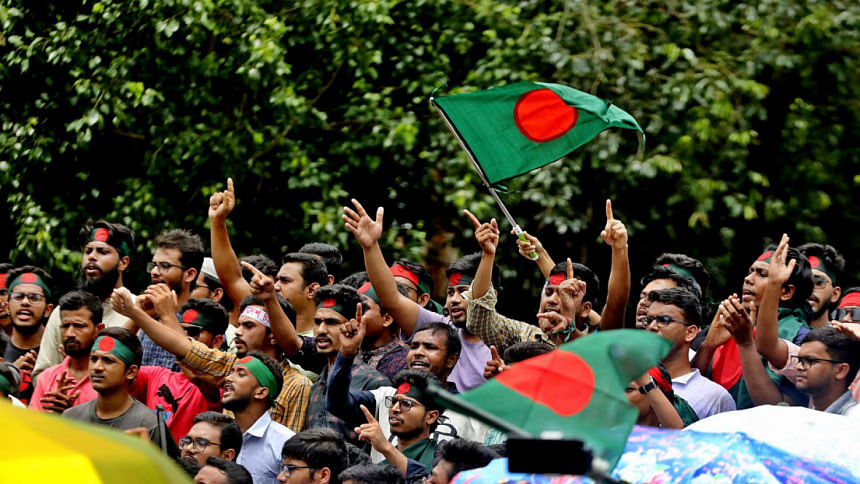
সরকার ঐতিহাসিক দিবস মুছে ফেলার প্রয়াসে এবং ঐতিহাসিক স্মৃতিচিহ্ন ধ্বংস করার সুযোগ করে দিয়েছে আর কিছু সংবাদপত্র বা মিডিয়া এ বিষয়ে চুপ থেকেছে। সরকার থেকেও এসব ধ্বংস কার্যক্রম ফ্যাসিবাদের প্রতি ক্ষোভের বহিঃপ্রকাশ বলে ন্যায্যতা দেওয়ার চেষ্টা করেছে। মৌলবাদী, স্বাধীনতাবিরোধী, গণতন্ত্রবিরোধী উন্মত্ত জনগোষ্ঠীকে এভাবে প্রশ্রয় দেওয়া হয়েছে। ন্যায্যতা দেওয়া, সমর্থন করা, নীরব থাকা, প্রতিবাদ না করার প্রতিক্রিয়া হচ্ছে ১৮ ডিসেম্বর প্রথম আলো, ডেইলি স্টার, ছায়ানট ও ঢাকার অন্যান্য স্থানে হামলা, ভাঙচুর, অগ্নিসংযোগ, লুটতরাজ।

যে সমাজে অন্যায়ের প্রতিবাদ হয় না, সেই সমাজ একসময় বসবাসের অযোগ্য হতে বাধ্য। আর সমাজ বসবাসের অযোগ্য হলে, যত অর্থবিত্তের মালিকই হই না কেন, বেঁচে থাকতে পারলেও, সুখ সর্বাধিক করা যাবে না।

  • এন এন তরুণ অর্থনীতির অধ্যাপক, ইনডিপেনডেন্ট ইউনিভার্সিটি বাংলাদেশ। সাউথ এশিয়া জার্নালের এডিটর অ্যাট লার্জ। nntarun@gmail.com
Innovation or Stagnation: The 2025 Economics Nobel and the Future of Bangladesh

Published in South Asia Journal. October 25, 2025

This year’s Nobel laureates in economics — Joel Mokyr, Philippe Aghion, and Peter Howitt — received the prize for their research on, among other things, creative destruction. The idea that “destruction” itself can be creative was first presented as a theory by Harvard professor Joseph Schumpeter, who remains a favorite economist of millions, including myself.

What is this theory that has been discussed by students and teachers for generations?

Its central idea is that economic growth, the evolution of capitalism, and technological progress occur through a continuous cycle in which new technologies, products, institutions, or business models replace the old ones. Schumpeter placed particular emphasis on the role of the entrepreneur. Indeed, the entrepreneur is the driving force of innovation, because, according to Schumpeter, it is the entrepreneur who breaks down existing structures and reorganizes resources in new and more productive ways.

He considered the capitalist economy to be inherently dynamic. According to him, progress depends on continuous change — the decline of old industries, the emergence of new ones, and the replacement of outdated methods. Although this process is creative, it also has destructive aspects. Schumpeter warned of its negative consequences — such as economic instability, worker displacement, and political resistance from entrenched interest groups. Notably, these symptoms are now visible in Bangladesh.

Schumpeter elaborated on these ideas in his famous book Capitalism, Socialism and Democracy. In the same work, he also argued that capitalism would ultimately destroy itself as it evolved. He reasoned that the socio-psychological foundations of capitalism would gradually erode and eventually vanish. In this sense, his words seem to echo those of Karl Marx.

However, the causes he identified were different from Marx’s. Schumpeter argued that capitalist institutions, bureaucracies, and vested interests typically resist change. He further predicted that bureaucracy would eventually dominate industrial enterprises, diminishing the spirit of innovation. Massive inequality, he warned, would emerge — leading to public resistance and, consequently, increased state control and regulation. In other words, capitalism would meet its demise. Thus, Schumpeter suggested that the real challenge lies in sustaining the vitality and dynamism of innovation while skillfully managing its destructive outcomes. The downfall of capitalism, though undesirable, is an inevitable fate.

What did he say about socialism? He did not support Marx’s revolutionary communism, but he believed that through democratic and bureaucratic evolution — and due to the instability created by capitalism’s creative destruction — a form of socialism would gradually replace capitalism. This transformation, he argued, would occur peacefully. However, Schumpeter was skeptical about the efficiency of socialism. In his view, innovation under socialism would not be as dynamic as in capitalism, and the system would lack entrepreneurial energy.

The 2025 Nobel Prize in Economics was awarded “for explaining innovation-driven economic growth.” One part of the prize went to Joel Mokyr, while the other was jointly awarded to Philippe Aghion and Peter Howitt.

Mokyr identified the preconditions for sustained growth through technological progress. His research demonstrated how creative destruction becomes possible — what conditions allow innovations to build upon one another, and which social, cultural, and institutional factors sustain innovation over centuries. In particular, he showed that a knowledge-based culture, institutions that encourage freedom of exchange, and a mindset open to risk-taking are all crucial. Without these, the process of innovation can stagnate.

Philippe Aghion and Peter Howitt, in their model, explained how sustained growth can occur through Schumpeter’s theory of creative destruction. They transformed qualitative insights into a precise and analytically testable framework. These models help us understand how innovation generates growth from within the economy, how old institutions are displaced, how competition stimulates innovation, and how economic policies, institutions, and market structures influence this dynamism. The central premise of their theory is that growth emerges from a continuous cycle of innovation and destruction.

The Royal Swedish Academy awarded the prize to these three economists “for explaining innovation-driven economic growth.” The Academy noted that their work demonstrates that “economic growth cannot be taken for granted; it requires continuous effort,” and that “to avoid stagnation, the processes underpinning creative destruction must be kept alive.” They also explained how new products and discoveries accelerate economic growth.

To grasp the true significance of this Nobel-winning research, we must see how it builds upon Schumpeter’s original theory. Schumpeter’s framework was primarily philosophical and conceptual. Aghion and Howitt placed his ideas within a formal mathematical structure, allowing for quantitative analysis. Mokyr, on the other hand, added historical and institutional depth — exploring the long-term social, cultural, and scientific factors that make creative destruction possible. He identified the essential preconditions for sustaining innovation, encompassing cultural, institutional, and scientific dimensions.

The new research helps us understand which policies stimulate innovation and what their potential drawbacks are — for instance, how to preserve competition, how to design patent systems, how to address resistance from incumbents, and how institutions can remain open to new ideas. In this sense, their work represents a major advancement beyond Schumpeter’s original theory.

They also integrated Schumpeter’s ideas with more contemporary issues such as globalization, trade, openness, and the challenges of stagnation. The 2025 Nobel laureates’ research offers deep insights into why some economies, despite having access to technology, become stagnant or fail to innovate.

The celebrated 1992 article by economists Philippe Aghion and Peter Howitt, “A Model of Growth through Creative Destruction,” marked the birth of modern Schumpeterian growth theory. Through it, they transformed Schumpeter’s qualitative insights into a formal theoretical model. According to their framework, growth arises from a continuous process of innovation, in which new products and processes replace old and inefficient ones.

In earlier exogenous growth models, technological progress was treated as an external factor. Aghion and Howitt, however, made it endogenous — that is, driven by deliberate efforts and incentives. Firms invest in research and development to gain temporary monopoly power, but once superior technologies emerge, the old ones are replaced. Progress thus occurs through competition among innovators — a perpetual race in which success may be short-lived, yet society as a whole benefits from it.

While Aghion and Howitt presented the mechanics of innovation through formal models, economic historian Joel Mokyr explored its spirit. In his books The Lever of Riches and A Culture of Growth, Mokyr asked two profound questions: Why did the Industrial Revolution occur in Europe — and why did it endure? After years of research, he found his answer. He discovered that the Industrial Revolution was not merely a revolution in markets or machinery, but a revolution in thought, mindset, and culture.

According to Mokyr, Europe’s economic transformation emerged from a unique cultural and intellectual environment — one that valued curiosity, experimentation, and rational inquiry. The so-called “Republic of Letters” — a transnational network of scholars, scientists, and inventors across Europe — allowed knowledge to flow freely across borders. This openness gave rise to what Mokyr calls “the Industrial Enlightenment,” a period when scientific discovery and technological innovation began to reinforce one another.

For Mokyr, innovation is not merely an economic activity; it is a cultural institution. Progress occurs when a society rewards new ideas and tolerates the uncertainty that accompanies them. But where imitation, censorship, or fear of failure prevail, the light of creativity fades. His research offers a profound historical lesson: for sustainable growth, capital and labor alone are not enough — a thriving ecosystem of freedom, trust, and intellectual openness is equally essential.

What can Bangladesh learn from this research? The country’s garments industry has been the cornerstone of its industrialization. However, to remain competitive, it must increasingly rely on automation, design innovation, and environmentally sustainable production methods. Similarly, the rise of Bangladesh’s digital economy — from e-commerce to IT services — requires preparing young entrepreneurs to innovate.

Bangladesh’s growth model, driven by cheap labor and export-oriented production, though impressive, cannot be sustained indefinitely. The challenge now is to foster innovation-driven growth — one that depends not merely on physical infrastructure, but on creating an environment where creativity, experimentation, and entrepreneurial spirit can flourish.

Innovation or stagnation: The 2025 Economics Nobel & future of developing economies

Published on The finacial Express 25 October, 2025

This year’s Nobel Prize in Economics awarded to Joel Mokyr, Philippe Aghion, and Peter Howitt signifies recognition of substantial advancements in the field of innovation-driven economic growth. Their research is anchored in the concept of creative destruction, a theoretical framework first articulated by Joseph Schumpeter, a Harvard professor whose influence persists across generations of economists and scholars.

Schumpeter’s theory of creative destruction says that economic development, capitalist evolution, and technological progress materialise through a perpetual cycle of replacement, whereby emergent technologies, products, institutions, and business models supersede those that are obsolete. Central to this theoretical construct is the entrepreneur, whom Schumpeter identifies as the principal agent of innovation. Entrepreneurs disrupt entrenched structures and reallocate resources toward more productive uses, thereby catalysing economic transformation.

Schumpeter described capitalism as a system driven by constant change, where old industries fade, new ones emerge, and economic methods keep evolving. This process fuels innovation but also brings disruption—causing instability, job losses, and resistance from those who benefit from the old order. Similar patterns can be seen in today’s Bangladeshi economy.

In his seminal work, Capitalism, Socialism and Democracy, Schumpeter elaborated upon the mechanisms through which capitalism may ultimately undermine itself. He theorised that the socio-psychological underpinnings of capitalism would gradually erode, culminating in the system’s eventual dissolution—a perspective that exhibits conceptual resonance with Karl Marx,. Specifically, Schumpeter contended that institutional inertia, bureaucratic expansion, and entrenched interests hinder adaptive change, and predicted that bureaucratisation would supplant entrepreneurial vigour, thereby diminishing innovation. He further anticipated that pronounced inequality would incite public resistance, engendering expanded state intervention and regulatory frameworks, and thus precipitating the demise of capitalism.

For Schumpeter, the principal challenge lies in sustaining the dynamism of innovation while judiciously managing its destructive externalities. He regarded the eventual decline of capitalism as an inevitable, though undesirable, outcome.

Regarding socialism, Schumpeter did not support Marxian revolutionary communism; instead, he predicted that the instability generated by creative destruction, coupled with democratic and bureaucratic evolution, would facilitate a gradual and peaceful transition to a form of socialism. Nevertheless, he was sceptical about socialism’s capacity for innovation, arguing that the absence of entrepreneurial incentives would impede the system’s creative potential.

The 2025 Nobel Prize in Economics was conferred in recognition of research elucidating the mechanisms underpinning innovation-driven economic growth. Joel Mokyr identified the prerequisites for sustained technological advancement, demonstrating how creative destruction is contingent upon specific cultural, social, and institutional conditions. Mokyr emphasised the necessity of a knowledge-oriented culture, institutions that promote the free exchange of ideas, and a societal disposition conducive to risk-taking. Absent these factors, innovation is liable to stagnate.

Aghion and Howitt advanced Schumpeterian theory by constructing formal, analytically robust models that explicate how endogenous innovation engenders sustained economic growth. Their framework delineates the displacement of established institutions, the role of competition in stimulating innovation, and the influence of policy, institutional architecture, and market structure on economic dynamism. The central thesis posits that growth is the product of a continuous, self-renewing cycle of innovation and obsolescence.

The Royal Swedish Academy honoured the three economists “for explaining innovation-driven economic growth.” In its statement, the Academy stressed that economic growth is never automatic — it demands constant effort — and warned that “to prevent stagnation, the forces behind creative destruction must be kept alive.” Their collective research shows how new ideas, products, and discoveries can accelerate growth.

To appreciate the full importance of this Nobel-winning work, it must be viewed in relation to Schumpeter’s original theory. Schumpeter’s ideas were largely philosophical and conceptual. Aghion and Howitt transformed them into a formal mathematical model, enabling empirical and quantitative analysis. Mokyr complemented this by providing historical and institutional context, examining the long-term cultural, social, and scientific foundations that sustain innovation and make creative destruction possible.

The recent research deepens our understanding of which policies effectively promote innovation and what trade-offs they entail — such as how to maintain competition, design patent systems, overcome resistance from established firms, and ensure that institutions stay receptive to new ideas. In this respect, their work significantly extends Schumpeter’s original theory.

They also connected Schumpeter’s concepts to modern issues like globalisation, trade, openness, and the risk of economic stagnation. The 2025 Nobel laureates’ contributions shed light on why some economies, even with access to advanced technology, struggle to innovate or experience prolonged stagnation.

The landmark 1992 paper by Philippe Aghion and Peter Howitt, “A Model of Growth through Creative Destruction,” marked the foundation of modern Schumpeterian growth theory. It translated Schumpeter’s qualitative insights into a formal theoretical framework, showing that economic growth emerges from a continuous cycle of innovation in which new products and processes replace out dated and inefficient ones.

Earlier exogenous growth models treated technological progress as something that occurred outside the economic system. Aghion and Howitt, however, made it an internal—or endogenous—process, driven by purposeful actions and incentives. Firms invest in research and development to gain temporary monopoly advantages, but as better technologies emerge, older ones are displaced. Growth, therefore, results from on-going competition among innovators — a relentless race in which individual success is fleeting, yet society as a whole advances.

While Aghion and Howitt explained the mechanics of innovation through formal modeling, economic historian Joel Mokyr examined its underlying spirit. In his influential works The Lever of Riches and A Culture of Growth, Mokyr posed two fundamental questions: Why did the Industrial Revolution begin in Europe, and why did it persist? After extensive research, he concluded that the revolution was not merely economic or technological—it was intellectual and cultural.

Mokyr argued that Europe’s transformation was born from a distinct cultural and intellectual climate that celebrated curiosity, experimentation, and rational inquiry. The “Republic of Letters”—a transnational community of scholars, scientists, and inventors—enabled knowledge to circulate freely across borders. This openness fostered what Mokyr terms the “Industrial Enlightenment,” an era in which scientific progress and technological innovation became mutually reinforcing.

For Mokyr, innovation is more than an economic process — it is a cultural institution. Progress thrives when societies value fresh ideas and accept the risks that come with them. But when imitation, censorship, or fear of failure dominate, creativity withers. His work offers a timeless lesson: sustainable growth requires more than capital and labour — it also depends on a vibrant culture of freedom, trust, and intellectual openness.

What lessons should the developing countries like Bangladesh extract from the theories of this year’s Nobel Laureates? Bangladesh’s garment industry has long been the foundation of its industrial success. Yet, to stay competitive, it must increasingly embrace automation, design innovation, and environmentally responsible production. Likewise, the expansion of Bangladesh’s digital economy — from e-commerce to IT services — hinges on empowering young entrepreneurs to think creatively and innovate.

Bangladesh’s growth model, built on low-cost labour and export-led production, has achieved remarkable progress but cannot endure forever. The next phase of development must focus on innovation-driven growth — one that rests not only on physical infrastructure, but also on cultivating an environment where creativity, experimentation, and entrepreneurship can truly thrive.
Dr N N Tarun Chakravorty is a Professor of Economics at Independent University, Bangladesh. Editor-At-Large, South Asia Journal. nntarun@gmail.com

When Destruction Becomes Creative: The Big Ideas Behind The 2025 Nobel In Economics – OpEd

Published in EURASIA REVIEW 22 October, 2025

This year’s Nobel laureates in economics — Joel Mokyr, Philippe Aghion, and Peter Howitt — received the prize for their research on, among other things, creative destruction. The idea that “destruction” itself can be creative was first presented as a theory by Harvard professor Joseph Schumpeter, who remains a favorite economist of millions, including myself.

What is this theory that has been discussed by students and teachers for generations?

Its central idea is that economic growth, the evolution of capitalism, and technological progress occur through a continuous cycle in which new technologies, products, institutions, or business models replace the old ones. Schumpeter placed particular emphasis on the role of the entrepreneur. Indeed, the entrepreneur is the driving force of innovation, because, according to Schumpeter, it is the entrepreneur who breaks down existing structures and reorganizes resources in new and more productive ways.

He considered the capitalist economy to be inherently dynamic. According to him, progress depends on continuous change — the decline of old industries, the emergence of new ones, and the replacement of outdated methods. Although this process is creative, it also has destructive aspects. Schumpeter warned of its negative consequences — such as economic instability, worker displacement, and political resistance from entrenched interest groups. Notably, these symptoms are now visible in Bangladesh.

Schumpeter elaborated on these ideas in his famous book Capitalism, Socialism and Democracy. In the same work, he also argued that capitalism would ultimately destroy itself as it evolved. He reasoned that the socio-psychological foundations of capitalism would gradually erode and eventually vanish. In this sense, his words seem to echo those of Karl Marx.

However, the causes he identified were different from Marx’s. Schumpeter argued that capitalist institutions, bureaucracies, and vested interests typically resist change. He further predicted that bureaucracy would eventually dominate industrial enterprises, diminishing the spirit of innovation. Massive inequality, he warned, would emerge — leading to public resistance and, consequently, increased state control and regulation. In other words, capitalism would meet its demise. Thus, Schumpeter suggested that the real challenge lies in sustaining the vitality and dynamism of innovation while skillfully managing its destructive outcomes. The downfall of capitalism, though undesirable, is an inevitable fate.

What did he say about socialism? He did not support Marx’s revolutionary communism, but he believed that through democratic and bureaucratic evolution — and due to the instability created by capitalism’s creative destruction — a form of socialism would gradually replace capitalism. This transformation, he argued, would occur peacefully. However, Schumpeter was skeptical about the efficiency of socialism. In his view, innovation under socialism would not be as dynamic as in capitalism, and the system would lack entrepreneurial energy.

The 2025 Nobel Prize in Economics was awarded “for explaining innovation-driven economic growth.” One part of the prize went to Joel Mokyr, while the other was jointly awarded to Philippe Aghion and Peter Howitt.

Mokyr identified the preconditions for sustained growth through technological progress. His research demonstrated how creative destruction becomes possible — what conditions allow innovations to build upon one another, and which social, cultural, and institutional factors sustain innovation over centuries. In particular, he showed that a knowledge-based culture, institutions that encourage freedom of exchange, and a mindset open to risk-taking are all crucial. Without these, the process of innovation can stagnate.

Philippe Aghion and Peter Howitt, in their model, explained how sustained growth can occur through Schumpeter’s theory of creative destruction. They transformed qualitative insights into a precise and analytically testable framework. These models help us understand how innovation generates growth from within the economy, how old institutions are displaced, how competition stimulates innovation, and how economic policies, institutions, and market structures influence this dynamism. The central premise of their theory is that growth emerges from a continuous cycle of innovation and destruction.

The Royal Swedish Academy awarded the prize to these three economists “for explaining innovation-driven economic growth.” The Academy noted that their work demonstrates that “economic growth cannot be taken for granted; it requires continuous effort,” and that “to avoid stagnation, the processes underpinning creative destruction must be kept alive.” They also explained how new products and discoveries accelerate economic growth.

To grasp the true significance of this Nobel-winning research, we must see how it builds upon Schumpeter’s original theory. Schumpeter’s framework was primarily philosophical and conceptual. Aghion and Howitt placed his ideas within a formal mathematical structure, allowing for quantitative analysis. Mokyr, on the other hand, added historical and institutional depth — exploring the long-term social, cultural, and scientific factors that make creative destruction possible. He identified the essential preconditions for sustaining innovation, encompassing cultural, institutional, and scientific dimensions.

The new research helps us understand which policies stimulate innovation and what their potential drawbacks are — for instance, how to preserve competition, how to design patent systems, how to address resistance from incumbents, and how institutions can remain open to new ideas. In this sense, their work represents a major advancement beyond Schumpeter’s original theory.

They also integrated Schumpeter’s ideas with more contemporary issues such as globalization, trade, openness, and the challenges of stagnation. The 2025 Nobel laureates’ research offers deep insights into why some economies, despite having access to technology, become stagnant or fail to innovate.

The celebrated 1992 article by economists Philippe Aghion and Peter Howitt, “A Model of Growth through Creative Destruction,” marked the birth of modern Schumpeterian growth theory. Through it, they transformed Schumpeter’s qualitative insights into a formal theoretical model. According to their framework, growth arises from a continuous process of innovation, in which new products and processes replace old and inefficient ones.

In earlier exogenous growth models, technological progress was treated as an external factor. Aghion and Howitt, however, made it endogenous — that is, driven by deliberate efforts and incentives. Firms invest in research and development to gain temporary monopoly power, but once superior technologies emerge, the old ones are replaced. Progress thus occurs through competition among innovators — a perpetual race in which success may be short-lived, yet society as a whole benefits from it.

While Aghion and Howitt presented the mechanics of innovation through formal models, economic historian Joel Mokyr explored its spirit. In his books The Lever of Riches and A Culture of Growth, Mokyr asked two profound questions: Why did the Industrial Revolution occur in Europe — and why did it endure? After years of research, he found his answer. He discovered that the Industrial Revolution was not merely a revolution in markets or machinery, but a revolution in thought, mindset, and culture.

According to Mokyr, Europe’s economic transformation emerged from a unique cultural and intellectual environment — one that valued curiosity, experimentation, and rational inquiry. The so-called “Republic of Letters” — a transnational network of scholars, scientists, and inventors across Europe — allowed knowledge to flow freely across borders. This openness gave rise to what Mokyr calls “the Industrial Enlightenment,” a period when scientific discovery and technological innovation began to reinforce one another.

For Mokyr, innovation is not merely an economic activity; it is a cultural institution. Progress occurs when a society rewards new ideas and tolerates the uncertainty that accompanies them. But where imitation, censorship, or fear of failure prevail, the light of creativity fades. His research offers a profound historical lesson: for sustainable growth, capital and labor alone are not enough — a thriving ecosystem of freedom, trust, and intellectual openness is equally essential.

What can Bangladesh learn from this research? The country’s garments industry has been the cornerstone of its industrialization. However, to remain competitive, it must increasingly rely on automation, design innovation, and environmentally sustainable production methods. Similarly, the rise of Bangladesh’s digital economy — from e-commerce to IT services — requires preparing young entrepreneurs to innovate.

Bangladesh’s growth model, driven by cheap labor and export-oriented production, though impressive, cannot be sustained indefinitely. The challenge now is to foster innovation-driven growth — one that depends not merely on physical infrastructure, but on creating an environment where creativity, experimentation, and entrepreneurial spirit can flourish.

Dr. N N Tarun Chakravorty

Dr. N N Tarun Chakravorty is a Visiting Professor of Economics at Siberian Federal University, Russia. Editor-At-Large, South Asia Journal. He has studied Economics at The University of Leeds, London School of Economics and The University of Bath. As an economist has presented papers in several conferences arranged by Royal Economic Society, American Economic Association, UK-based Development Studies Association, Canadian Economics Association, Asia Pacific Region, Economic Congress of Russia etc.

রাজনীতির ব্যাকরণ

একটি টক শোতে বিএনপি নেত্রী ব্যারিস্টার রুমিন ফারহানাকে যা বলতে শুনলাম, তার সারমর্ম এ রকম: বাংলাদেশে এখন একজন রাজনীতিকের ইমেজ হলো ক্লাস ফাইভ পাস, উঠতি লোকাল মাস্তান থেকে বড় মাস্তান, তারপর জাতীয় পর্যায়ের মাস্তান। চাঁদাবাজির রেট অনেক হাই। দুই নম্বরি ব্যবসা থেকে বিশাল টাকার মালিক। তারপর এমপি এবং একসময় হয়তো মন্ত্রী।

জানা কথা হলেও নতুন করে মন বিষণ্ন হলো। অথচ এই দেশেও একদা রাজনীতি ছিল শিক্ষিত, ত্যাগী ও মানবিক মানুষের ব্রত। কোথায়, কীভাবে হারিয়ে গেল সেই সব দিন? এমন চিন্তা থেকেই ‘রাজনীতিক’দের জন্য লিখতে ইচ্ছা হলো। জানি, প্লেটো-কাঙ্ক্ষিত ‘ফিলোসফার কিং’ আমাদের এ পোড়ার দেশে কখনোই হবে না। তবুও ভালো রাজনীতির কথা নিরন্তর বলে যেতে হবে, লিখে যেতে হবে।

বিংশ শতাব্দীর দ্বিতীয় ও তৃতীয় দশকে মানব ইতিহাসের সবচেয়ে গুরুত্বপূর্ণ ঘটনাগুলো ঘটে, যেমন প্রথম বিশ্বযুদ্ধ, ভার্সাই চুক্তি, রুশ বিপ্লব ও সমাজতন্ত্রের সূচনা, ইতালিতে মুসোলিনির আবির্ভাব ও দুনিয়াব্যাপী ফ্যাসিজমের উত্থান, মহামন্দা, ব্রিটিশ সাম্রাজ্যের ক্ষয়িষ্ণু প্রবণতা যা ইন্ডিয়া অ্যাক্টে প্রতিফলিত, ব্রিটিশ রাজনীতিতে লেবার পার্টির উত্থান ও শ্রমিকের অধিকার রক্ষার দিকে মনঃসংযোগ। এরই প্রেক্ষাপটে ব্রিটিশ দার্শনিক ও রাষ্ট্রবিজ্ঞানী হেরাল্ড লাস্কির চিন্তাজগতে ঘটে এক বিস্ময়কর বৈপ্লবিক পরিবর্তন। ১৯২৫ সালে লাস্কি রচিত মহাগ্রন্থ গ্রামার অব পলিটিকস এসব বৈশ্বিক ঘটনাবলির ও লাস্কি চিন্তাজগতের পরিবর্তনেরই প্রতিফলন।

লাস্কি এই গ্রন্থে রাষ্ট্র, সার্বভৌমত্ব, অধিকার, স্বাধীনতা এবং গণতন্ত্রের প্রকৃতি নিয়ে সমালোচনামূলক বিশ্লেষণ করেন। তিনি রাজনৈতিক কর্তৃত্বের একটি বহুবিধ ধারণা এবং এমন একটি সমাজতান্ত্রিক অর্থনৈতিক কাঠামোর পক্ষে যুক্তি উপস্থাপন করেন, যা সামাজিক ন্যায়বিচার ও অর্থনৈতিক সমতার ওপর গুরুত্ব দেয়।

লাস্কি রাষ্ট্রীয় সার্বভৌমত্বের প্রচলিত ধারণাকে চ্যালেঞ্জ করেন। বলেন, ক্ষমতা রাষ্ট্রে কেন্দ্রীভূত না হয়ে বিভিন্ন সামাজিক প্রতিষ্ঠানের মধ্যে বণ্টিত হওয়া উচিত। তিনি হবস এবং অস্টিন উত্থাপিত আইনি সার্বভৌমত্বের ধারণার সমালোচনা করেন। এর পরিবর্তে তিনি সার্বভৌমত্বের একটি বহুত্ববাদী ধারণা প্রকাশ করেন। তিনি বলেন, রাষ্ট্রের পাশাপাশি একাধিক কর্তৃত্বের কেন্দ্র (যেমন শ্রমিক ইউনিয়ন, পেশাগত সংগঠন, স্থানীয় সরকার এবং ধর্মীয় প্রতিষ্ঠান) রাজনৈতিক জীবনে গুরুত্বপূর্ণ ভূমিকা পালন করে। এসব কর্তৃত্বকেন্দ্রের সহাবস্থানের প্রয়োজনীয়তার কথা বলেন তিনি।

তাঁর মতে, রাষ্ট্রই একমাত্র কর্তৃত্বের উৎস নয়। রাষ্ট্র বরং এমন একটি প্রতিষ্ঠান, যা অন্যদের সঙ্গে মিলেই শাসনব্যবস্থায় অংশগ্রহণ করে। লাস্কির এই বহুত্ববাদী দৃষ্টিভঙ্গি জি ডি এইচ কোল এবং লিয়ন দুগুইয়ের মতো চিন্তাবিদদের দ্বারা প্রভাবিত। তাঁরা মনে করতেন সমাজের বিভিন্ন প্রতিষ্ঠানের মধ্যে ক্ষমতা বণ্টন করা জরুরি, যেন স্বেচ্ছাচারিতা ও দমন-পীড়ন ঠেকানো যায়।

লাস্কি জোর দিয়ে বলেন, সরকারের কাজ শুধু আইনশৃঙ্খলা রক্ষা করা নয়। সরকারের প্রধান কাজ হলো সবার জন্য কল্যাণ নিশ্চিত করা। তিনি বৈষম্য মোকাবিলায় অর্থনৈতিক নিয়ন্ত্রণ ও সামাজিক ন্যায়বিচারে রাষ্ট্রের সক্রিয় ভূমিকার পক্ষে মত দেন। লাস্কি বলেন, রাষ্ট্রের কর্তৃত্ব নিরঙ্কুশ নয় এবং তা সামাজিক ও অর্থনৈতিক বিবেচনার মাধ্যমে সীমাবদ্ধ হওয়া উচিত। তিনি সতর্ক করেন, একটি অনিয়ন্ত্রিত রাষ্ট্র সার্বভৌমত্বের নামে ব্যক্তিস্বাধীনতা দমন করতে পারে। এর পরিবর্তে তিনি এমন একটি বিকেন্দ্রীকৃত শাসনব্যবস্থার কথা বলেন, যেখানে একাধিক প্রতিষ্ঠান সম্মিলিতভাবে কর্তৃত্ব ভাগ করে নেয়। তিনি অনিয়ন্ত্রিত পুঁজিবাদ তথা বাজার অর্থনীতির সমালোচনা করেন। কারণ, এটি অর্থনৈতিক বৈষম্য ও সামাজিক অন্যায্যতার সৃষ্টি করে। তাঁর মতে, সরকারের উচিত শ্রমজীবী শ্রেণির স্বার্থ রক্ষার জন্য হস্তক্ষেপ করা।

লাস্কি তাঁর বইয়ে ব্যক্তিস্বাধীনতার একটি নতুন তত্ত্ব উপস্থাপন করেন। কেবলমাত্র রাষ্ট্রের হস্তক্ষেপের অনুপস্থিতিই ব্যক্তিস্বাধীনতা নয়; বরং ন্যায়ভিত্তিক সমাজে ব্যক্তির সম্ভাবনা বিকাশের সামর্থ্য হিসেবে তিনি ব্যক্তিস্বাধীনতাকে সংজ্ঞায়িত করেন। তিনি অর্থনৈতিক বৈষম্যকে স্বাধীনতার জন্য একটি মৌলিক হুমকি হিসেবে দেখেন এবং বলেন, অর্থনৈতিক নিরাপত্তা ছাড়া রাজনৈতিক অধিকার অর্থহীন। কারণ, বৈষম্য গরিব ও শ্রমজীবী শ্রেণির জন্য সুযোগ সীমিত করে দেয়।

লাস্কি স্বাধীনতাকে দুটি ভাগে ভাগ করেন—আনুষ্ঠানিক স্বাধীনতা ও বাস্তব স্বাধীনতা। আনুষ্ঠানিক স্বাধীনতার মধ্যে রয়েছে আইনি ও রাজনৈতিক অধিকার। যেমন মতপ্রকাশের স্বাধীনতা, ভোটাধিকার, ও আইনের সুরক্ষা। বাস্তব স্বাধীনতা এমন সামাজিক ও অর্থনৈতিক শর্তের কথা বলে, যা ব্যক্তিকে তাঁর অধিকারগুলো অর্থবহভাবে প্রয়োগ করতে সক্ষম করে। অর্থনৈতিক নিরাপত্তা না থাকলে আনুষ্ঠানিক স্বাধীনতা অর্থহীন হয়ে পড়ে। একটি উদাহরণ দিয়ে লাস্কি ধারণাটি ব্যাখ্যা করেন: ভোটাধিকার আছে এমন একজন দরিদ্র মানুষের যদি যথাযথ শিক্ষা, স্বাস্থ্যসেবা বা ন্যায্য মজুরি না থাকে, তাহলে প্রকৃতপক্ষে তিনি স্বাধীন নন।

লাস্কির এই বক্তব্য বাংলাদেশের জন্য খুব প্রাসঙ্গিক। এখানে প্রত্যেক নাগরিকের ভোটাধিকার আছে। কিন্তু গরিব মানুষ নিজের পছন্দের প্রার্থীকে ভোট দিতে পারেন না। সামান্য টাকার বিনিময়ে তিনি তাঁর ভোট বিক্রি করে দিতে বাধ্য হন অথবা গ্রামের মাতবর বা এলাকার প্রভাবশালী নেতার পছন্দ অনুযায়ী তিনি ভোট দিতে বাধ্য হন। কারণ, সেই মাতবর বা প্রভাবশালী নেতা তাঁকে ‘বিপদে’ রক্ষা করেন, প্রয়োজনের সময় কিছু টাকাপয়সা দেন এবং এক সময় জমি বা ভিটা লিখে নেন।

৭৫ বছর পরে এসে অমর্ত্য সেন স্বাধীনতাকে নতুনভাবে ব্যাখ্যা করেছেন। নেগেটিভ ফ্রিডম, পজিটিভ ফ্রিডম। স্কুলে যাওয়ার অধিকারকে প্রফেসর সেন নেগেটিভ ফ্রিডম বলছেন। এখানে রাষ্ট্রের, সংগঠনের বা ব্যক্তির কাছে থেকে বাধা নেই, কিন্তু বাধা না থাকাই যথেষ্ট নয়। যাঁর স্কুলের বেতন দেওয়ার, বই কেনার টাকা নেই, সে এই স্বাধীনতা কী করবে? সে জন্য তিনি বলছেন, নেগেটিভ ফ্রিডম হলো প্রয়োজনীয় শর্ত; কিন্তু পর্যাপ্ত শর্ত নয়। পজিটিভ ফ্রিডমের মানে হলো আপনি যা মূল্যবান মনে করেন, তা করার বা হওয়ার বাস্তব সক্ষমতা থাকা। এটি শুধু স্বাধীনভাবে থাকতে পারার বিষয় নয়, এটি ক্ষমতায়নের বিষয়।

সেনের ক্যাপাবিলিটি অ্যাপ্রোচ তথা ক্ষমতাপদ্ধতিতে বিবৃত ‘ক্ষমতাসম্পন্ন স্বাধীনতা’র ধারণা আরও গভীর। এটা ব্যাখ্যা করতে তিনি ‘বাস্তব স্বাধীনতা’ শব্দটি ব্যবহার করেন। ব্যক্তি যে ধরনের জীবনকে মূল্যবান মনে করে, সেই জীবনযাপন করার সক্ষমতাই বাস্তব তথা কার্যকর স্বাধীনতা। তিনি জোর দিয়ে বলেন, স্বাধীনতা কেবল অধিকার থাকার বিষয় নয়; বরং সেই অধিকারগুলোকে অর্থবহভাবে ব্যবহার করার উপায় ও পরিবেশ থাকাও জরুরি। যেমন শিক্ষা, স্বাস্থ্যসেবা এবং সামাজিক সহায়তা।

গণতন্ত্রের দৃঢ় সমর্থক লাস্কি পুঁজিবাদী গণতন্ত্রের সমালোচনা করেন। কারণ, পুঁজিবাদী গণতন্ত্রে অর্থনৈতিক ক্ষমতা অভিজাত ও পুঁজিপতি শ্রেণির হাতে কেন্দ্রীভূত থাকে, তাঁরা সম্পদের ওপর নিয়ন্ত্রণ রাখে আর সংখ্যাগরিষ্ঠ মানুষ জীবনধারণের জন্য সংগ্রাম করে। এভাবে পুঁজিবাদ শ্রেণি বিভাজন সৃষ্টি করে। এ জন্যই তিনি এই ব্যবস্থাকে অন্যায্য মনে করেন এবং বিশ্বাস করেন, অর্থনৈতিক ক্ষমতার আরও ন্যায্য বণ্টন প্রয়োজন।

লাস্কির মতে, প্রকৃত গণতন্ত্র তখনই সম্ভব, যখন রাজনৈতিক ও অর্থনৈতিক ক্ষমতা সমানভাবে বণ্টিত হয়। গণতান্ত্রিক প্রতিষ্ঠানগুলোকে অংশগ্রহণমূলক এবং শ্রমজীবী শ্রেণির চাহিদার প্রতি সাড়া দেওয়ার মতো হতে হবে। তিনি সতর্ক করেন, যদি না অর্থনৈতিক ক্ষমতার গণতন্ত্রীকরণ হয়, তবে রাজনৈতিক গণতন্ত্র কার্যকর হয় না। লাস্কি এমন এক অংশগ্রহণমূলক গণতন্ত্রের পক্ষে কথা বলেন, যেখানে শ্রমিক ও প্রান্তিক জনগোষ্ঠীর সিদ্ধান্ত গ্রহণ প্রক্রিয়ায় বেশি অংশগ্রহণ থাকবে। তিনি বিশ্বাস করেন যে নির্বাচনের বাইরে গণতান্ত্রিক অনুশীলনের সম্প্রসারণ দরকার এবং কর্মক্ষেত্রে গণতন্ত্র ও ট্রেড ইউনিয়নের অংশগ্রহণ একটি ন্যায়সংগত সমাজ গঠনে গুরুত্বপূর্ণ।

লাস্কি এমন একটি সমাজতান্ত্রিক কাঠামোর পক্ষে যেখানে অর্থনৈতিক সম্পদ ব্যক্তিগত স্বার্থের দ্বারা নয়; বরং গণতান্ত্রিকভাবে নিয়ন্ত্রিত হয়। তিনি পুঁজিবাদকে স্বভাবতই শোষণমূলক হিসেবে দেখেন এবং ন্যায় ও সমতা নিশ্চিত করতে প্রধান শিল্পগুলোর যৌথ মালিকানার প্রয়োজনীয়তা বিশ্বাস করেন। তিনি এমন একটি বিশ্বের রূপকল্প রচনা করেন, যেখানে রাষ্ট্রগুলো আন্তর্জাতিক সংস্থার মাধ্যমে সংঘাতের সমাধানে সহযোগিতা করে। তিনি যুদ্ধ ও অর্থনৈতিক শোষণ রোধে বৈশ্বিক শাসনকাঠামোর পক্ষে সমর্থন জানান।

রবীন্দ্রনাথের মতো হেরাল্ড লাস্কিও জাতীয়তাবাদের বিপদ সম্পর্কে আমাদের সতর্ক করেন। তাঁর পর্যবেক্ষণ হলো, জাতীয়তাবাদ প্রায়ই সংঘাত ও যুদ্ধের দিকে নিয়ে যায়। তিনি এমন একটি বিশ্ব কল্পনা করেন, যেখানে রাষ্ট্রগুলো বিরোধ মীমাংসা ও অর্থনৈতিক সমতা এবং শান্তির মতো যৌথ লক্ষ্য অর্জনের জন্য পারস্পরিক সহযোগিতা করবে। তিনি এমন আন্তর্জাতিক প্রতিষ্ঠানের প্রতিষ্ঠাকে সমর্থন করেন, যেগুলো বাণিজ্য, শ্রমমান ও মানবাধিকারের নিয়মনীতি নির্ধারণ করবে। তাঁর মতে, শক্তিশালী দেশগুলোর অর্থনৈতিক শোষণকে আন্তর্জাতিক সমাজতান্ত্রিক আন্দোলনের মাধ্যমে চ্যালেঞ্জ করা প্রয়োজন।

সাম্রাজ্যবাদ-উপনিবেশবাদের কঠোর সমালোচক, প্রফেসর লাস্কি যখন বলেন ‘সাম্রাজ্যবাদ-উপনিবেশবাদ পুঁজিবাদী শোষণের সম্প্রসারিত রূপ’, তখন তার মধ্যে মার্ক্সীয় তত্ত্বের প্রতিধ্বনি শোনা যায়। উপনিবেশমুক্তি ও নিপীড়িত জাতিগুলোর আত্মনিয়ন্ত্রণের অধিকারের পক্ষে লাস্কির জোরালো অবস্থান আমাদের প্রেরণা জোগায়।

লাস্কির গ্রামার অব পলিটিকস রাজনৈতিক তত্ত্বে একটি প্রভাবশালী রচনা হিসেবে বিবেচিত, যা রাষ্ট্রক্ষমতার সমালোচনা করে, বিকেন্দ্রীকৃত ও গণতান্ত্রিক শাসনব্যবস্থার পক্ষে মত দেয়, এবং সমাজতান্ত্রিক নীতির মাধ্যমে অর্থনৈতিক ও সামাজিক ন্যায় প্রতিষ্ঠার আহ্বান জানায়। তাঁর চিন্তাধারা এখনো গণতন্ত্র, সমাজতন্ত্র এবং রাজনৈতিক বহুত্ববাদ নিয়ে আলোচনায় আমাদের উদ্দীপ্ত করে।

  • এন এন তরুণ অর্থনীতির অধ্যাপক, ইনডিপেন্ডেন্ট ইউনিভার্সিটি বাংলাদেশ, সাউথ এশিয়া জার্নালের এডিটর অ্যাট লার্জ nntarun@gmail.com

Can Anti-Discrimination Student Movement Free Bangladesh From The Family Dynasty?

Plato, the proponent of the concept of state, is the right person to impart us the aim of politics. When he, in his magnum opus, ‘The Republic’, portrays his ideal state as one that ensures justice, harmony and the well-being of its citizens, we can extract that the aim of politics is to increase the wellbeing of people.

In fact, Plato’s concept of ideal state is still in line with contemporary ideas. A philosopher-king, in his ideal state theory, is one who must be an enlightened ruler with a deep understanding of the state affairs and the ability to discern absolute truth and justice. 

In the modern times, however, one may express her caveats about the use of the words, ‘king’ and ‘ruler’. Whatever be the words, the inner meaning remains the same and what stands out from Plato’s concept of ideal state is, wellbeing of the people should be the ultimate goal of politics, but when politics is dominated by family dynasties or if the state suffers from crony capitalism, wellbeing of the people is seen to be diminishing. 

The historical events that have given rise to this modern world are the Industrial Revolution, Magna Carta, Glorious Revolution of England, French Revolution, Bill of Rights enacted in the USA and Russian Revolution. The gist of all these events is the empowerment of people and in some cases transition from monarchy (centralized power to one family) to democracy (the government of the people, by the people, for the people). Why did this transition take place? The answer is to uphold people’s interest— to maximize people’s wellbeing. It means that when power is captured by one family, people’s wellbeing is never maximized. And that’s the reason why people revolted against monarchy so that opportunities that the state could provide, become open to all irrespective of caste and creed— so that people might enjoy the freedom of choice, freedom of enterprise, and thus maximize their wellbeing. 

In the states where all these revolutions took place, people’s wellbeing increased significantly after the transitions. The reason behind it is explained in Amartya Sen’s capability approach to development, which says, the development of capacities of individuals is the key to the overall human development. ‘Enhancement of Capacities’ means utilizing the potentials that already exist in humans. If individuals’ capacities were enhanced, they would be able to do anything. With a view to enhancing individuals’ capacities, the state must play a very important role by making all the necessary arrangements such as alleviating poverty, schooling etc. But in the states where the power is concentrated to one family or where crony capitalism exists, individuals’ capacities cannot be enhanced, that is, human potentials remain unutilized. 

A very important thing in this context is that human beings don’t enjoy receiving alms from others, be it, from individuals or from the state. They wish to stand on their own feet, exert their own effort, build their own enterprise and then earn their bread all by themselves. They don’t enjoy being the objects of pity from ‘Royal Families’. This important phenomenon of human nature calls for the necessity of ‘enhancement of capacities’ construed in Sen’s capability approach.

The existence of a family dynasty is dependent solely on a psychological ‘disease’ called ‘person worship’ or personality cult mostly visible in developing countries where uneducated people consider the family members or descendants of their ‘hero’ superior to themselves. Once the people start ‘worshipping’ a certain individual, they continue to ‘worship’ his or her descendants over generations. 

The families of Sheikh Mujibur Rahman and General Ziaur Rahman are two such dynasties in Bangladesh. As has already been mentioned that the level of wellbeing in a state contaminated by family dynasties is seen to be lower, but moral issues are even more crucial. That is to say that every individual, be it someone from a peasant family or someone from a rich family should be able to go to the top of the ladder in the state. Family dynasty is an absolute barrier in the path of every individual to such a rise. This means, the family dynasty creates a discriminatory, unfair and unjust society. Since the recent movement in Bangladesh which overthrew the Sheikh Hasina regime is called Anti-Discrimination Student Movement, we would expect our students with modern values ​​of modern times to adopt the agenda of abolition of the family dynasty.  

In India, Jawaharlal Nehru, due to his long tenure as the Congress Party president, became an object of personal adulation among the Indian populace. Mahatma Gandhi, the undisputed leader of India’s independence movement, benefitted even more from such personal veneration. Although Nehru never nominated his daughter Indira for leadership, she became the Congress chief and later the Prime Minister following Lal Bahadur Shastri. Most Congress Party supporters preferred a member of the Nehru family to lead them, even if that individual was less competent. For instance, when Indira took over as Prime Minister, there were leaders in Congress, such as Jagjivan Ram, who were far more qualified than Indira Gandhi.

After Indira Gandhi’s death, Congress had many talented leaders, including Pranab Mukherjee and Narasimha Rao, but it was Indira’s son, Rajiv Gandhi, who became the Congress president and then the country’s Prime Minister. Later, at one stage, the positions of party president and general secretary were held by the mother-son duo of Sonia Gandhi and Rahul Gandhi. This could be considered the epitome of dynastic politics, and any Congress member with modern values might feel ashamed of this.

The situation in Bangladesh is not as dire. Here, at least the position of general secretary in both major parties is “graciously” given to someone outside the “royal family.” However, we must break free from the grip of dynastic politics. Students with modern values and progressive mindsets can help us achieve this goal.

Anti-discrimination student movement is a blessing for Bangladesh, which has helped us with a tremendous transition. Now the students can help us with the formation of a new political party and free us from the burden of the family dynasty. Those who have already completed their studies, may be the members of this new political party and others may be waiting. They may also invite others to join their team who have passed the test of time in terms of knowledge, integrity and patriotism. If they really do try to do this, I would issue two warnings. First, I would ask them to consider Plato’s idea regarding the formation of ​​a new political party and then build a new state. Plato advocated a meritocratic society in which individuals are assigned roles and responsibilities based on their own abilities rather than their inherited or acquired status. Education plays a leading role in shaping the citizens of an ideal state. The education system focused on rigorous, philosophical training, mathematics, ethics and physical fitness, aimed at nurturing the intellect and moral character of the people.

Secondly, I would insist that the principle of equality be the core spirit of the proposed political party. We must remember that human emancipation is not possible without social ownership of wealth, for which we must cultivate the spirit of collective life in the society. We must develop an education system that teaches the spirit of collective life.

Once there were revolutions to break the stronghold of monarchy in many countries. Today the modern world needs another revolution to demolish family dynasties. Let that revolution start from Bangladesh.

FacebookTwitterEmailFlipboardMastodonLinkedInShare

Can we uplift Bangladesh to a modern state?

The French Revolution aimed to equip France with some key attributes necessary for becoming a modern state. Ultimately, a modern state can be defined by its possession of these essential characteristics. The first characteristic is that the state must be governed by man-made laws— not by laws made by kings or by revelation. The theory of classical mechanics says that everything in the universe changes over time. Therefore, no law can last forever. New laws must be made in new times. Accepting change is modernity.

The worldview that Europe’s Enlightenment Movement in the seventeenth and eighteenth centuries built throughout the West was based on the reliance on reason over faith, the primacy of matter over ideas, emphasis on worldliness rather than the after world. For example, Karl Marx, a disciple of the idealist philosopher Hegel, abandoned his master and took refuge in the materialist philosopher Feuerbach.

The Enlightenment Movement was the foundation of the French Revolution. Therefore, looking at terminology of the Enlightenment Movement will give an idea of ​​the modern state. The main themes of the Enlightenment Movement included the celebration of the glory of reason and the application of reason; freedom from beliefs and Prejudices; to awaken the power by which man can know this universe and improve the condition of human society; knowledge, liberation and happiness are the goals of rational humanity etc. Let me explain the term ‘rational humanity’. Suppose ‘revelation’ says, lower castes cannot be allowed to enter the temple. Then someone who believes in Charbak philosophy might say, ‘No. It can’t be the case. God cannot discriminate like that. Therefore, this revelation is not the word of God. It is merely a manipulation of self-interested Brahmins.’

When a drought of knowledge-science-philosophy is going on in the society of Bangladesh, notice the preparation phase of the people before the French Revolution. A group of avant-garde thinkers and writers began writing extensively in eighteenth-century France, including Voltaire and Rousseau. These were philosophical thoughts about the state, politics, society, universe, man, God etc. This philosophy emphasized the use of human reason. And there was criticism of established religious and prevailing political practices. The people of France read their philosophy widely, adopted it, and prepared for an all-out revolution to bring about drastic changes.

The roots of the French Revolution lie deep in the European Renaissance of the fourteenth to seventeenth centuries. And the Renaissance is the European cultural, artistic, political and economic rebirth. The Renaissance was a rediscovery of classical philosophy, literature, and art. After the fall of the Roman Empire in 476 A.D. to the thirteenth century, this rediscovery is that man is at the center of this universe— at the center of all human action. The achievements in all fields of science, art, literature, etc. are for the people— for the improvement of their quality of life on this earth.

The invention of science and technology led to the Industrial Revolution in England. The Industrial Revolution then spread to other European countries and the United States. As a result, urbanization and unprecedented development of transportation systems took place. The standard of living of the workers leaped. This was followed by the passage of the Bill of Rights (1689) regarding civil rights and liberties, the authority of Parliament over the King, the separation of religion and state, and the Glorious Revolution (1688–1689). Inspired by the English Bill of Rights, the United States also passed the Bill of Rights in 1789, which guarantees human rights and individual freedoms, such as freedom of speech, press, assembly and exercise of religion; due process of law and the right to bear arms; And powers not delegated to the federal government shall be reserved to the states and the people.

The French Revolution was completed in 1792 with the abolition of the monarchy and the establishment of the Republic. With this, a bicameral legislature was established and the role of religion in any state affairs was eliminated. Three ideals of the French Revolution were established: Liberty, equality, fraternity. A new era began in the whole world. The French Revolution inspired many people in many countries, who fought for freedom and changed the destiny of people.

There is a fundamental difference between the revolutions discussed so far and   the Russian Revolution. These revolutions did not ensure equality among people. These historical events achieved the right to vote, the right to express opinion, the right to live according to one’s own way etc., but didn’t ensure equality among people— didn’t ensure the fair dues of the working people. It is only the Russian Revolution which guaranteed working people’s right to food. In fact, there is no emancipation of man without the emancipation of the backward section of people: women and workers. This liberation is impossible without the implementation of communist ideals. Because only in a state built on communist ideals the working people exist at the center of power.

The Soviet Union built through the Russian Revolution is such an example of the emancipation of workers and women. Apart from the Soviet Union’s phenomenal progress in science and its emergence as a superpower, its incredible progress in literacy and women’s empowerment, two fundamental elements of development, is simply a wonder of human civilization.

After the establishment of the Bolshevik government in 1917, the urban and rural literacy rates rose to 94 and 86 respectively by 1939, which rose to 99 and 98 by 1959, while, according to the 1897 census report, Russia had a nominal literacy rate of under 21 percent. At the same time, the Soviet Union was fully able to bring equality between men and women in all areas. Historian Ben Eckloff commented, ‘What Britain, France and Germany took at least 100 years to do, the Soviet Union did in just 22 years.’

Women’s freedom in the capitalist world is, in my opinion, only a rhetorical slogan. Those who associate with it love thinking of themselves as progressives and sink into a sort of delusion. A capitalist cannot practice women’s freedom because women’s freedom cannot be practiced separately without the practice of equality in all spheres of life. Women can be equal to men in decision-making, economic capacity and political power in the state, society and family only in a state founded on communist ideals. Therefore, if one wants to practice women’s freedom, he must work for the establishment of a communist state.

Doing the same work, women get paid less than men, blacks get paid less than whites in the US, the highest form of capitalism. Death rates are higher for blacks than whites, and for women more than men, because blacks and women suffer from caloric deprivation for years, resulting in weakened immune systems. In capitalist countries, cases of sexual harassment and rape of women by colleagues or superiors, teachers in various institutions including Hollywood, Oxford University are constantly happening. It proves that one of the ideals of the French Revolution, ‘equality’, is still an empty bully.

If our students want to build a modern state, they must read the history of the French Revolution and build Bangladesh on the ideals of the French Revolution. And if they want to materialize the anti-discrimination movement, they must go beyond the French Revolution and move farther eastward, to the Russian Revolution.

Can the student movement free us from dynastic politics?

Can the student movement free us from dynastic politics?

Plato, in his magnum opus The Republic, portrays his ideal state as one that ensures justice, harmony, and the well-being of its citizens. From this, we can infer that the aim of politics is to increase the well-being of people. In Plato’s ideal state theory, a philosopher-king must be an enlightened ruler with a deep understanding of state affairs and the ability to discern absolute truth and justice.

Today, one might question the use of terms like “king” and “ruler.” Regardless of the terminology, the underlying meaning remains the same. However, when politics is dominated by family dynasties or if the state suffers from crony capitalism, the well-being of the people tends to diminish.

The historical events that have most shaped the modern world are the European Renaissance, the Industrial Revolution, the Magna Carta, the Glorious Revolution of England, the French Revolution, the Bill of Rights enacted in the US, and the Russian Revolution. The essence of these events is the empowerment of people and, in some cases, a transition from monarchy (centralized power within one family) to democracy (government of the people, by the people, for the people). This transition aimed to uphold people’s interests and maximize their well-being.
When power is concentrated within a single family, people’s well-being is rarely maximised. This is why people revolted against monarchies—to ensure that state opportunities were open to all, regardless of caste and creed, so that people could enjoy freedom of choice, freedom of enterprise, and thus maximise their well-being.

In the states in which these revolutions took place, people’s well-being significantly improved after the transitions. Amartya Sen’s capability approach to development explains that the development of individuals’ capacities is key to the overall human development. “Enhancement of capacities” means utilising the inherent potential in humans. When individuals’ capacities are enhanced, they can achieve great things. To enhance these capacities, the state must play a crucial role by addressing needs such as alleviating poverty, providing schooling, etc. But in the states in which power is concentrated to one family or where crony capitalism exists, individuals’ capacities cannot be enhanced, that is, human potentials remain unutilised.

A critical aspect here is that people do not enjoy receiving alms from others, be it from individuals or the state. They prefer to stand on their own feet, exert their own efforts, build their own enterprises, and earn their own bread. They do not wish to be objects of pity from “royal families.” This inherent aspect of human nature underscores the necessity for the “enhancement of capacities,” as proposed in Sen’s capability approach.

Family dynasties depend on a psychological phenomenon called “person worship” or a personality cult, often visible in developing countries where people who are not very educated view the family members or descendants of a “hero” as superior. Once people start to “worship” a certain individual, they continue to worship their descendants across generations.

In Bangladesh, the families of Sheikh Mujibur Rahman and Gen Ziaur Rahman are examples of such dynasties. As mentioned previously, states plagued by family dynasties generally experience lower levels of well-being, and moral issues are even more critical. Every individual, be it someone from a poor family or someone from a rich family, should be able to get to the top of the state ladder. But family dynasties create barriers in every individual’s path to such a rise—leading to the creation of a discriminatory, unfair, and unjust society. Since the recent student movement in Bangladesh is called the anti-discrimination student movement, we would expect these young individuals with modern values to advocate for the abolition of family dynasties.

This movement is a boon for Bangladesh, which should help us with a tremendous transition. Now, the students can help establish a new political party and free the country from the burden of family dynasties. Those who have already completed their studies may become members of this new political party, while others may join later. They may also invite others with knowledge, integrity, and patriotism to join them. If they pursue this path, I would issue two warnings.

First, I would advise them to consider Plato’s idea on forming ​​a new political party and building a new state. Plato advocated for a meritocratic society where individuals are assigned roles and responsibilities based on their own abilities, rather than inherited or acquired status. Education plays a leading role in shaping citizens in an ideal state, with a system focused on rigorous philosophical training, mathematics, ethics, and physical fitness to nurture intellect and moral character.

Second, I would insist that the principle of equality be the core spirit of the proposed political party. We must remember that human emancipation is not possible without social ownership of wealth, for which we must cultivate the spirit of collective life within society and also develop an education system that teaches this spirit of collective life.


Dr N N Tarun Chakravorty is visiting professor of economics at Siberian Federal University, Russia, and editor-at-large at South Asia Journal.


Views expressed in this article are the author’s own.